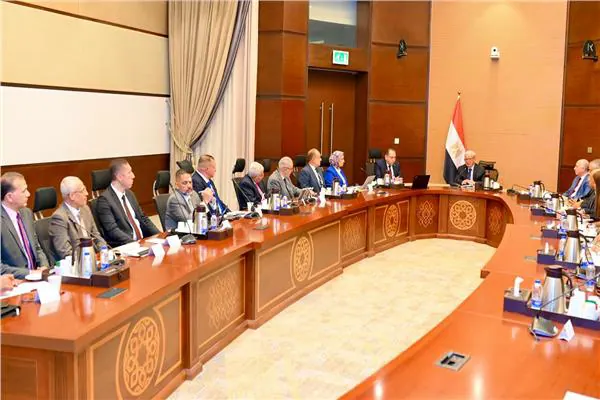
Egyptian Deputy Prime Minister for Economic Affairs, Dr. Hussein Issa, recently met with the executive presidents of companies under the Egyptian Holding Company for Cotton, Spinning, Weaving, and Ready-made Clothing. The meeting aimed to review the project's progress, financial and operational performance indicators, and discuss ways to enhance the industry's competitiveness. Dr. Issa emphasized the government's commitment to the textile sector, citing its strategic importance and potential for growth.
The project, which involves developing seven companies, aims to modernize the industry and increase its global competitiveness. The project includes the development of over one million square meters of production and service facilities, using the latest machinery and equipment. Dr. Issa highlighted the project's goal of maximizing the value added of Egyptian cotton and utilizing the sector's capabilities and accumulated expertise.
The meeting reviewed the current status of the project's stages, including the first stage, which was completed at the Egyptian Spinning and Weaving Company in Mahalla Kobra. The stage included three spinning factories, textile preparations, and a new power plant. The second stage, which will complete the development of the Mahalla Kobra company, includes five factories, four of which have been completed, and the dyeing complex is nearing completion.
The project also includes the development of other companies, such as Egypt's Shibin El-Kom Spinning and Weaving Company, Damietta Spinning and Weaving Company, and the Upper Egypt Spinning and Weaving Company in Minya. The third and final stage of the project involves the development of new factories and the installation of modern machinery and equipment.
Dr. Issa stressed the importance of marketing and exporting in parallel with development and modernization efforts. He encouraged the companies to develop sales mechanisms, open new markets, and expand exports. The Deputy Prime Minister also emphasized the government's openness to partnerships with the private sector to enhance efficiency, governance, and returns on investment.
The project's progress was presented through exhibitions by the companies' executive presidents, highlighting the current status of projects, completion rates, and operational plans for new factories. Dr. Issa concluded the meeting by emphasizing the need for regular monitoring to complete the remaining projects, accelerate completion rates, and improve the financial and operational performance of the companies.
The national textile development project is one of the state's strategic industrial projects, aiming to restore Egypt's historical leadership in the industry. The project seeks to create a comprehensive production system that invests in the competitive advantages of Egyptian cotton and develops a number of industrial complexes and iconic brands.
Key points
- The project aims to modernize the textile industry and increase its global competitiveness.
- The development of seven companies is underway, with a focus on enhancing efficiency and governance.
- The project seeks to maximize the value added of Egyptian cotton and utilize the sector's capabilities and accumulated expertise.