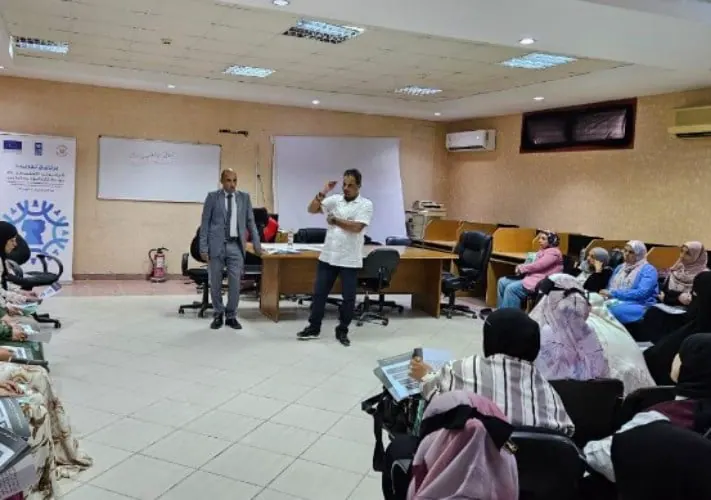
The Egyptian Ministry of Social Solidarity is set to conclude the second phase of its specialized training program for social workers. This initiative is part of a larger project aimed at enhancing the institutional and human capacities of the Ministry, in collaboration with the United Nations Development Programme and supported by the European Union. The program seeks to bolster the capabilities of field cadres and develop the social work system.
The second phase of the program, which began on September 19 and will run until October 12, 2026, involves organizing eight training camps targeting social workers in seven governorates: Beheira, Alexandria, Giza, Dakahlia, Kafr El Sheikh, Fayoum, and Al Gharbeya. This phase builds on the first phase, which focused on preparing a group of social workers as trainers. These trainers will now pass on their knowledge and experience to their colleagues in the targeted governorates.
The training program covers a range of strategic topics relevant to the Ministry's work and the role of social workers. These include raising awareness about the Social Security Law No. 12 of 2025 and its executive regulations, economic empowerment programs, and the benefits of subscribing to social insurance. The program also addresses issues such as positive parenting, as part of the "Moda" program, and procedures for preventing and addressing violence against women and girls.
The training also focuses on mechanisms for protection and prevention in the context of combating human trafficking and irregular migration. Additionally, it includes raising awareness about first aid for dealing with burns, in collaboration with the "Ahl Misr" foundation. This comprehensive approach aims to enhance the knowledge and skills of social workers in dealing with various situations they may encounter during their fieldwork.
The second phase of the program involves social workers who were trained as trainers during the first phase, along with specialized trainers in areas such as the "Moda" program, positive parenting, and economic empowerment. The program also includes participation from officials of the Ministry of Social Solidarity, the National Authority for Social Insurance, and supervisors from the women's departments of the Social Solidarity Directorate in the targeted governorates.
The program was inaugurated by Hanen Mostafa, Head of the Central Administration for Family and Women's Affairs at the Ministry of Social Solidarity. She emphasized that completing the program represents a significant step towards investing in the capabilities of social workers, who are crucial elements of the Ministry's fieldwork and have direct contact with families and local communities.
The program aims to expand the base of those benefiting from the training and enhance the transfer of knowledge and experiences from one trainer to another and from one governorate to another. This will support the development of a sustainable training system capable of meeting the needs of fieldwork and reinforcing the role of social workers in reaching families and raising their awareness of the services and programs offered by the Ministry.
Key points
- The program is part of a project to enhance the institutional and human capacities of the Ministry of Social Solidarity.
- The second phase of the program targets social workers in seven governorates.
- The program covers topics such as social security, economic empowerment, and combating violence against women and girls.