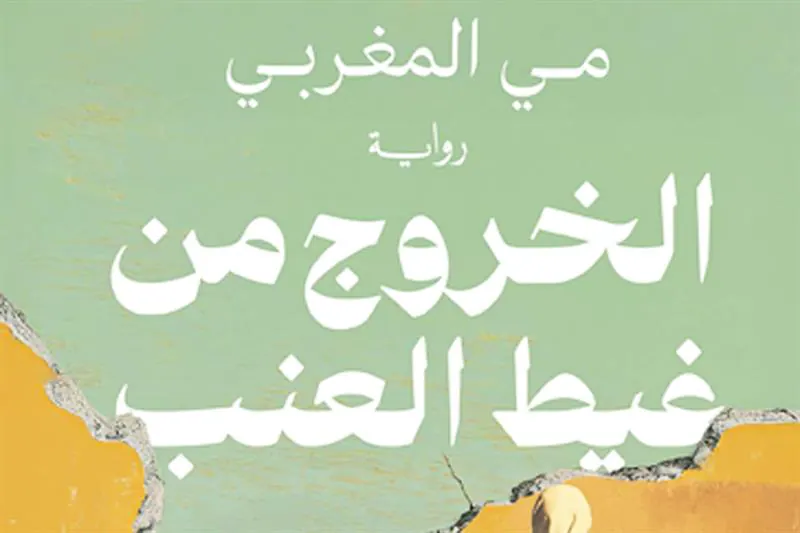
Egyptian author May Al-Maghraby's debut novel, Al-Khuroug min Gheit Al-Enab (Leaving Gheit Al-Enab), offers a poignant portrayal of Egypt's marginalized communities, particularly women. The novel tells the story of Nasra and her grandmother Asma, who share a legacy of sexual coercion, poverty, and fear. Al-Maghraby's work is a powerful exploration of the dual coercive schemes of patriarchy and inequity.
The novel is set in Gheit Al-Enab, a rural space on the outskirts of Alexandria that has evolved into a densely populated slum. The area is home to working-class Upper Egyptians who have migrated to the city. Al-Maghraby's characters, including Nasra and her family, are doomed to the margins of society. The state has intervened in the area, constructing apartment buildings as part of the Bashair Al-Kheir (Good Tidings) Project.
However, this intervention has come with an element of control, as residents are not allowed to make any amendments to their living space. This mirrors the coercive relationships that Nasra and her family experience. Nasra's brother, Sami, is particularly violent, and his wife Fayza is also subjected to his abuse. The novel explores the cyclical nature of violence and the limited options available to women like Nasra and Asma.
Al-Maghraby's work is notable for its unflinching portrayal of the realities faced by marginalized communities in Egypt. The author's use of language and mindset is authentic to the city's inner core, offering a nuanced exploration of the complexities of Egyptian society. Al-Maghraby's degree in psychology from Alexandria University has a strong imprint on the novel, which offers a highly emotional and feminist perspective.
The novel has been compared to Youssef Idris' 1959 novel, Al-Haram (The Sin), which also explored the frustrations and agonies of marginalized communities. However, Al-Maghraby's work is distinct in its focus on the experiences of women and its unapologetic feminist perspective. The novel offers a powerful critique of patriarchal society and the limited options available to women.
Al-Maghraby's portrayal of Alexandria is also noteworthy, as it differs significantly from the romanticized depictions of the city found in the works of authors like Lawrence Durrell and Ibrahim Abdel-Meguid. Instead, the author offers a gritty and realistic portrayal of the city's marginalized periphery. The novel is a testament to the power of literature to shed light on the experiences of marginalized communities.
The novel's exploration of themes such as coercion, patriarchy, and female empowerment offers a nuanced and thought-provoking critique of Egyptian society. Al-Maghraby's work is a significant contribution to the literary landscape of Egypt and offers a powerful voice for marginalized communities.
Key points
- The novel offers a poignant portrayal of Egypt's marginalized communities, particularly women.
- The author's use of language and mindset is authentic to the city's inner core, offering a nuanced exploration of the complexities of Egyptian society.
- The novel offers a powerful critique of patriarchal society and the limited options available to women.