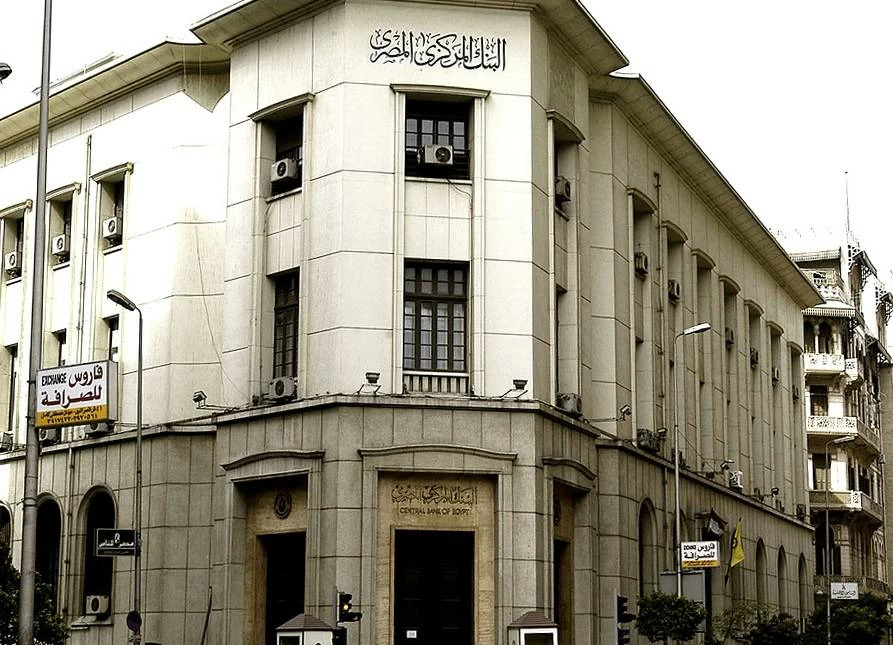
The Central Bank of Egypt withdrew 536.950 billion pounds from the local market through fixed-rate deposits, also known as tied deposits, for a period of 7 days at an interest rate of 19.5%. This move was made just hours before the Monetary Policy Committee meeting to discuss interest rates. According to the latest data from the Central Bank, all bids submitted by banks were accepted at a value of 536.950 billion pounds, with an allocation rate of 100%, through 10 auctions.
This action is part of the Central Bank's liquidity management mechanism, which is used regularly to adjust liquidity levels within the banking system. Sohair El-Damaty, a banking expert, stated that the volume of liquidity withdrawn from the market through tied deposits reflects the Central Bank's continued management of liquidity levels in the banking system, in line with its inflation and interest rate targets.
El-Damaty added that the current withdrawal rates can be interpreted as the Central Bank's tendency to keep interest rates unchanged during the Monetary Policy Committee meeting, especially with the continued need to balance inflation control and maintaining adequate liquidity levels in the market. She emphasized that liquidity management does not necessarily imply tightening monetary policy but rather using available tools to achieve balance in the money market.
The expert further explained that the Central Bank's actions aim to keep interbank interest rates near the main operation rate. She pointed out that the coming period may see more liquidity directed towards productive sectors, supporting economic activity and investment. El-Damaty also noted that monetary policy in the coming phase will need to balance several factors, including inflation, exchange rate movements, foreign cash flows, and local liquidity levels.
The Central Bank's move comes as the country faces inflationary pressures, and the committee is expected to discuss potential interest rate adjustments. Egypt has been working to stabilize its economy, which has been impacted by various factors, including the global economic situation and domestic challenges.
According to El-Damaty, the Central Bank's decision to withdraw liquidity is a proactive measure to manage inflation and maintain financial stability. She highlighted that the bank's actions demonstrate its commitment to using all available tools to achieve its objectives.
The outcome of the Monetary Policy Committee meeting and any potential interest rate adjustments will likely have significant implications for the Egyptian economy, influencing borrowing costs, consumer spending, and overall economic growth. The Central Bank's efforts to balance inflation control with economic growth will continue to be closely monitored by financial analysts and stakeholders.
Key points
- The Central Bank of Egypt withdrew 536.9 billion pounds from the local market to combat inflation.