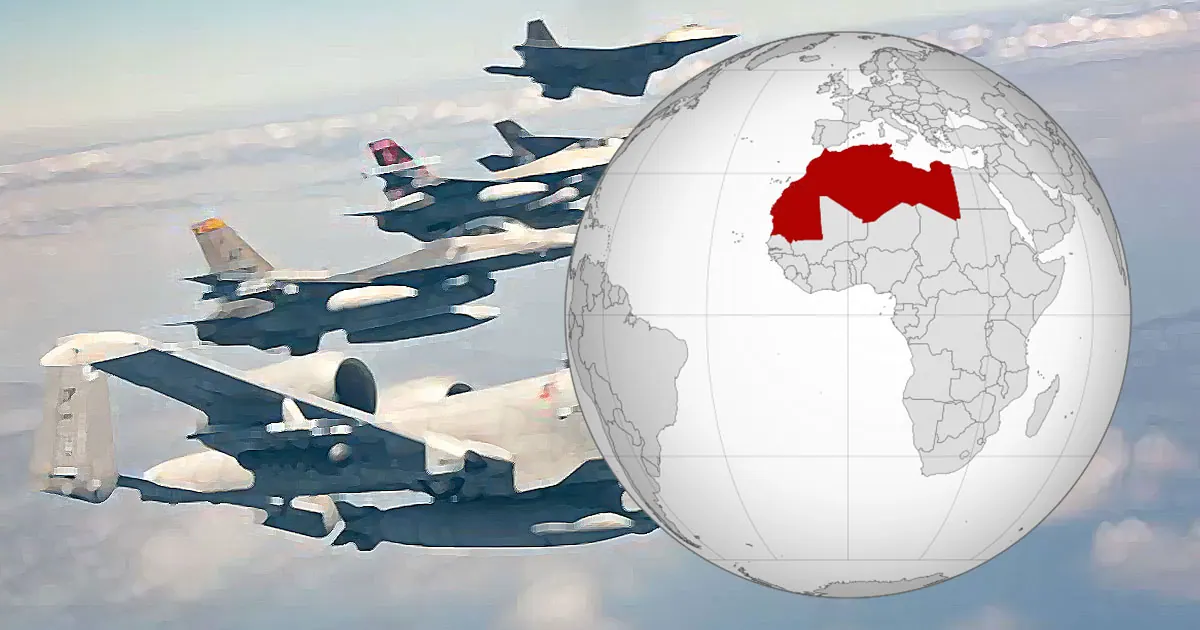
Egypt has the largest conventional military aviation fleet in North Africa, with a total of 1,088 aircraft, according to data from Global Firepower, a platform specializing in comparing global military capabilities. This puts Egypt in ninth place worldwide in terms of fleet size. The Egyptian fleet includes 242 fighter jets, 90 attack aircraft, 53 transport planes, 344 training aircraft, 11 special mission platforms, and 348 helicopters, including 100 attack helicopters.
Algeria follows Egypt with 620 aircraft, ranking 16th globally in terms of fleet size. The Algerian fleet comprises 111 fighter jets, 42 attack aircraft, 63 transport planes, 90 training aircraft, 10 special mission platforms, four refueling planes, and 300 helicopters, including 74 attack helicopters. Nearly half of Algeria's inventory consists of rotary-wing aircraft.
Morocco ranks third in the region with 271 aircraft, according to Global Firepower. The Royal Moroccan Armed Forces have 84 fighter jets, 31 transport planes, 77 training aircraft, four special mission platforms, two refueling planes, and 73 helicopters, including six attack helicopters. This number is significant, as Morocco's growing aeronautical capabilities include an increasing reliance on drones, which are not included in this count.
Tunisia's military aviation fleet is more modest, with 155 aircraft, according to Global Firepower. Only 10 of these are classified as fighter jets, while 101 are helicopters, representing about two-thirds of the total inventory. Tunisia also has 12 transport planes, 28 training aircraft, and four special mission aircraft.
The case of Libya is more complex, with Global Firepower attributing 83 military aircraft to the country. This includes 10 fighter jets, one attack aircraft, 12 transport planes, 35 training aircraft, and 22 helicopters. However, this number is lower than previously reported, and the actual capabilities on the ground may be affected by the country's divided military structures and foreign military presence.
The Global Firepower data has limitations, as it excludes drones, which have become a crucial component of modern warfare. The ranking should be interpreted with caution, as it only provides an indication of the numerical importance of conventional air fleets. Factors such as the quality and age of aircraft, weapon systems, crew training, maintenance, and radar and electronic warfare capabilities also play a significant role in determining a country's air superiority.
The data from Global Firepower highlights the significant disparities in military aviation capabilities across North Africa. Egypt, Algeria, and Morocco have substantial fleets, while Tunisia and Libya have more limited capabilities. The growing importance of drones and other unmanned systems will likely continue to shape the military aviation landscape in the region.
Key points
- Egypt has the largest conventional military aviation fleet in North Africa, with 1,088 aircraft.
- Algeria and Morocco follow Egypt in terms of military aviation capabilities, with 620 and 271 aircraft, respectively.
- The Global Firepower data excludes drones, which have become a crucial component of modern warfare.