Egypt has inaugurated a new municipal solid waste transfer station in Nabarouh, Dakahlia governorate, as part of the Kitchener Drain Depollution Programme. The programme is a joint initiative with the European Bank for Reconstruction and Development (EBRD) and the European Union (EU) aimed at improving waste management and reducing pollution across the drain's catchment area. The Nabarouh Transfer Station will handle up to 300 tonnes of municipal solid waste per day.
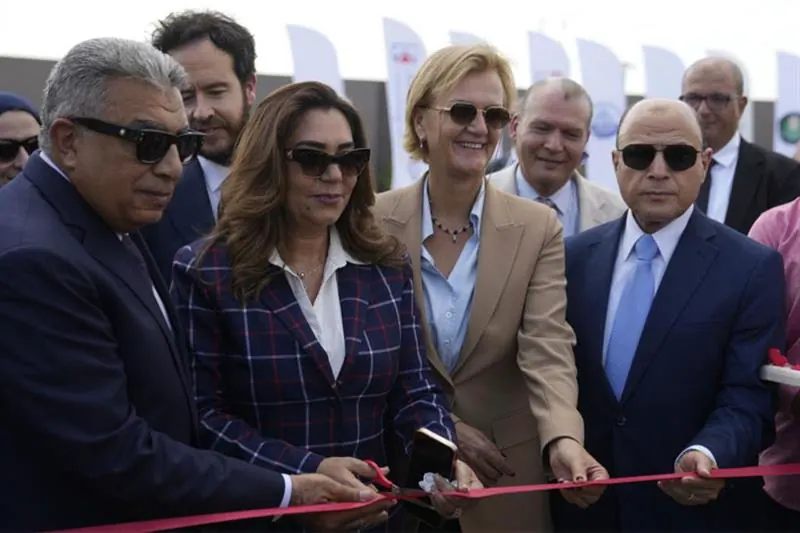
The inauguration ceremony was attended by EBRD representatives, EU Ambassador to Egypt Angelina Eichhorst, Egypt's Minister of Local Development and Environment Manal Awad Mikhail, and representatives of local authorities. The facility will serve six local administrative units: Nabarouh City, Tanikh, Dreen, Nesha, Behout and Al-Tayba. It will act as a link between municipal waste collection services and the Qallabsho Mechanical Biological Treatment Facility.
The new operating model is designed to reduce transport distances, improve fleet efficiency and enable waste collection services to focus more effectively on local communities. Engineering assessments indicate that the facility could reduce travel distances for collection vehicles by more than 80 percent and diesel consumption by more than two-thirds. This will contribute to better air quality and support the programme's broader goal of reducing environmental pollution.
The Nabarouh Transfer Station is expected to reduce carbon dioxide emissions by around 4.4 tonnes daily by cutting the distances travelled by waste collection vehicles. The Kitchener Drain Depollution Programme combines investments in drain rehabilitation, wastewater and sanitation infrastructure, and solid waste management to improve environmental conditions throughout the catchment area.
Egypt is a founding member of the EBRD and has received significant investment from the bank since it began operations in the country in 2012. The EBRD has invested more than €15.4 billion across 234 projects in Egypt. The bank's support for the Kitchener Drain Depollution Programme is part of its efforts to promote sustainable development and environmental protection in the region.
The inauguration ceremony included opening remarks, a presentation on the project, a ribbon-cutting ceremony and a tour of the facility. The programme's implementation is expected to have a positive impact on the environment and public health in the region. The Egyptian government has been working to improve waste management and reduce pollution in the country.
The Kitchener Drain Depollution Programme is a significant initiative aimed at improving environmental conditions in the region. The programme's success is expected to contribute to better air and water quality, and support sustainable development in the region. Key stakeholders, including government officials, EBRD representatives, and local authorities, have expressed their commitment to the programme's success.
Key points
- The Nabarouh Transfer Station will handle up to 300 tonnes of municipal solid waste per day and reduce carbon dioxide emissions by around 4.4 tonnes daily.
- The facility is expected to reduce travel distances for collection vehicles by more than 80 percent and diesel consumption by more than two-thirds.
- The EBRD has invested more than €15.4 billion across 234 projects in Egypt since it began operations in the country in 2012.