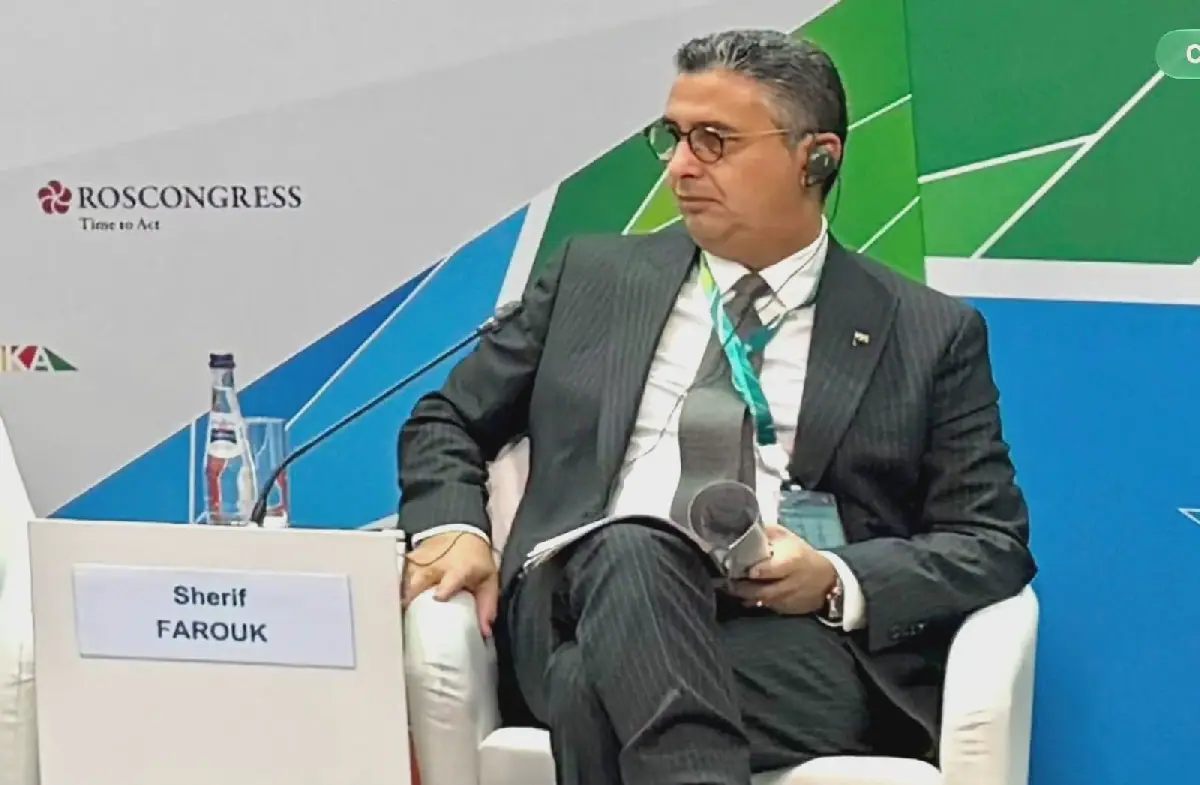
Egyptian Minister of Supply and Internal Trade, Dr. Sherif Farouk, emphasized the importance of enhancing joint investment in food trade, manufacturing, and logistics services to ensure stable food supplies, improve supply chain efficiency, and reduce distribution costs. This statement was made during his participation in a session titled "The Russo-African Agricultural-Industrial Alliance: Facing Challenges Together" at the Russo-African Economic and Humanitarian Forum in Moscow, Russia.
Dr. Farouk highlighted that Egypt is studying the feasibility of developing a logistics hub for grains and oils that integrates trade, storage, manufacturing, and distribution activities. This proposed hub aims to enhance domestic food security, create investment and employment opportunities, and serve regional markets, based on technical and economic studies. Egypt's strategic location, domestic market, and trade links with African countries and international markets position it to play a pivotal role in food trade.
The Minister stressed that improving connectivity between ports, manufacturing centers, and distribution networks, as well as fostering cooperation among companies, banks, and shipping firms, can significantly reduce transportation and handling costs. This, in turn, lowers the cost of delivering food products to markets. Egypt is keen on collaborating with Russia and African partners on joint investment projects that yield clear economic benefits and support local manufacturing and food trade.
Dr. Farouk's participation in the forum underscores Egypt's commitment to strengthening economic ties with Russia and African nations. The proposed logistics hub is part of Egypt's strategy to enhance its role in food security and trade within the region. By leveraging its geographical advantages and existing trade relationships, Egypt aims to become a key player in the food trade sector.
The initiative to establish a logistics center for grains and oils aligns with Egypt's goals to improve food supply chains and reduce costs associated with food distribution. This project is expected to have a positive impact on the country's economy by creating jobs and stimulating investment in the food sector.
Egypt's exploration of a logistics hub for grains and oils reflects its proactive approach to addressing food security challenges and enhancing trade efficiency. The country's efforts to collaborate with international partners, including Russia, demonstrate its commitment to achieving sustainable economic growth and development in the food sector.
The development of a logistics hub would also contribute to Egypt's goal of becoming a regional hub for food trade, providing a platform for the storage, processing, and distribution of grains and oils. This would not only enhance food security but also position Egypt as a key player in the global food trade.
Key points
- Egypt is considering establishing a logistics center for grains and oils to boost food trade and reduce distribution costs.
- The proposed hub aims to enhance domestic food security, create investment and employment opportunities, and serve regional markets.
- Egypt's strategic location and trade relationships make it an ideal location for a logistics hub.