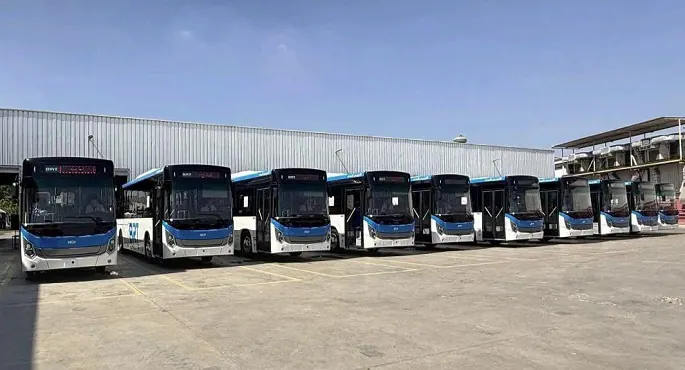
Egypt's Minister of Local Development and Environment, Dr. Manal Awad, announced the delivery of 20 electric buses to the Ministry of Transport. These buses will operate within the Bus Rapid Transit (BRT) system on the Cairo Ring Road, in collaboration with MCV. This initiative supports the government's efforts to provide modern, clean, and efficient public transportation. The project is part of the "Air Pollution and Climate Change Management in Greater Cairo" program, funded by the World Bank.
Dr. Manal Awad emphasized that introducing electric buses represents a practical approach to achieving the state's environmental and climate goals. The "Air Pollution and Climate Change Management in Greater Cairo" project, funded by the World Bank, focuses on reducing emissions and improving citizens' quality of life. The BRT system is a significant step forward in developing public transportation, reducing reliance on traditional fossil fuel-based vehicles, and mitigating pollution.
The Minister highlighted that providing electric buses demonstrates the state's commitment to expanding sustainable transportation solutions, offering numerous environmental, economic, and social benefits. This move aims to provide citizens with modern, safe, and efficient transportation. Dr. Mohamed Hassan, National Coordinator of the Air Pollution and Climate Change Management project, noted that delivering electric buses is part of the project's third component, which focuses on supporting a transition to low-emission transportation and improving air quality in Greater Cairo.
Dr. Mohamed Hassan added that the project includes not only providing electric buses but also building the necessary technical capacities to operate and maintain this modern technology. Specialized training programs have been implemented in collaboration with MCV to ensure the sustainability of operations and maximize the benefits of the electric transportation system. The buses have been equipped with the latest international technical specifications, suitable for operation within the BRT system, ensuring high levels of operational efficiency, safety, and reliability.
This achievement is a result of fruitful cooperation between the Ministry of Local Development and Environment, the Ministry of Transport, development partners, and the private sector. It reflects the success of integrating various national parties in implementing developmental projects. The shift towards sustainable transportation is no longer just an environmental goal but a practical approach to service development, improving quality of life, and providing a cleaner environment for citizens.
The project continues to work in coordination with relevant parties to support the transition to a low-emission economy and achieve sustainable development goals. The delivery of electric buses marks a significant milestone in Egypt's efforts to enhance public transportation and reduce environmental impact. This initiative is expected to have a positive impact on air quality and contribute to a more sustainable future for Cairo's residents.
Key stakeholders, including the Ministry of Transport and the World Bank, have expressed their support for this initiative, highlighting its potential to serve as a model for sustainable urban development. As Egypt continues to invest in modern and environmentally friendly transportation solutions, citizens can expect improved public services and a healthier environment.
Key points
- Egypt delivers 20 electric buses to enhance public transportation in Cairo.
- The initiative is part of the "Air Pollution and Climate Change Management in Greater Cairo" program, funded by the World Bank.
- The electric buses will operate within the Bus Rapid Transit (BRT) system on the Cairo Ring Road.