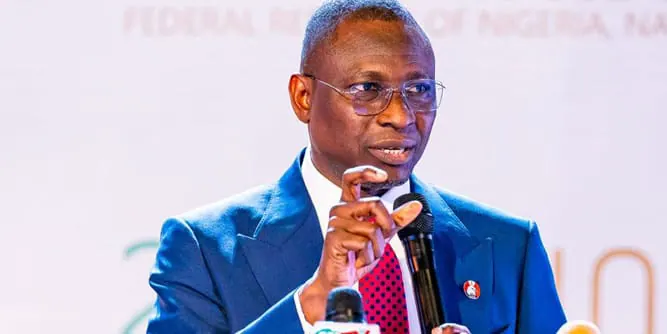
The Chairman of the Economic and Financial Crimes Commission (EFCC), Ola Olukoyede, has expressed concerns over the scale of alleged corruption in Nigeria's public sector. He stated that the commission receives more than 20,000 petitions on public corruption every year. This, he said, reflects the depth of the corruption challenge confronting Nigeria. Olukoyede made these remarks in Abuja at a ceremony marking the 80th birthday of former Attorney-General of the Federation and Minister of Justice, Kanu Agabi.
Olukoyede highlighted that some of the cases investigated by the commission involved public officials whose financial positions changed dramatically after assuming office. He cited instances where public servants, who had comparatively modest financial positions before taking office, accumulated substantial dollar and naira assets within a short period. According to him, some officials allegedly accumulated millions of dollars and naira within three or four years of being in public office.
The EFCC chairman disclosed that investigations sometimes traced substantial dollar and naira assets to public servants who had comparatively modest financial positions before assuming office. He stated that some officials allegedly owned large numbers of houses, with some building over 50 or even 200 houses. Olukoyede emphasized that public office holders should be prepared to account for their stewardship, stressing that transparency and accountability must remain central to the management of public resources.
Olukoyede argued that the alleged diversion of public resources was not merely a matter for law enforcement agencies, but a collective problem that affects all Nigerians. He urged Nigerians to come together to say no to the activities of corrupt leaders. The EFCC chairman's remarks came against the backdrop of continuing efforts by Nigeria's anti-corruption agencies to investigate alleged financial crimes involving public officials.
The chairman of the Independent Corrupt Practices and Other Related Offences Commission (ICPC), Musa Adamu Aliyu, also spoke at the event. He identified societal acceptance of corrupt practices and weaknesses within public institutions as major factors sustaining corruption. Aliyu called for integrity education to begin early, particularly in primary and secondary schools, to expose younger Nigerians to values that discourage corruption.
Aliyu urged stakeholders to engage members of Generation Z and Generation Alpha on the importance of integrity and responsible citizenship. He emphasized that Nigerians need to be told that they want to imbibe the culture of integrity. The event brought together members of the bench and bar, public officials, civil society organisations, academics, and other stakeholders to discuss the rule of law, public accountability, and the fight against corruption in Nigeria.
The EFCC has repeatedly stated that its mandate covers the investigation and prosecution of economic and financial crimes, while cases ultimately remain subject to judicial determination. The commission's efforts to investigate alleged financial crimes involving public officials are ongoing, with a focus on promoting transparency and accountability in the management of public resources.
Key points
- The EFCC receives over 20,000 petitions on public corruption annually.
- Some public officials have accumulated millions of dollars and naira within a short period in office.
- Societal acceptance of corrupt practices and weaknesses in public institutions sustain corruption in Nigeria.