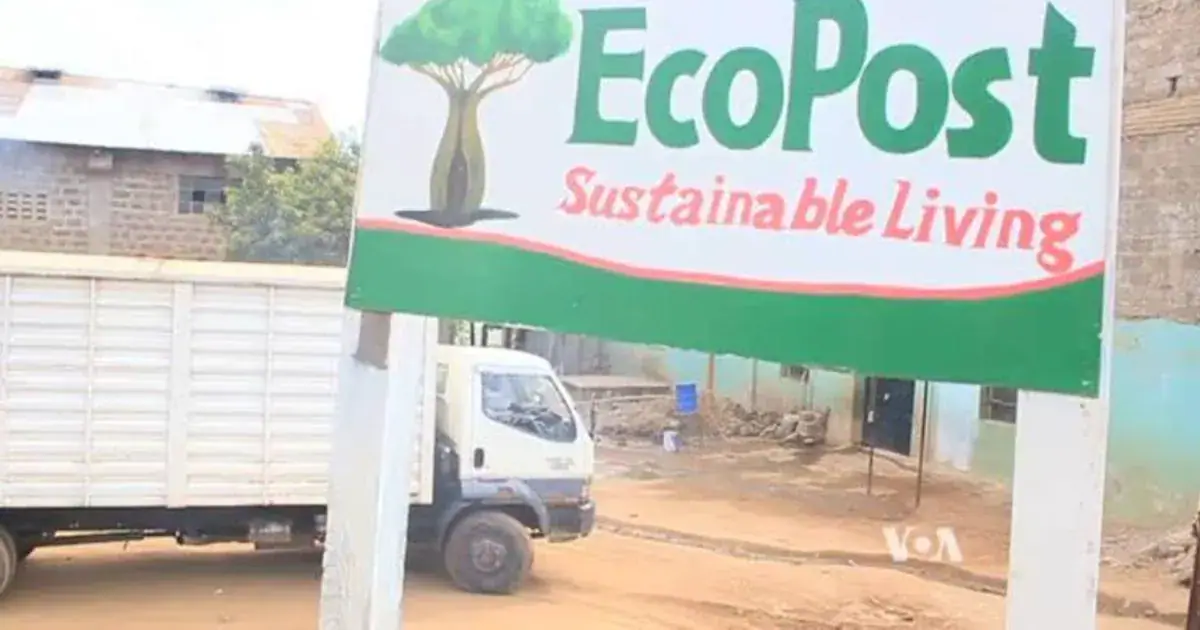
EcoPost Kenya, a social enterprise founded in 2009 by Lorna Rutto, has developed a manufacturing business that converts discarded plastic into fencing posts, plastic lumber, and outdoor products. The company's mission is to create an alternative to timber while finding commercial value in plastic that would otherwise end up in dumpsites or waterways. By recycling 100% plastic waste, EcoPost produces durable, rot-proof, and termite-resistant materials. This innovative approach tackles Kenya's plastic waste problem and demand for affordable construction materials.
The manufacturing process at EcoPost begins with collecting and sorting plastic waste from suppliers, including waste collection businesses, informal collectors, and companies dealing in recyclable materials. The plastic is then separated according to type and quality, with contaminants removed before processing. The material is shredded, heated, and moulded into solid profiles, which are cooled and cut into usable lengths. EcoPost primarily works with recycled polymers, including high-density polyethylene (HDPE) and polypropylene (PP).
EcoPost's product catalogue has expanded beyond its original fencing posts to include round and square fencing poles, plastic planks, decking boards, wall cladding, road-signage posts, garden beds, and outdoor furniture. These products are marketed to homeowners, farmers, institutions, landscaping businesses, and commercial customers. According to the company, its products resist termites, rot, mould, and algae, making them suitable for outdoor applications with an estimated lifespan of at least 50 years.
The company's business model extends beyond manufacturing, relying on a network of waste collectors, including young people and women in marginalised communities, who supply the plastics used in production. This creates an income market for materials that might otherwise have little commercial value. In March 2023, Austrian plastics manufacturer Borealis announced a partnership with EcoPost to strengthen this supply chain, including training, capacity building, and entrepreneurial start-up kits for youth and women's groups.
EcoPost's early years were marked by struggles to scale, as documented in a 2012 Stanford Graduate School of Business case study. The founders needed additional machinery and working capital but struggled to secure financing due to incomplete financial records, thin operating margins, power interruptions, and limited production capacity. Despite these challenges, EcoPost has attracted support from organisations, including Safaricom Foundation, WWF, KCB Bank, Coca-Cola, and the Opes Impact Fund.
EcoPost's work has also featured in international environmental and circular-economy programmes, and the company is now part of a broader conversation about circular manufacturing in Kenya. By recovering waste, reducing dependence on virgin materials, and creating commercially useful products from discarded resources, EcoPost offers a straightforward business proposition: plastic waste becomes raw material, raw material becomes a saleable construction product, and the recycling chain creates income for people supplying the material.
As EcoPost continues to grow, its impact on the environment and local communities is becoming increasingly significant. By addressing plastic pollution, deforestation, and unemployment, the company is demonstrating the potential for innovative solutions to drive positive change. With its products and business model, EcoPost Kenya is an example of how social enterprises can make a lasting difference in the lives of people and the planet.
Key points
- EcoPost Kenya recycles 100% plastic waste into durable building materials.
- The company's products resist termites, rot, mould, and algae, making them suitable for outdoor applications.
- EcoPost's business model creates an income market for materials that might otherwise have little commercial value.