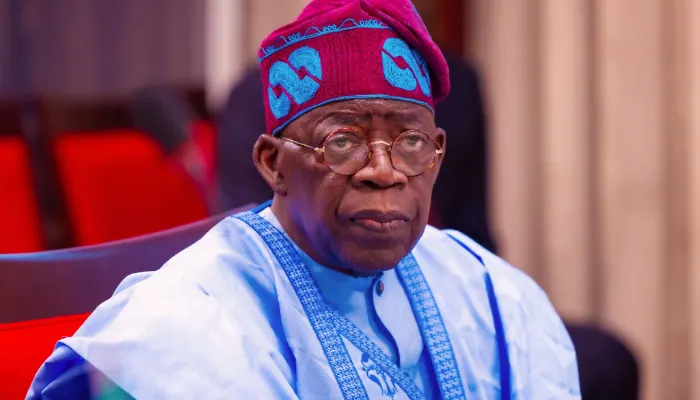
A recent report by The Economist suggests that President Bola Tinubu may retain office in the 2027 presidential election despite growing public discontent over insecurity and economic hardship. The report, published on October 1, Nigeria's Independence Day, identified several factors that could shape the contest, including incumbency, opposition fragmentation, religion, voter turnout, and identity politics. These factors, according to The Economist, could give Tinubu an advantage in the election.
The report noted that Tinubu's administration has implemented economic reforms, which have had negative impacts on Nigerians. However, it argued that Nigeria's electoral dynamics could still give the president an advantage. The Economist cited analysis by TheCable Index, which showed that a combination of votes secured by opposition candidates Atiku Abubakar and Peter Obi in the 2023 presidential election could have altered the outcome of that election. The two opposition figures are now seeking the presidency on different platforms.
The fragmentation of the opposition has been identified as a key factor that could work in Tinubu's favour. Atiku Abubakar and Peter Obi are contesting the presidency on the platforms of the African Democratic Congress (ADC) and Nigeria Democratic Congress (NDC), respectively. The Economist argued that their failure to form a joint ticket could prevent votes against the ruling All Progressives Congress (APC) from consolidating behind one candidate. This could make it difficult for the opposition to challenge Tinubu's re-election bid.
Religion and voter expectations are also expected to play a significant role in the 2027 election. The Economist noted that Tinubu and Vice-President Kashim Shettima are both Muslims, which could resonate with voters in northern Nigeria. The publication also suggested that religious identity could influence voters considering Obi, a Catholic. Additionally, The Economist cited political cynicism among some voters, particularly in communities where residents have experienced poor public services over long periods.
The report further pointed to what it described as political cynicism among some voters, particularly in communities where residents have experienced poor public services over long periods. Many people in these areas have low expectations and may not use the ballot box to express their disappointment. The publication cited the case of a woman in Maiduguri who said she intended to vote for Tinubu as a "thank you" for medicine she received at a government hospital.
The ADC Presidential Campaign Council has rejected The Economist's forecast, saying that electoral forecasts cannot determine how Nigerians will vote. Phrank Shaibu, director of strategic communication of the ADC presidential campaign council, responded in a statement, saying that factors such as incumbency and political machinery could influence an election but should not be treated as evidence of public consent. He also cautioned against interpreting individual appreciation for government assistance as blanket approval of the administration's record.
Shaibu also disputed the suggestion that low voter turnout could work in Tinubu's favour. He said the relatively low participation recorded in the 2023 presidential election could have reflected voter apathy, insecurity, distrust, logistical barriers, or a perception among some voters that their participation would not change the outcome. The competing assessments point to several variables likely to matter in 2027, including economic reforms, insecurity, opposition willingness to consolidate its support, voter turnout, and regional and religious identities.
Key points
- The Economist forecasts that President Bola Tinubu may retain office in the 2027 presidential election despite public discontent over insecurity and economic hardship.
- The report identified incumbency, opposition fragmentation, religion, voter turnout, and identity politics as factors that could shape the contest.
- The ADC Presidential Campaign Council has rejected The Economist's forecast, saying that electoral forecasts cannot determine how Nigerians will vote.