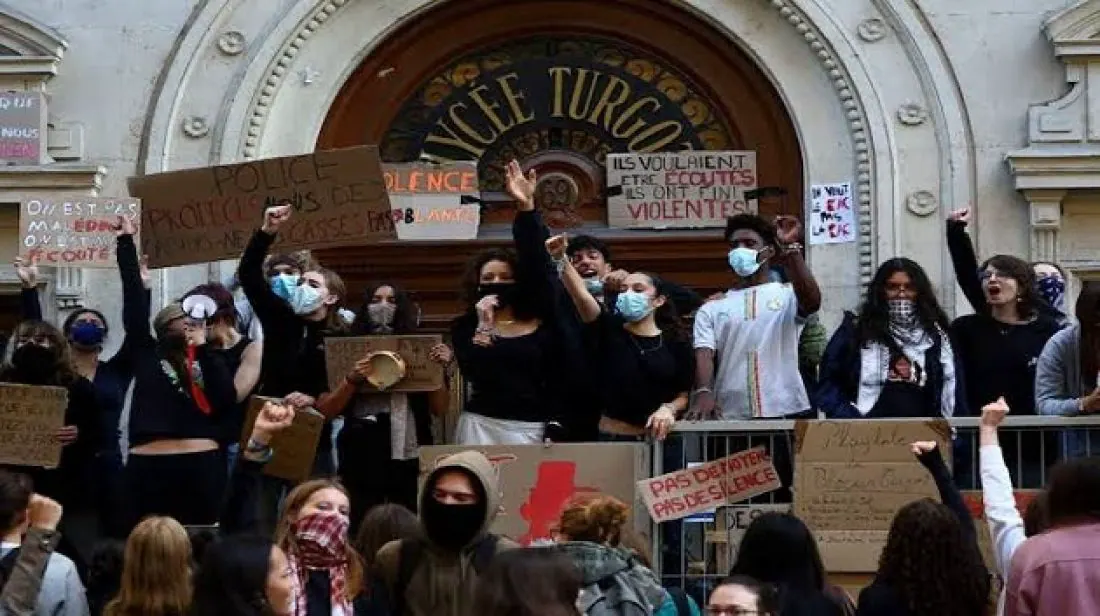
French Prime Minister Sebastien Lecornu announced on Tuesday that high school classes would be suspended until the end of the week. This decision was made to facilitate dialogue with protesting students. The move comes as tens of thousands of high school students took to the streets across France to demonstrate, with some protests turning violent.
According to Lecornu, a total of 215 students, 85 educational staff, and 715 security personnel were injured during the protests. The Prime Minister attributed the violence to radical left-wing groups seeking to create chaos in the lead-up to the presidential elections. The protests were marked by a significant security presence, with authorities attempting to contain the situation.
The protests, which began several days ago, have been characterized by clashes between students and security forces. The government has been criticized for its handling of the situation, with some accusing authorities of using excessive force. The protests have also raised concerns about the potential for the movement to spread to universities.
The student protests are centered on a range of issues, including concerns about education policy and broader social and economic grievances. The movement has been marked by a strong sense of mobilization, with students using social media to organize and coordinate their efforts. The protests have also sparked a national debate about the state of education in France.
The French government has faced criticism for its response to the protests, with some accusing authorities of being heavy-handed. The government has defended its actions, arguing that it is necessary to maintain order and ensure public safety. The situation remains tense, with many students vowing to continue protesting until their demands are met.
The protests have also raised concerns about the potential impact on the upcoming presidential elections. The elections are scheduled to take place in several months, and some analysts have suggested that the protests could have a significant impact on the outcome. The government has sought to downplay the significance of the protests, arguing that they do not pose a major threat to stability.
The situation in France remains fluid, with many students and observers watching to see how the situation will unfold. The government's decision to suspend high school classes has been seen as a significant move, but it is unclear whether it will be enough to quell the protests. The coming days will be crucial in determining the trajectory of the movement and its potential impact on French politics.
Key points
- French Prime Minister Sebastien Lecornu suspended high school classes until the end of the week due to violent student protests.
- A total of 215 students, 85 educational staff, and 715 security personnel were injured during the protests.
- The protests are centered on a range of issues, including concerns about education policy and broader social and economic grievances.