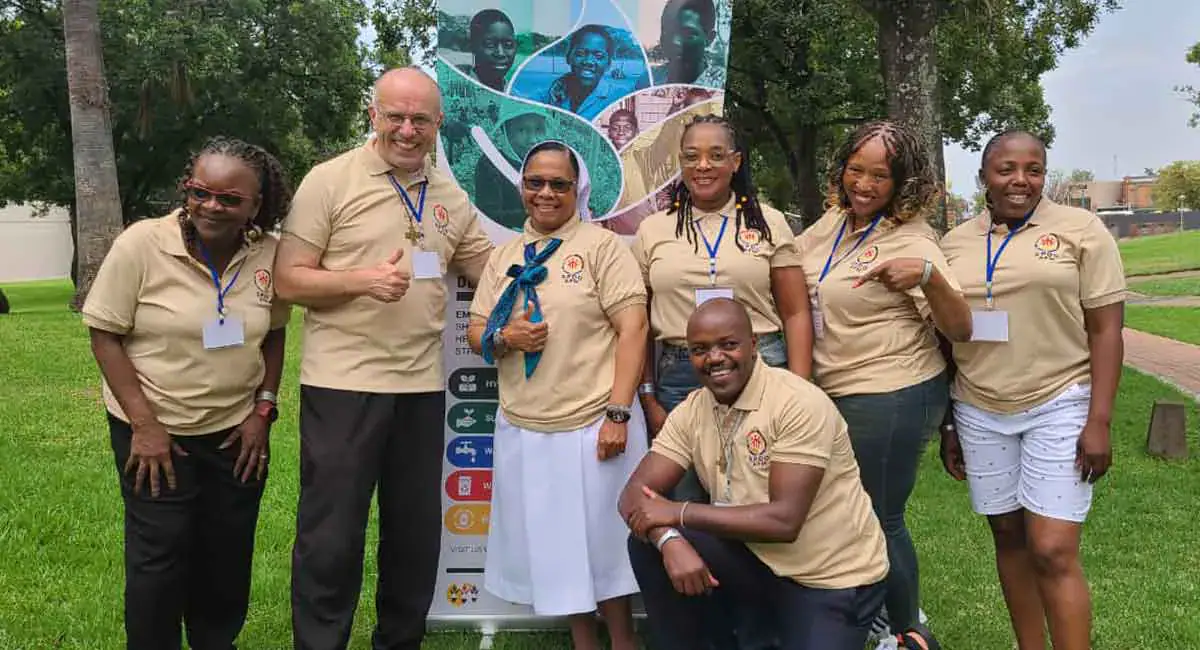
The Eco Ubuntu project, inspired by Pope Francis' encyclical Laudato Si', was launched in early 2024 and has made significant strides in promoting environmental education and practical initiatives among young people in Southern Africa. The project has reached over 18,000 young people through schools, skills centres, parishes, and communities in South Africa, Eswatini, and Lesotho. This initiative is a collaborative effort between the Salesian congregation and various stakeholders to promote environmental awareness and sustainability.
The Eco Ubuntu project has combined environmental education with practical initiatives under six pillars: renewable energy, green life skills, sustainable cultivation, access to water, hydroponics, and waste management. Activities have included Eco Camps, Eco Sport Days, Eco Clubs, and the establishment of school gardens and hydroponic systems. These initiatives have yielded impressive results, with over 7,300 young people receiving green skills training and 5,300 introduced to hydroponics.
One of the significant achievements of the Eco Ubuntu project is the establishment of 23 hydroponic systems and the distribution of 230 home hydroponics kits. Additionally, five solar-powered boreholes have been installed to irrigate 13 gardens, and 231 people have graduated from solar technology courses. The project has also led to the production of over 80 tons of vegetables in school gardens, with some being used in school kitchens and others sold to local communities.
Participants in the project have identified a change in attitudes among young people as one of the most significant achievements. Many young people have become environmental ambassadors in their families and communities, promoting sustainable practices and environmental awareness. School representatives have shared examples of this transformation, highlighting the positive impact of the project on young people's lives.
The Eco Ubuntu project has also fostered partnerships with various stakeholders, including agricultural colleges, PETCO, recycling enterprise Pikitup, the Malkerns Research Centre, and the University of Eswatini. These partnerships have broadened discussions on agricultural development, recycling, water management, and practical green skills, contributing to a more comprehensive approach to environmental sustainability.
Looking ahead, participants have identified the need for stronger formation and accompaniment of Green Delegate teams, more effective Eco Clubs, and the sustainability of affordable initiatives that can benefit communities beyond Salesian schools. A second phase of Eco Ubuntu is envisaged from June 2027, building on the experience and evaluation of the first three years.
The Eco Ubuntu project has demonstrated the potential for environmental initiatives to inspire positive change among young people in Southern Africa. As Fr Vaclav Klement, Salesian provincial superior, encouraged participants to pursue this direction, the project's impact is expected to continue growing, contributing to a more sustainable and environmentally conscious future for the region.
Key points
- Over 18,000 young people have been reached through the Eco Ubuntu project.
- The project has established 23 hydroponic systems and distributed 230 home hydroponics kits.
- A second phase of Eco Ubuntu is planned for June 2027, building on the experience and evaluation of the first three years.
Reporting sources
- Turning ‘Eco Ubuntu’ into a Youth Movement · The Southern Cross