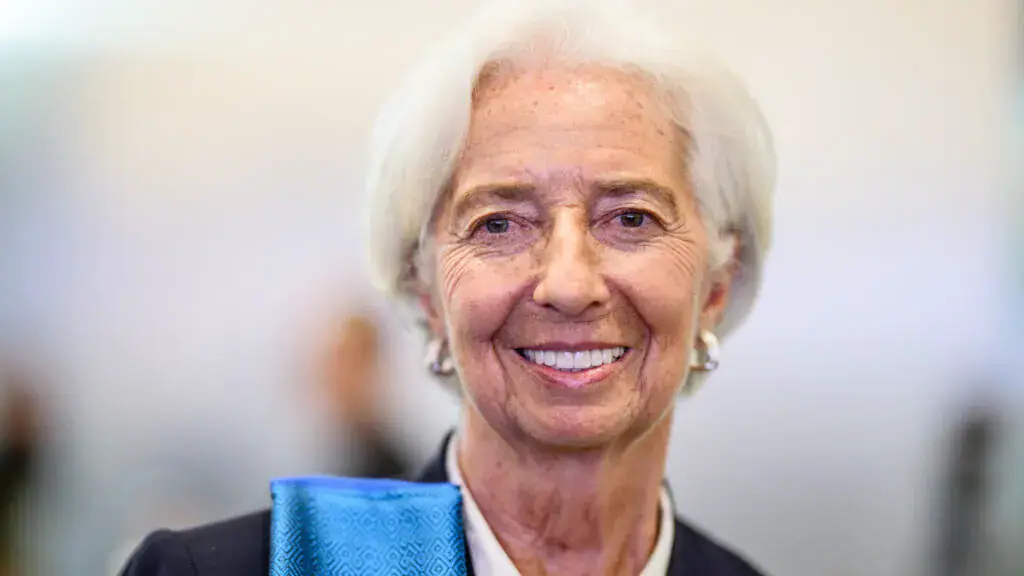
European Central Bank President Christine Lagarde has announced her resignation, effective February 7, 2027, months before her scheduled term ends in October. The decision comes as the eurozone faces renewed inflation risks, rising borrowing costs, and mounting concerns over government debt. Lagarde cited a desire to engage in political matters in France and internationally, which could conflict with the ECB's political neutrality.
Lagarde's resignation has sparked speculation about her successor, with former Dutch central bank governor Klaas Knot and Spain's Pablo Hernández de Cos emerging as leading contenders. European Council President Antonio Costa confirmed that the process of selecting a new ECB president would begin immediately. The leadership change is not expected to trigger significant market disruption, as investors are familiar with the ECB's policy framework.
The ECB is facing significant challenges, including an oil-price shock linked to the Iran war, which has increased pressure on policymakers to prevent rising energy costs from spreading to wages and prices. The bank must navigate the competing pressures of persistent inflation and weakening financing conditions. Markets are assessing the likelihood of further interest rate increases as policymakers respond to higher energy prices.
The ECB's deposit rate is expected to reach 3.25 percent by the end of 2027, according to money markets, which are pricing in three additional rate increases. Higher interest rates could help contain inflation but would also increase borrowing costs, potentially weighing on consumer spending, business investment, and economic activity.
Rising government borrowing costs have become a major concern for European policymakers, particularly in France. Investors are increasingly uneasy about France's debt burden and uncertain fiscal outlook following this year's elections. The ECB could respond if it judged that market pressures were unjustifiably fragmenting financing conditions across the eurozone.
The ECB has several options to address market pressures, including redirecting reinvestments from bonds acquired under its earlier asset-purchase programmes or using the Transmission Protection Instrument, a facility designed to counter disorderly market pressures. However, any intervention would depend on the ECB's assessment of market conditions and the circumstances surrounding the rise in yields.
Lagarde's departure comes at a sensitive point for the central bank, and her successor will inherit the challenge of containing energy-driven inflation while preventing rising borrowing costs and sovereign debt concerns from placing further pressure on Europe's economic recovery. Lagarde said she leaves the ECB "with a sense of good work done and an ECB that is fit for the future."
Key points
- Christine Lagarde to step down as ECB president on February 7, 2027
- ECB faces challenges including inflation, debt pressures, and oil-price shock
- Lagarde's successor to inherit challenge of containing inflation and preventing economic risks