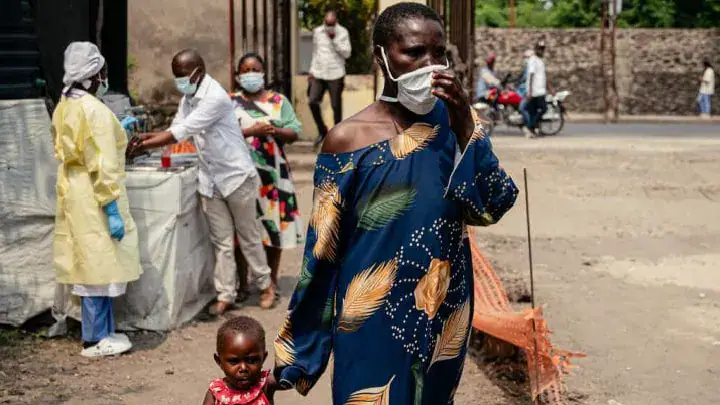
The 17th Ebola outbreak in the Democratic Republic of Congo, caused by the Bundibugyo strain, continues to pose significant challenges. In Nizi, Ituri province, security concerns are jeopardizing the continuity of response operations. The Institut national de santé publique (INSP) is urging the preservation of healthcare infrastructure and the safety of teams engaged in the response efforts. This appeal comes as a mother and daughter were seen at a health screening post in eastern DRC.
The INSP emphasizes the need to safeguard healthcare structures, ensuring they remain protected spaces accessible to healthcare professionals and patients alike. The institution also advocates for the free movement of medical personnel and intervention teams, which is crucial for ongoing surveillance, care, and prevention activities. According to the INSP, securing healthcare facilities and protecting responders are essential conditions for an effective epidemic response.
The Ebola response is heavily reliant on the continuity of healthcare interventions, including epidemiological surveillance, contact tracing, and care for infected individuals. Any disruption to these activities risks delaying the detection of new cases and compromising efforts to break the transmission chains. The INSP is urging all stakeholders to preserve the continuity of care and facilitate response operations.
The INSP is also calling on the population to remain calm, adhere to preventive measures, and rely exclusively on information from health authorities. The security of response actors is a critical condition for interrupting transmission chains and protecting communities. Despite the concerning security situation, the INSP reaffirms its commitment to continuing interventions in collaboration with the government and partners.
In Nizi, the protection of healthcare infrastructure and the free movement of medical teams are imperative for maintaining an effective epidemic response. The situation on the ground remains challenging, with security concerns threatening the progress made so far. The INSP and other stakeholders are working to address these challenges and ensure the response efforts can continue unimpeded.
The Ebola outbreak in DRC has seen several developments, including the death of two medical doctors who contracted the disease. The response efforts are being evaluated, with a three-day assessment taking place in Kisangani. The situation is being closely monitored, with efforts to contain the outbreak and prevent further spread.
The DRC is experiencing several other developments, including the formation of a new humanitarian organization in Lubumbashi and the announcement of $6.9 million in revenue from mining by-products. The country is also facing challenges related to access to social media for minors and the regulation of economic zones.
Key points
- The INSP is urging the protection of healthcare structures and personnel in Nizi, Ituri province, amid security concerns threatening Ebola response efforts.
- The Ebola response is heavily reliant on the continuity of healthcare interventions, including epidemiological surveillance, contact tracing, and care for infected individuals.
- The security of response actors is a critical condition for interrupting transmission chains and protecting communities.