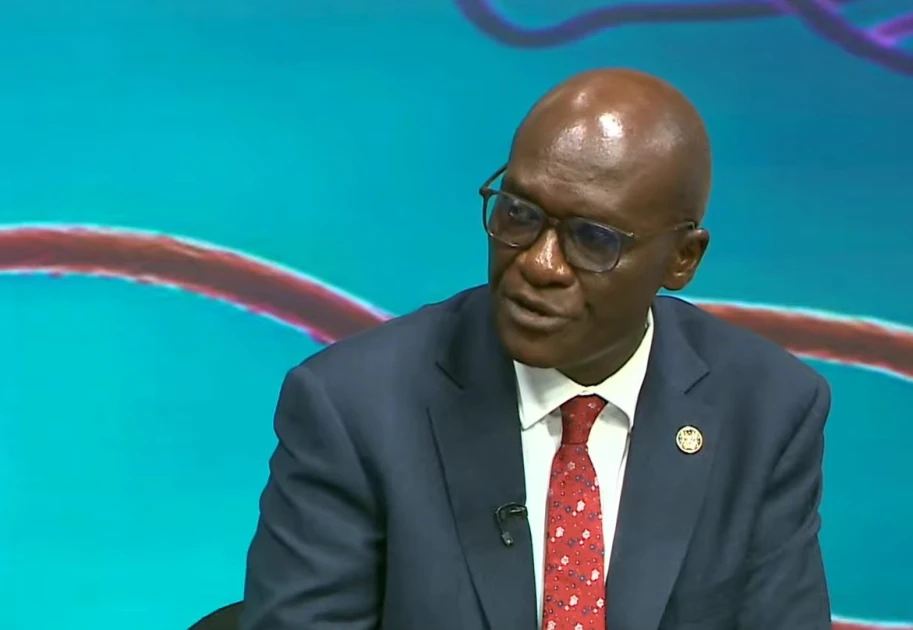
Questions are emerging over how Kenya's first confirmed Ebola patient passed through screening at Jomo Kenyatta International Airport (JKIA) before travelling to Nairobi Hospital, where he was later diagnosed with the virus. Director-General for Health Dr Patrick Amoth stated that the patient underwent the normal screening process at the airport but may have taken medication that lowered his temperature and masked some of his symptoms.
The patient, a Kenyan citizen who had lived in the Democratic Republic of Congo (DRC) for seven years, arrived in Kenya on October 3 after travelling from the DRC to Kampala by road. He then boarded Jambojet flight 8523 to Nairobi and underwent the normal public health screening at JKIA before being picked up by a relative and taken to Nairobi Hospital.
Amoth added that the patient had travelled from northwestern DRC to Entebbe before boarding a flight to Nairobi. “So far, we have screened more than 650,000 travellers from our 15 designated points of entry. This patient came from North Western DRC up to Entebbe then took a flight to Nairobi. He underwent normal screening which is an automatic thermo-scanner,” Amoth said.
Amoth noted that the screening at the points of entry also relies on travellers providing accurate information on surveillance forms, including their travel history and symptoms. He urged travellers to make truthful self-declarations, saying the information is intended to facilitate early identification and treatment rather than punish travellers.
The patient had reportedly been unwell for about a month and had received treatment at several hospitals while in the DRC. At Nairobi Hospital, he was isolated after presenting with symptoms including fever, intense fatigue, weakness, muscle pain, painful swallowing, sore throat and bleeding under the skin at an injection site.
Medical tests later confirmed Ebola Bundibugyo virus disease. Despite supportive treatment, the patient died on Monday at 11:30 pm. Amoth said the Bundibugyo strain is one of three Ebola virus species known to cause large outbreaks, alongside the Zaire and Sudan strains.
Unlike the Zaire strain, Bundibugyo has no vaccine or specific treatment, meaning management mainly involves supportive care. However, Amoth said early reporting significantly improves the chances of survival. He urged anyone who develops symptoms or suspects they may have been exposed to call the toll-free 719 hotline for assistance.
Key points
- The Ministry of Health has so far identified 28 contacts who interacted with the deceased, while 23 passengers and four crew members from the flight are also being traced.
- The incubation period for Ebola is between two and 21 days.
- Amoth explained that most people develop symptoms within the first four to five days after exposure and that transmission occurs once symptoms develop.