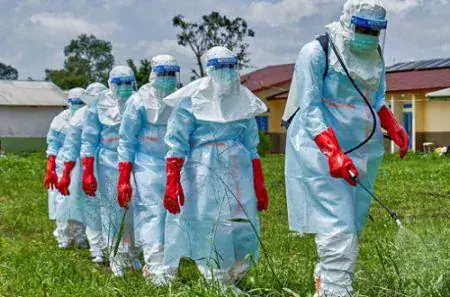
The Ebola outbreak in the Democratic Republic of Congo (DRC) has claimed 5,387 lives and infected 11,042 people, according to the Congolese Ministry of Health's latest update on November 9. The outbreak, which began in mid-May, has a fatality rate of 48.8%, making it the deadliest epidemic in the country's history and the second most severe globally. The virus has spread to eight of the DRC's 26 provinces, with the eastern provinces of Ituri and North Kivu being the main transmission hubs.
The ongoing conflict in the east and attacks on healthcare workers have hindered efforts to contain the disease, which has spread to other African countries and Europe. Currently, 651 patients are hospitalized or in isolation, while 2,990 people have recovered from the infection. Health teams have managed to track 79.7% of identified contacts. The outbreak is caused by the Bundibugyo virus, for which there are no approved vaccines or specific treatments, unlike the Zaire ebolavirus.
In late August, Congolese authorities launched an immunization campaign using the Ervebo vaccine, which is approved for the Zaire ebolavirus, but its effectiveness against the Bundibugyo virus is still being evaluated. The World Health Organization (WHO) is monitoring the development of two candidate vaccines specific to the Bundibugyo virus, but preliminary data do not yet confirm their efficacy during the current outbreak.
The epidemic has spread beyond the DRC's borders, with cases reported in several countries. In Africa, Kenya confirmed nine infections and two deaths, while Nigeria reported one case. The WHO declared the end of the outbreak in Uganda on August 26, after 20 cases and two deaths. In Europe, one infection was detected in France related to the outbreak, and four patients infected in the DRC were evacuated for treatment in Germany, the Netherlands, and the UK.
This is the 17th Ebola epidemic in the DRC's history, and globally, only the 2014-2016 West African outbreak was more lethal, causing approximately 28,000 infections and over 11,000 deaths. The virus is transmitted through direct contact with bodily fluids of infected people or animals, causing symptoms such as high fever, vomiting, diarrhea, and in severe cases, internal and external hemorrhaging.
The situation on the ground remains challenging, with health teams working to contain the outbreak amidst ongoing conflict and insecurity. The WHO and other international health organizations are providing support to the Congolese government to combat the epidemic. The development of effective vaccines and treatments for the Bundibugyo virus is crucial to controlling the outbreak and preventing future epidemics.
The international community is closely monitoring the situation, and efforts are being made to enhance preparedness and response measures in countries at risk. The DRC's experience in responding to Ebola outbreaks has been valuable, but the current epidemic highlights the need for sustained investment in healthcare infrastructure and emergency response capacity to effectively combat infectious disease outbreaks.
Key points
- The Ebola outbreak in DR Congo has a fatality rate of 48.8%, making it the country's deadliest epidemic.
- The outbreak has spread to eight provinces in DR Congo, with the eastern provinces of Ituri and North Kivu being the main transmission hubs.
- There are currently no approved vaccines or specific treatments for the Bundibugyo virus, which is causing the outbreak.
Reporting sources
- Ébola já matou mais de 5.300 pessoas e ultrapassa os... · novojornal.co.ao