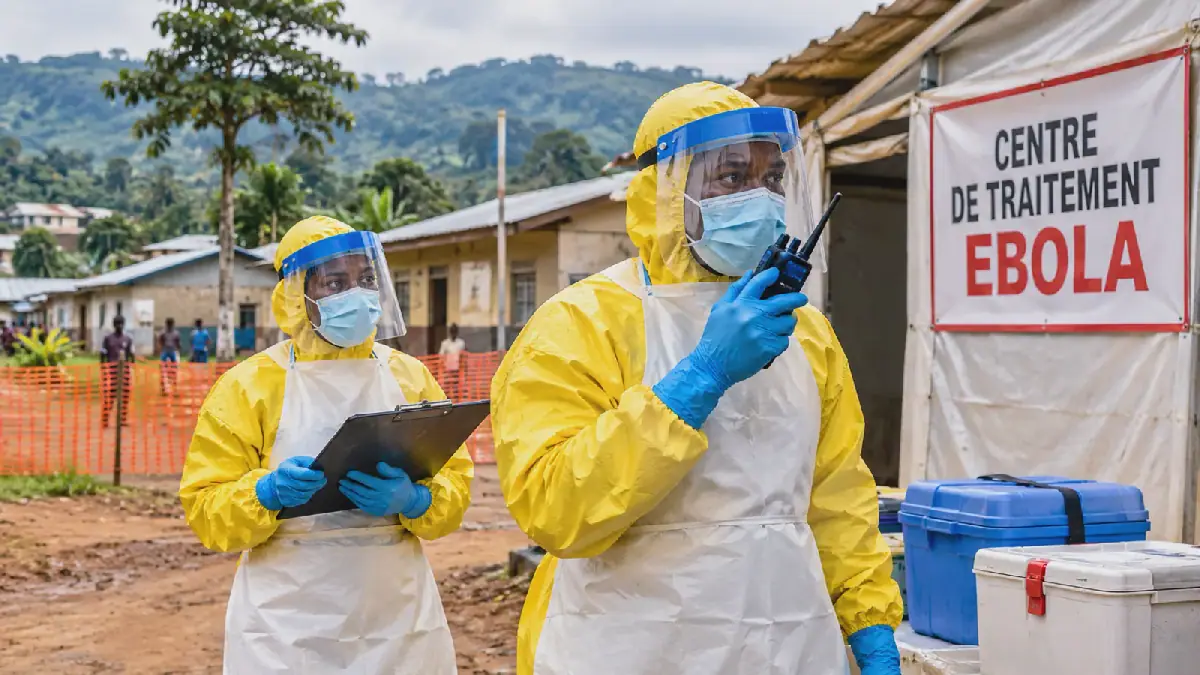
The Ebola outbreak in the Democratic Republic of Congo (DRC) has reached a total of 12,021 infected people and 5,904 deaths, according to reports from January 26, 2026. The health sector and partners continue to face significant challenges in controlling the outbreak. The numbers were released amid ongoing efforts to contain the virus, which has spread to eight provinces out of 26 in the country.
The current outbreak, caused by the less common Bundibugyo strain of the Ebola virus, was first reported in mid-May 2026 in Ituri Province in northeastern DRC. Since then, it has continued to spread, posing significant challenges to health authorities. These challenges include delays in identifying infected individuals, insecurity due to armed groups, and weaknesses in the healthcare system.
A major concern for health authorities is that many new cases are not linked to known Ebola patients. According to the Africa CDC, only 15% of new cases are identified as having come into contact with previously known patients. This indicates a long chain of transmission that remains unaccounted for, making it difficult to track and halt the spread of the virus.
The Bundibugyo strain of Ebola has no approved vaccine or specific treatment, adding to the complexity of the outbreak. This outbreak is the second-largest Ebola outbreak in history, surpassed only by the 2014-2016 outbreak in West Africa, which infected over 28,600 people and killed around 11,000.
An analysis of satellite imagery suggests that the reported death toll from the DRC government may be significantly lower than the actual number of fatalities in the two most affected areas. This discrepancy highlights that the challenges in combating Ebola in DRC go beyond the number of infected people and include issues of security, limited capacity to track contacts, and difficulties in accurately assessing the situation on the ground.
Health authorities still have a significant task ahead in identifying all infected individuals, tracing their contacts, and ensuring that communities have access to medical services to help halt the spread of the virus. Efforts to contain the outbreak are ongoing, with health organizations and partners working to improve the response and mitigate the impact of the disease.
The situation remains critical, with the potential for further spread of the virus if not adequately addressed. Continued international support and cooperation are essential in helping the DRC manage the outbreak and prevent it from becoming an even greater health crisis.
Key points
- The Ebola outbreak in DRC has infected 12,021 people and killed 5,904 as of January 26, 2026.
- The outbreak is caused by the Bundibugyo strain of the Ebola virus, which has no approved vaccine or specific treatment.
- The challenges in combating the outbreak include delays in identifying infected individuals, insecurity, and weaknesses in the healthcare system.