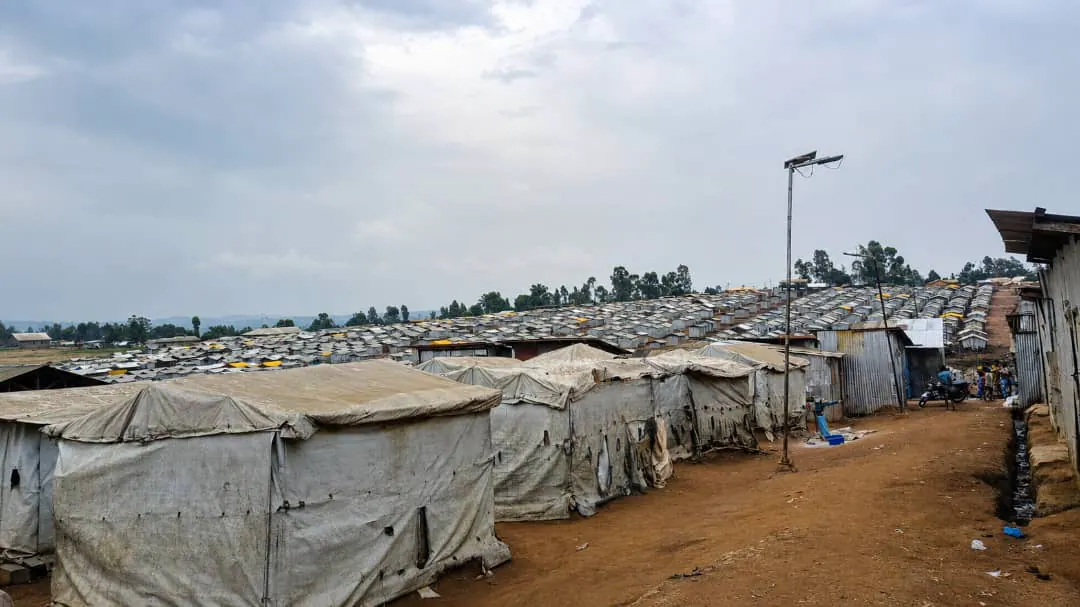
The humanitarian situation in DR Congo's Ituri province has taken a turn for the worse with the dispersion of thousands of displaced people from the Kigonze site in Bunia, the provincial capital. The UN humanitarian coordinator ad interim, Damien Mama, has expressed concerns that this development could compromise Ebola surveillance, contact tracing, and response efforts. The Kigonze site, which hosted nearly 18,000 people, was covered by Ebola response activities.
According to Mama, the unorganized dispersion of displaced individuals, combined with access difficulties, poses a significant risk to epidemiological surveillance, contact tracing, and continuity of services. This situation constitutes a major health concern for humanitarian actors, who are struggling to access the site. Many displaced households have moved to live with host families, necessitating a rapid assessment of their situation and needs.
The UN humanitarian coordinator emphasized that the priority is to access the site as quickly as possible to assist those in need. However, humanitarian actors have not yet been able to independently establish the facts or measure the extent of the damage and needs. The reasons behind the security operation that led to the displacement, as well as the number of casualties, have not been officially disclosed.
The situation in Ituri province is further complicated by the ongoing Ebola outbreak. The province has been experiencing an upsurge in Ebola cases, and the displacement of people has raised concerns about the potential for the virus to spread. Humanitarian actors are working to respond to the crisis, but their efforts are being hindered by access difficulties and the dispersion of displaced people.
Mama's concerns are shared by other humanitarian organizations, which have expressed fears about the potential consequences of the displacement. The situation is being closely monitored, and efforts are being made to respond to the needs of those affected. However, the humanitarian community requires access to the site to provide assistance and to assess the situation.
The incident has highlighted the challenges faced by humanitarian actors in responding to crises in difficult-to-access areas. The UN and other humanitarian organizations have called for improved access and security to enable them to respond effectively to humanitarian needs. The situation in Ituri province remains volatile, and humanitarian actors are working to respond to the crisis.
The humanitarian response to the crisis in Ituri province is ongoing, with organizations working to provide assistance to those affected. The response efforts are being led by the UN and other humanitarian organizations, which are working closely with local authorities to respond to the needs of those affected. The situation remains fluid, and humanitarian actors are working to adapt to the changing circumstances.
Key points
- The dispersion of thousands of displaced people in DR Congo's Ituri province is complicating Ebola surveillance and response efforts.
- The UN humanitarian coordinator has expressed concerns about the potential consequences of the displacement, including the risk of Ebola transmission.
- Humanitarian actors require improved access and security to respond effectively to humanitarian needs in the area.