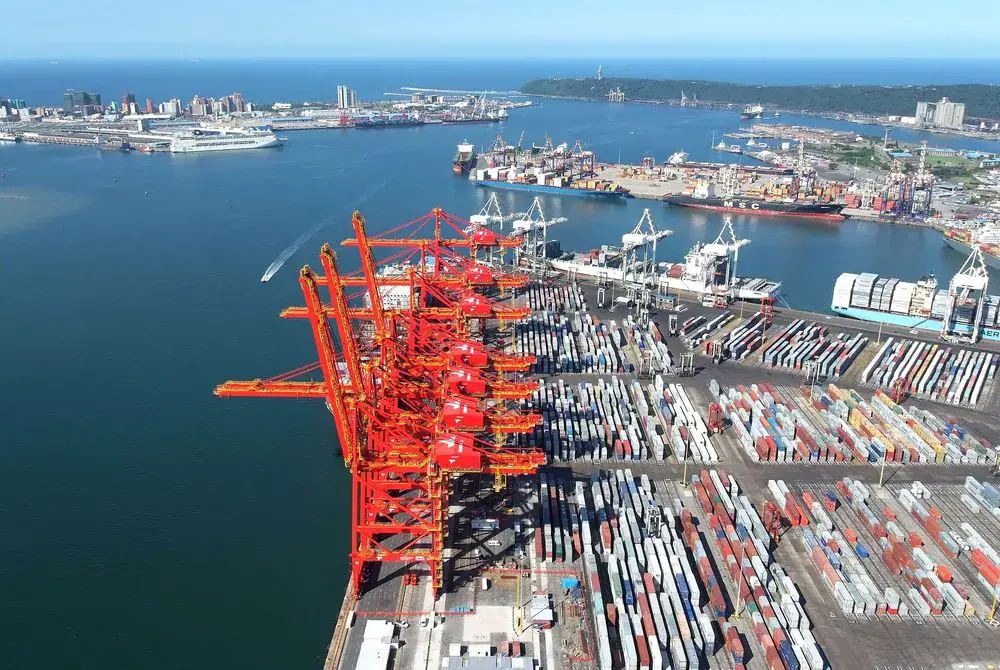
Delays at the Port of Durban are placing pressure on South African manufacturers, disrupting factory production and contributing to job losses. Shipping delays of up to six weeks and container-related charges of up to R17,500 per day are affecting businesses. Cables 4 Africa CEO Andre Smith warned that persistent port inefficiencies are undermining local manufacturers' ability to maintain continuous production, driving up operating costs.
The port congestion is causing significant delays in container discharge, with times increasing from three days to between seven and 14 days. This has resulted in businesses being exposed to mounting storage charges, production stoppages, and cash flow pressures. Smith cited an instance where a vessel docked six weeks late, causing stock scheduled to arrive in September to arrive in mid-October.
The delays are also affecting the wider supply chain, with businesses and industries reliant on imports and exports being impacted. Deneys' head of transport, Malcolm Hartwell, noted that delays of up to six weeks are affecting traders' cash flow and customers' operations. This problem is not limited to seasonal importers and exporters facing Christmas deadlines.
The Port of Durban congestion is becoming a broader threat to South Africa's manufacturing competitiveness. Dr Simphiwe Madikizela, a senior lecturer at Unisa's Graduate School of Business Leadership, warned that port problems are affecting industries beyond shipping and logistics, impacting local manufacturing companies' productive capacity, operational efficiency, and competitiveness.
The situation is further complicated by cable theft and imports of inferior products, which are disrupting production and raising costs. Smith called for reliable electricity, more efficient ports, stronger action against non-compliant imports, and measures to tackle syndicate theft. Local cable production is crucial, particularly in service-critical industries such as solar and green-energy.
In response to the congestion, Transnet and Durban Gateway Terminal (DGT) have announced measures to address the issue. DGT will receive 12 Konecranes hybrid straddle carriers as part of an equipment modernisation programme aimed at improving reliability, productivity, and reducing fuel use and emissions.
The investment in new equipment is expected to support more reliable container handling and improve operational efficiency. DGT chief executive Javier Lancha emphasised that improving operational efficiency and safety is a priority. The hybrid straddle carriers will enable the terminal to stack containers up to four high and are expected to be the terminal's first hybrid straddle carriers.
Key points
- Delays at the Port of Durban are causing significant losses for businesses, with container charges of up to R17,500 per day.
- The port congestion is threatening South African manufacturing competitiveness and affecting industries beyond shipping and logistics.
- Measures are being implemented to address the congestion, including the introduction of new equipment to improve reliability and productivity.