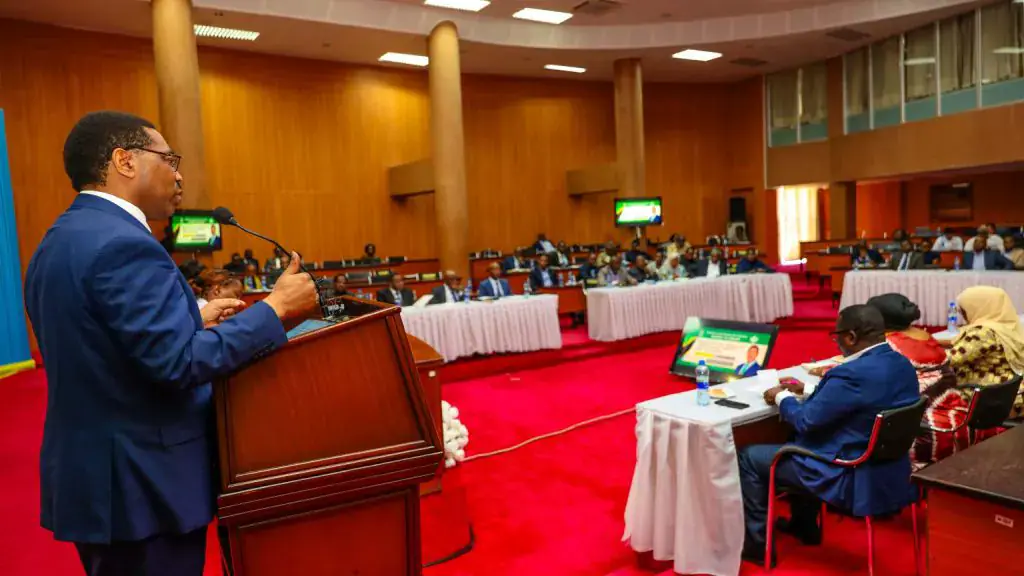
On November 28, 2026, in Dodoma, Prime Minister Dkt. Mwigulu Nchemba addressed a working session of regional leaders on clean cooking energy. He emphasized the importance of their role in implementing the National Clean Cooking Energy Strategy, which aims to increase the use of clean energy for cooking. As a key link between the central government and citizens, regional leaders are crucial in driving this agenda forward.
Despite significant efforts by the government to promote clean cooking energy, there is still much work to be done to ensure widespread adoption. The Prime Minister stressed that regional leaders must develop effective strategies to accelerate the use of clean energy in their areas. This includes ensuring that public institutions, such as schools, colleges, and prisons, switch to clean cooking energy.
The Prime Minister also directed regional leaders to follow up on and implement the directives issued by President Dkt. Samia Suluhu Hassan during the launch of the National Clean Cooking Energy Strategy on May 8, 2024. This involves monitoring progress and evaluating the implementation of these directives to avoid repetitive but unimplemented resolutions.
The Deputy Minister of Energy, Salome Makamba, reported that the government is implementing the 2024-2034 National Clean Cooking Energy Strategy. The goal is for 80% of Tanzanians to use clean cooking energy by 2034, with a target of 35% by December 2026. She commended regional leaders for their efforts and encouraged all stakeholders to collaborate with the government in implementing the strategy.
According to the Permanent Secretary of the Ministry of Energy, Felchesmi Jossen Mramba, the use of clean energy in Tanzania has increased from 6.9% to 28.6%. This growth is attributed to government and stakeholder efforts to distribute 145,659 improved cookstoves and 484,410 gas cylinders. These efforts have contributed to a reduction in deaths related to non-clean energy use from 33,000 to 19,000 per year.
The Permanent Secretary emphasized that regional leaders have a vital role in achieving the national goal of clean cooking energy. Their responsibilities include prioritizing clean energy, coordinating stakeholders, and overseeing public awareness campaigns. By doing so, they can help reduce health, environmental, and economic impacts associated with traditional cooking methods.
The efforts to promote clean cooking energy are yielding positive results, with regions like Dodoma receiving 19,530 gas cylinders and 10,660 improved cookstoves in 2025. The Dodoma Regional Commissioner, Rosemary Senyamule, announced plans for a clean energy campaign, scheduled for the following Saturday, to further educate and encourage citizens to adopt clean cooking energy.
Key points
- The Prime Minister of Tanzania has urged regional leaders to accelerate the implementation of the National Clean Cooking Energy Strategy to increase the use of clean energy for cooking.