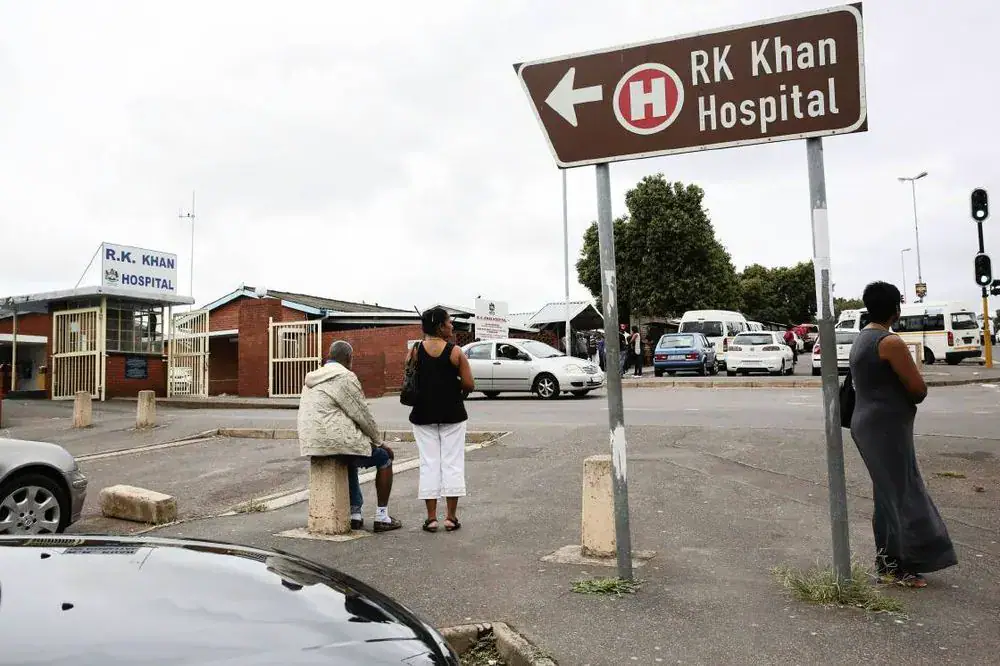
RK Khan Hospital in Chatsworth, South Africa, was once a beacon of hope for accessible healthcare, offering quality medical attention to ordinary people. When it opened in March 1969, the hospital respected the dietary beliefs of the Indian community it served, ensuring no beef or pork was served. This was a firm expression of respect for the Hindu and Muslim communities. The hospital was built to serve 100 000 people in the Chatsworth area.
The hospital was established with the help of Advocate Rahim Karim Khan, a prominent philanthropist who left his estate to support Indian medical relief. The Trust he established put up half the initial capital cost of constructing the hospital's core block, with the provincial health department footing the balance. When the hospital opened, it had a full-time medical staff of 26, a part-time medical staff of eight, seven full-time specialists and seven part-time specialists, and a nursing staff of 377.
In its early years, RK Khan Hospital was spoken of with pride. Its wards were remembered for their cleanliness, its nurses for their dedication, its doctors for their professional competence, and its management for keeping the institution running efficiently. Patients could expect to be treated with dignity, and nursing was regarded as a vocation. Cleanliness was not an optional extra but an essential part of patient care. The hospital also had a nurses' training college that took in 90 student nurses each year.
However, the hospital now faces allegations of staff shortages, poor sanitation, and medicine shortages. There are reports of patients having to rely on family members to bring clean sheets and pillows from home. The condition of some toilets, with persistent foul odours, points to worrying shortcomings in sanitation. Medical equipment is either in critically short supply or frequently out of order. Essential items such as blood-pressure monitors and blood-glucose testing machines have to be shared between wards.
The hospital is also grappling with a serious shortage of essential medicines. Even medication for chronic conditions such as hypertension and diabetes is not always readily available. Patients who depend on these drugs to manage their conditions are sometimes left with little choice but to purchase them from private pharmacies at their own expense. This has led to concerns about the hospital's ability to provide quality care to its patients.
Former patients and staff have shared their experiences of the hospital's decline. One patient recalled attending the funerals of people who were admitted to the hospital and died four or five days later, having spent those final days waiting in a makeshift holding area for a bed in a ward, and without ever being seen by a specialist. Another patient shared that the hospital floors were once so brilliantly polished that you could practically use them as a mirror.
Despite the challenges, there are still many caring, compassionate, and knowledgeable nurses working tirelessly at RK Khan Hospital. However, their dedication is often overshadowed by the steady stream of negative reports portraying nurses as overworked, uncaring, lazy, ruthless, or incompetent, with many suffering from burnout. The hospital's decline raises questions about its ability to restore public trust and provide quality care to its patients.
Key points
- The hospital faces allegations of staff shortages, poor sanitation, and medicine shortages.
- The hospital's decline has led to concerns about its ability to provide quality care to its patients.
- Despite challenges, many nurses remain dedicated and compassionate.