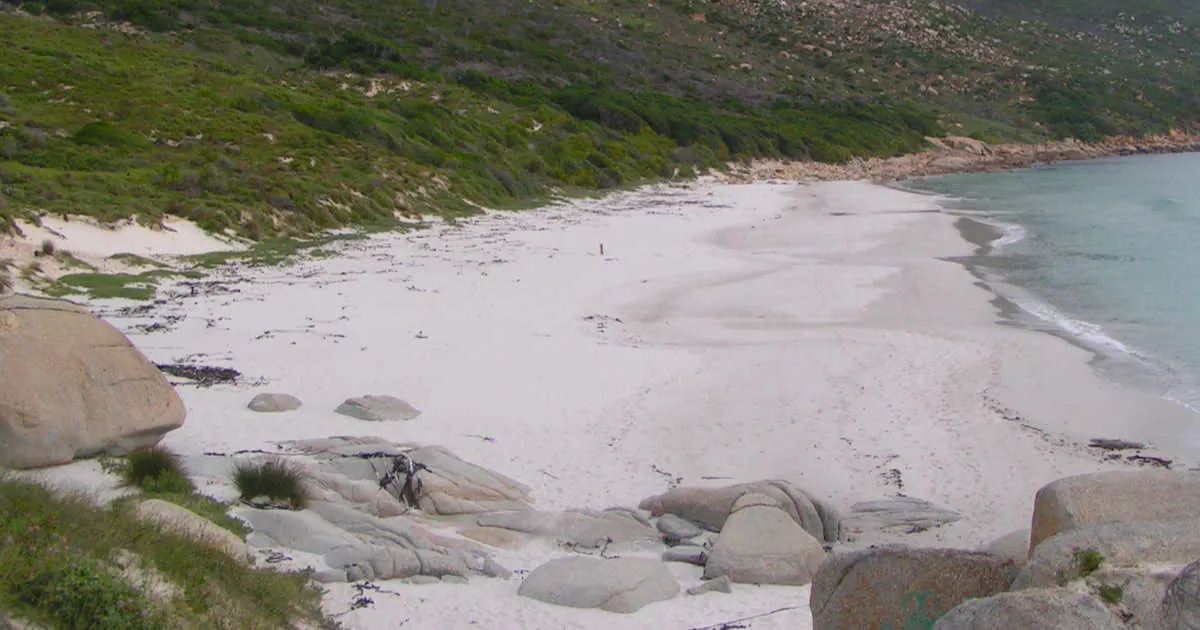
Cape Town's Sandy Bay, a world-famous beach and popular gathering place for gay men, has been targeted in a campaign to crack down on nudity. New signs have been erected warning beachgoers that nudity and "sexual misconduct" are prohibited, with those caught potentially facing fines. The Llandudno Community Improvement District and residents of Kronenzicht funded the signage, with support from SANParks and City of Cape Town Councillor Cameron Patrick.
The beach has for decades been widely known as an unofficial Cape Town nudist beach, with a history as a queer space dating back to the 1970s. It has gained international recognition as one of the world's top gay-friendly beaches, forming part of the city's queer heritage. However, local residents are pushing back against a campaign to have the beach declared an official nudist beach.
In March, a petition was launched on Change.org urging authorities to formally designate Sandy Bay as a regulated naturist beach. However, SANParks responded that "Sandy Bay Beach forms part of Table Mountain National Park and is not, and has not been, formally designated as a naturist beach." The campaign has brought renewed attention to the long-standing tension between Sandy Bay's unofficial history as a nudist beach and the rules governing the area.
The Hout Bay Community Crime Prevention group claimed that the new signs are "another positive step in the ongoing work to make Sandy Bay a safer and more welcoming place for everyone." They argued that the beach should be accessible to all, and that naturists should have reported incidents of group orgies, underage sex, and drug use in the area. The group also plans to install "very high-tech camera systems" to track individuals entering and leaving the area.
However, not everyone agrees with the crackdown on nudity. Comedian and influencer Anton Taylor spoke out against the efforts, arguing that "none of this is harming anybody." He noted that visitors to the beach must hike to get there, and that "nobody is being exposed against their wishes." Taylor questioned the use of drones, suggesting they could be used more effectively elsewhere in Cape Town.
The use of drones to monitor the beach has been met with skepticism, with Taylor arguing that they could be used to address more pressing issues in Cape Town, such as gang violence and gender-based violence. The drones are part of a broader effort to enforce the rules at Sandy Bay, which has been a source of controversy in recent months.
The debate over Sandy Bay's status as a nudist beach is ongoing, with different groups holding competing views on the issue. While some argue that the beach should be protected as a queer space, others believe that it should be subject to the rules governing Table Mountain National Park. The issue remains a contentious one, with no clear resolution in sight.
Key points
- The use of drones to monitor Sandy Bay has sparked controversy.
- The beach has a long history as a queer space and unofficial nudist beach.
- There are competing views on whether Sandy Bay should be designated as an official nudist beach.