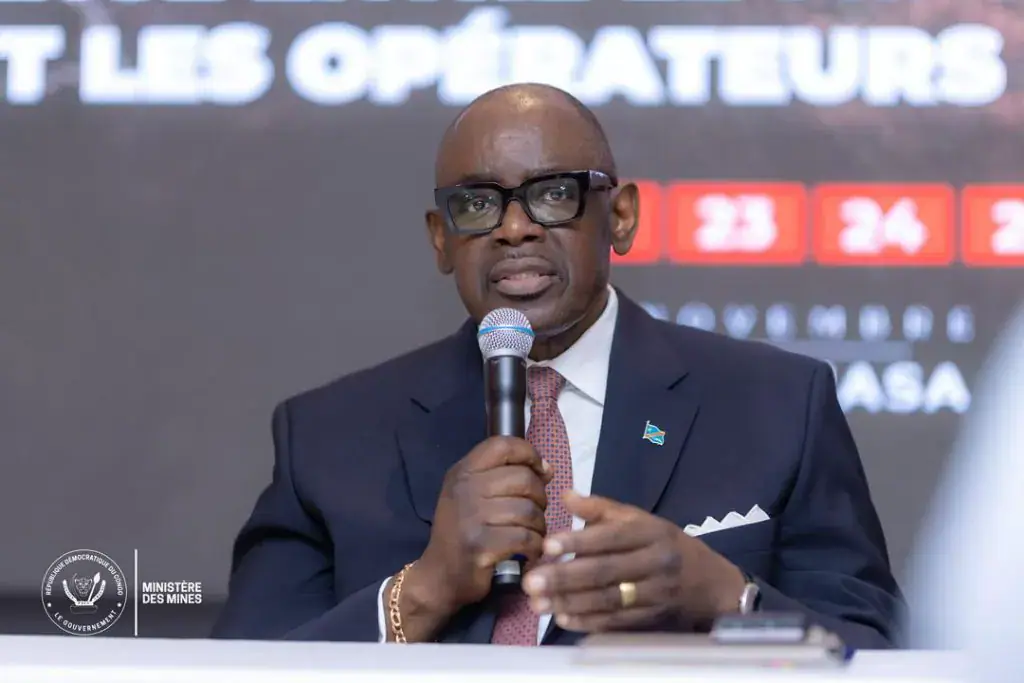
The Democratic Republic of Congo's Minister of Mines, Louis Watum, has announced that state-owned mining company Gécamines aims to commercialize 300,000 tonnes of copper by 2026. This ambitious target was revealed during the opening of Makutano Mining 2026 in Kinshasa, where Watum emphasized the need for the country to move beyond mere extraction and instead focus on producing, transforming, and marketing its natural resources.
Watum's vision for the Congolese mining industry is centered around creating a more diversified economy that can add value to its natural resources. He lamented that for too long, the DRC has been crucial to global industries without reaping the full benefits of its contributions. The minister's goal is to transition the country from being merely a supplier of raw materials to a key player in the global mineral economy, capable of influencing the entire value chain.
The DRC's strategic position in the global mineral market, particularly in the context of growing competition between the US, Europe, and China, makes it an attractive partner for investors. Watum highlighted a strategic partnership agreement between Kinshasa and Washington as an example of the country's increasing importance. However, he stressed that this international attention should not only boost the country's profile but also contribute to its economic sovereignty and improve the livelihoods of its citizens.
A key aspect of Watum's strategy is the revitalization of Gécamines, which he envisions as a champion industrial player rather than just a passive shareholder in mining projects. The company must regain its productive capacity, strengthen its marketing channels, and rebuild an integrated value chain. The commercialization of 300,000 tonnes of copper by 2026 is seen as a crucial milestone in this process.
Watum's ambitions for the Congolese mining sector require a collective effort from the government, private investors, and public enterprises. He called for a collaborative approach, where the state provides stability and confidence, the private sector invests and innovates, and public companies focus on performance and responsibility. Ultimately, the goal is to ensure that every tonne of minerals extracted contributes to employment, industrialization, and the prosperity of the Congolese people.
The DRC's mining industry has long been dominated by the extraction of raw materials, with limited value addition taking place within the country. Watum's vision is to change this narrative, leveraging the country's natural resources, human expertise, and international partnerships to drive industrial growth. The success of this strategy will depend on the ability of various stakeholders to work together and translate economic ambitions into tangible results.
The recent taxation of mining by-products has already yielded significant results, with the Congolese Treasury collecting approximately $6.9 million in revenue over a 30-day period. This development highlights the potential for the mining sector to contribute substantially to the country's economy, beyond the traditional focus on major minerals like copper and cobalt.
Key points
- The DRC aims to commercialize 300,000 tonnes of copper by 2026 through Gécamines.