Democratic Republic of Congo Minister of State for Social Affairs, Humanitarian Action, and National Solidarity, Ève Bazaiba, has emphasized the need to address the root causes of the country's humanitarian crisis. Speaking at a session of the World Food Programme's Board of Directors in Rome, Italy, Bazaiba highlighted the devastating impact of ongoing conflict in eastern DRC on the humanitarian situation. She noted that 28 million Congolese people currently require food assistance.
Bazaiba attributed the worsening humanitarian crisis to the Rwandan aggression in eastern DRC, perpetrated through its proxies, the FRN, ex-AFC/M23. These groups continue to occupy large areas of North Kivu and South Kivu provinces. The minister stated that the humanitarian response must not be limited to providing assistance to affected populations but also address issues of peace and security. She stressed the importance of an approach that integrates humanitarian, peace, and security concerns.
The minister cited data from the United Nations, revealing a significant increase in the number of people requiring humanitarian assistance. On December 1, 2025, 14.9 million Congolese people needed help, but this number rose to 28 million following renewed hostilities by Rwandan forces in Uvira. Bazaiba also pointed to the activities of the ADF, which continue to expand their influence in DRC, and the Mbororo phenomenon as factors contributing to the deteriorating humanitarian situation.
Bazaiba emphasized that a holistic approach is necessary to address the complex humanitarian crisis in DRC. She called for action on multiple fronts, including humanitarian, diplomatic, and security efforts. The minister highlighted DRC's potential in agriculture, climate, and energy sectors, which could be leveraged to address global challenges. However, she noted that insecurity hampers the country's ability to tap into these opportunities.
The minister urged the international community to support DRC's efforts to achieve peace and stability. She stressed that if DRC is at peace and developed, it would have a positive impact on its nine neighboring countries. Bazaiba also emphasized the need for a global response to the humanitarian crisis, involving humanitarian, diplomatic, and security actors.
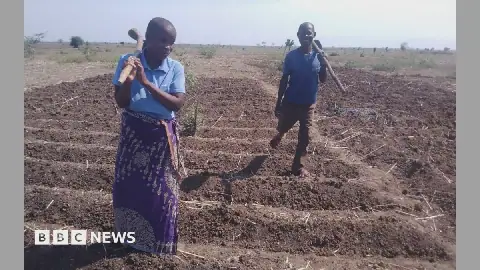
Bazaiba highlighted DRC's potential to contribute to global solutions on climate change, ecological transition, and energy transition. She noted that the country's 80 million hectares of arable land could be used to address global hunger. However, she emphasized that insecurity and terrorist groups hinder the country's ability to utilize these resources effectively.
In conclusion, Bazaiba called for a comprehensive approach to address the humanitarian crisis in DRC. She emphasized that humanitarian efforts must be accompanied by diplomatic and security efforts to address the root causes of the crisis. The minister's statement underscores the need for a sustained international commitment to support DRC's efforts to achieve peace, stability, and development.
Key points
- DRC Minister of State Ève Bazaiba calls for international community to address root causes of humanitarian crisis.