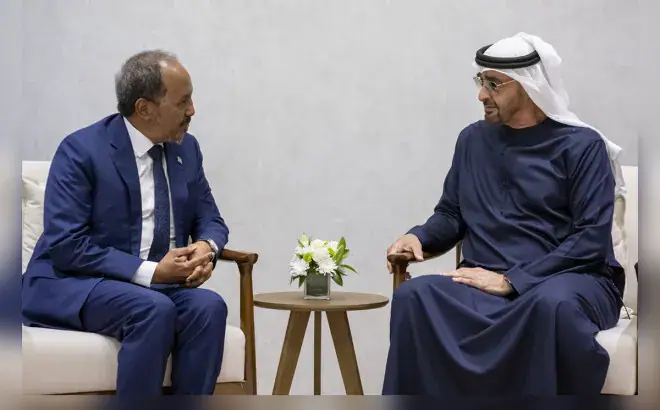
Somalia's federal government has accused the United Arab Emirates of interfering in the country's internal affairs, undermining national unity and sovereignty. In a statement issued on November 18, the Ministry of Foreign Affairs expressed serious concern over the continued Emirati interference. The government demands that Abu Dhabi conduct all diplomatic and security engagements through Mogadishu. This development escalates tensions between the two nations.
The Somali government reaffirmed that it is the sole authority responsible for Somalia's foreign relations and rejected foreign security arrangements made without its approval. The Ministry of Foreign Affairs stated that Somalia reaffirms its rejection of any foreign engagement or parallel security arrangement that bypasses the Federal Government. This stance is based on the United Nations Charter and international law.
President Hassan Sheikh Mohamud previously accused the UAE of providing political, financial and security support to regional administrations and armed groups that undermine Somalia's unity. He criticized agreements involving the UAE and the administrations of Somaliland, Puntland and Jubaland, particularly arrangements concerning strategic ports. The president argued that such agreements must be negotiated through the federal government.
The UAE's diplomatic adviser, Anwar Gargash, responded to President Mohamud's remarks, accusing him of prioritizing personal political interests over Somalia's national interests. Gargash defended the UAE's longstanding relationship with Somalia and warned that domestic political rivalries should not draw the country into wider regional disputes. The public exchange between officials in Mogadishu and Abu Dhabi has intensified.
Despite growing tensions, Somalia's Foreign Ministry emphasized that its objections are directed at the UAE government's policies, not the Emirati people. The government warned that it will pursue lawful measures to defend its sovereignty, territorial integrity and national unity. The ministry did not specify what additional measures it intends to take or whether further diplomatic restrictions against the UAE are being considered.
The latest confrontation follows Somalia's January decision to terminate agreements with the UAE covering security, defense and economic cooperation. The dispute has intensified amid political disagreements between Mogadishu and several regional administrations over constitutional amendments, power-sharing and the country's electoral process. The UAE maintains economic and security relationships with Somaliland and other Somali regional authorities.
Somalia's Foreign Ministry has given the UAE ambassador 72 hours to leave the country. The government remains resolute in its stance, citing the need to protect national unity and sovereignty. The situation remains volatile, with potential implications for regional stability.
Key points
- Somalia accuses UAE of interfering in internal affairs, undermining national unity and sovereignty.
- Somali government demands UAE conduct diplomatic and security engagements through Mogadishu.
- Somalia terminates agreements with UAE covering security, defense and economic cooperation in January.