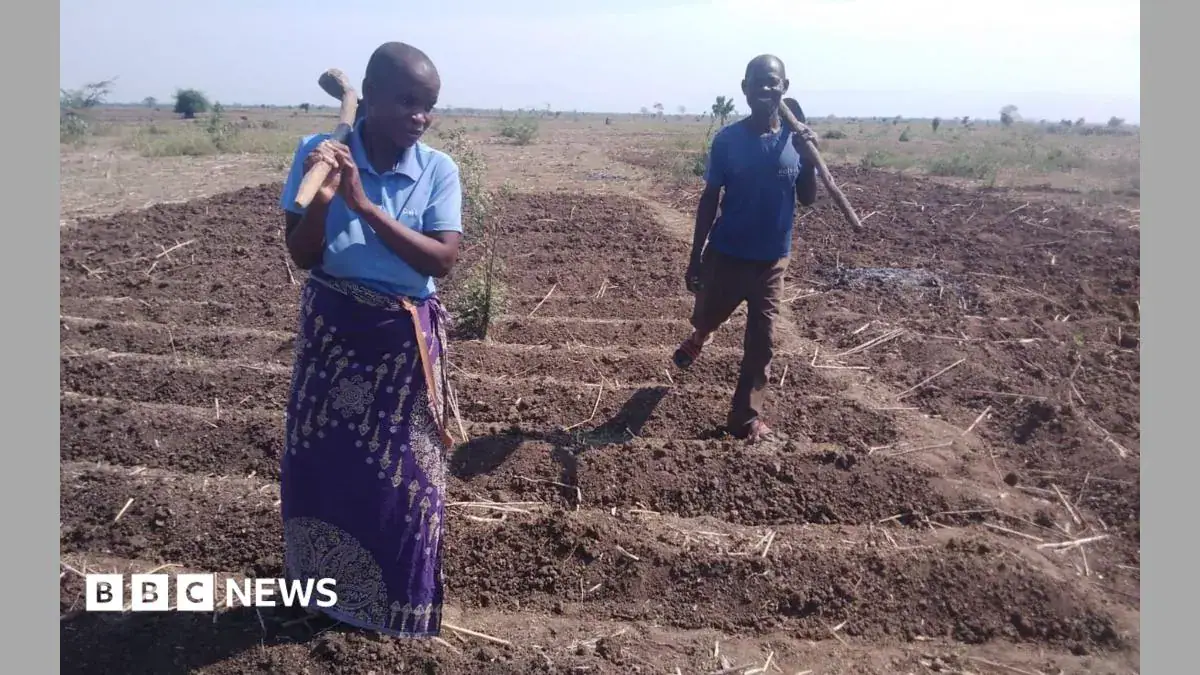
Severe drought in Uganda's Karamoja region has left Elijah Lobur and his family struggling to access food, with the 44-year-old farmer noting that seven months without rain have led to widespread hunger. Local officials report that over 90% of crops in the region have failed due to the drought, which has also affected wild plants that the family relied on for food. The region's agriculture heavily depends on rainfall, and the lack of it has had devastating effects.
In Malawi, Mathews Nkhambala faced devastating flooding after Tropical Cyclone Freddy hit the region last year, and floods again struck the Chikwawa district in April 2024, forcing him to flee with his family. He lost a harvest of 15 bags of sorghum, part of his farmland, and his children were traumatized, refusing to go to school for months. Nkhambala now faces another challenge: a lack of rain, which may affect his harvest and livelihood. His situation highlights the vulnerability of communities in Malawi to climate-related disasters.
A government assessment after Cyclone Freddy revealed that Malawi had suffered more than 50 climate-related disasters since 1980, impacting millions of people. Both Uganda and Malawi are grappling with the consequences of climate change, with their governments seeking help to adapt to changing weather patterns. However, they are among 23 African countries yet to submit National Adaptation Plans (NAPs) to the UN climate convention, which outline how they are affected by climate change and the assistance they require.
Experts warn that without these plans, obtaining funding will be challenging. Milton Lorpia from the Warrior Squad Foundation in Karamoja stated that a plan would have helped the region tackle climate impacts. The lack of NAPs in these countries may hinder their ability to access climate funding, exacerbating the effects of climate change on their communities. Climate change has had a significant impact on Uganda and Malawi, and a plan would help them mitigate its effects.
The effects of climate change are being felt across Africa, with many countries experiencing severe weather events. The situation in Uganda and Malawi highlights the need for climate resilience and adaptation plans to mitigate the impacts of climate change. African countries must develop and implement these plans to access funding and support, which will help them address the challenges posed by climate change.
The international community has emphasized the importance of climate adaptation and resilience in Africa. European advocates have suggested utilizing existing commitments to increase climate funding for Africa. However, the lack of NAPs in many countries may hinder their ability to access this funding. African countries must prioritize the development and implementation of these plans to address the challenges posed by climate change.
The situation in Uganda and Malawi serves as a reminder of the urgent need for climate action in Africa. The development and implementation of National Adaptation Plans can help countries access funding and support, which will enable them to mitigate the effects of climate change. By working together, African countries and the international community can address the challenges posed by climate change and build a more resilient future for the continent's communities.
Key points
- 23 African countries, including Uganda and Malawi, lack National Adaptation Plans, hindering their access to climate funding.
Reporting sources
- COP31: Increased climate funding for Africa? Europe advocates utilising existing commitments. · sierraleonetoday.co.com