The incident, known as the "Major Kalume affair," occurred on March 18, 1978, when 13 young officers, including Major Kalume Kahamba, were executed by firing squad in Kinshasa. The officers, mostly graduates of the Belgian Royal Military Academy, were accused of plotting to overthrow the government of President Mobutu Sese Seko. The alleged plot was uncovered in February 1978, and the officers were arrested and put on trial.
According to reports, Major Kalume Kahamba, who was the secretary particular of General Norbert LIKULIA BOLONGO, the military auditor general of the Forces Armées Zaïroises (FAZ), had met with members of the opposition party, Mouvement d'Action et de Résistance du Congo (MARC), while on a mission in Europe in 1976. He was accused of receiving money from the opposition party to recruit other military personnel and execute a plan to destabilize the government.
The trial, which took place from March 8 to 16, 1978, was widely criticized for being a parody of justice. Many of the accused were tortured and coerced into making confessions, and the prosecution's evidence was largely based on a list of people who had attended a funeral and made donations to a memorial fund. The court-martial, composed of senior military officers, including General LIKULIA BOLONGO, found 78 of the 91 accused guilty and sentenced 13 to death.
The executions were carried out on March 18, 1978, and were widely condemned by human rights groups and the international community. President Mobutu Sese Seko justified the executions, stating that they were necessary to maintain order and stability in the country. The incident marked a low point in the Mobutu regime's human rights record and had a profound impact on the country's military and politics.
In the aftermath of the executions, the government confiscated the property of the condemned officers, including their homes and other assets. The incident also led to the dismissal of 752 officers and non-commissioned officers from the military, including several high-ranking officers. The "Major Kalume affair" remains a dark chapter in the history of the Democratic Republic of Congo.
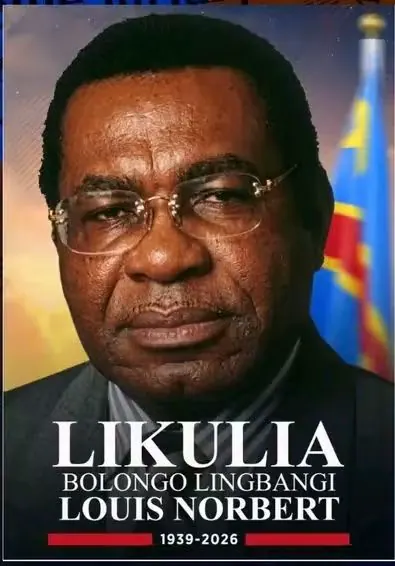
General Norbert LIKULIA BOLONGO, who played a key role in the trial and execution of the 13 officers, later fled to Brazzaville, Republic of Congo, in 1997, after the fall of the Mobutu regime. He had served as the last prime minister of the Mobutu regime and had been accused of various human rights abuses during his tenure. The legacy of the "Major Kalume affair" continues to be felt in the Democratic Republic of Congo, with many calling for greater accountability and justice for the victims and their families.
Key points
- 13 young officers were executed in 1978 for their alleged involvement in a plot to destabilize the government of President Mobutu Sese Seko.