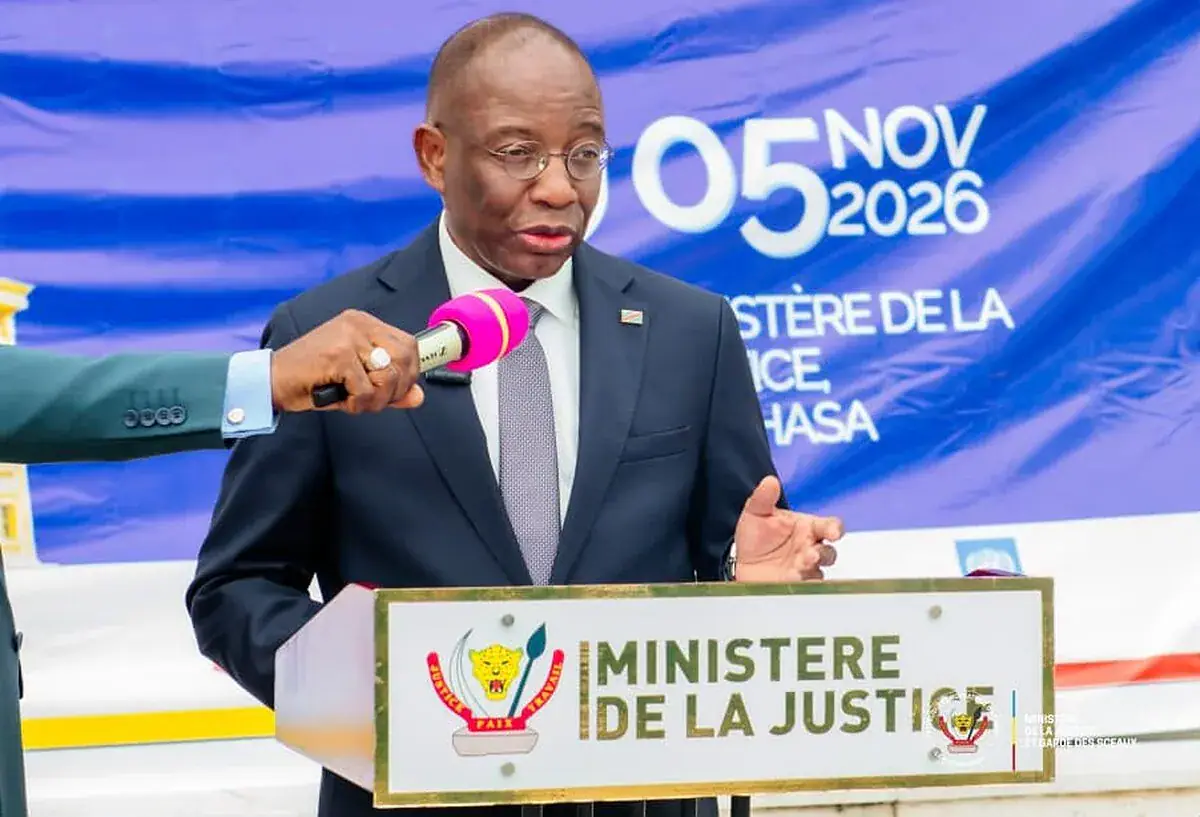
The Democratic Republic of Congo has taken a significant step towards modernizing its judicial system with the launch of digital reforms by Justice Minister Guillaume Ngefa. The reforms aim to increase transparency and accountability in the collection of judicial revenues and improve the monitoring of detainees. On November 5, 2026, in Kinshasa, Minister Ngefa introduced two new systems: the digitalization of judicial revenues and the interconnection of judicial and penitentiary institutions.
The digitalization of judicial revenues seeks to eliminate parallel collections that escape state control. Minister Ngefa emphasized that judicial revenues must be public resources, not private ones, and that they should be tracked and recorded transparently. The new system will enable users to know the official amount to pay and obtain a reliable proof of transaction. This move is expected to reduce corruption and ensure that the Treasury receives the resources it is legally entitled to.
In addition to financial reforms, Minister Ngefa's initiative aims to address administrative inefficiencies that can infringe on individual liberties. The interconnection of courts, prosecutors, registries, and penitentiary establishments will provide judicial authorities with up-to-date information on detainees' legal situations. This will help prevent individuals from being held in prison due to poorly transmitted files, unexecuted decisions, or lack of administrative follow-up.
The modernization effort also includes the digitalization of nationality certificate issuance, which will reduce delays, limit fraud risks, and secure payments. The first digital nationality certificate was issued, and the interconnection of penitentiary registries at Makala Central Prison was demonstrated. These developments mark a significant step towards a more efficient and transparent judicial system.
To ensure the effectiveness of these systems, Minister Ngefa called on magistrates, registrars, and administrative agents to use them with rigor and integrity. He also announced training, monitoring, and evaluation of results to support users. The technology is not meant to replace judicial actors but to reinforce their professional obligations.
The initiative has received support from international partners, including the European Union and the United Nations Development Programme (UNDP). The EU ambassador, Douglas Darius Carpenter, praised the effort to consolidate the rule of law and improve the functioning of courts and penitentiary services. UNDP representative Kamil Kayode symbolically handed over computer equipment to Minister Ngefa, highlighting the importance of digitalization in modernizing the Congolese judicial system.
The government aims to transform these digital tools into concrete results, including reducing corrupt practices, ensuring better management of public resources, and protecting citizens' liberties. The success of these reforms will depend on the effective implementation and use of the new systems. Key stakeholders will monitor progress and assess the impact of these digital reforms on the Congolese judicial system.
Key points
- DR Congo's Justice Minister Guillaume Ngefa has launched digital reforms to curb corruption and protect detainees' rights.
- The reforms include the digitalization of judicial revenues and the interconnection of judicial and penitentiary institutions.
- The initiative aims to increase transparency, accountability, and efficiency in the judicial system.