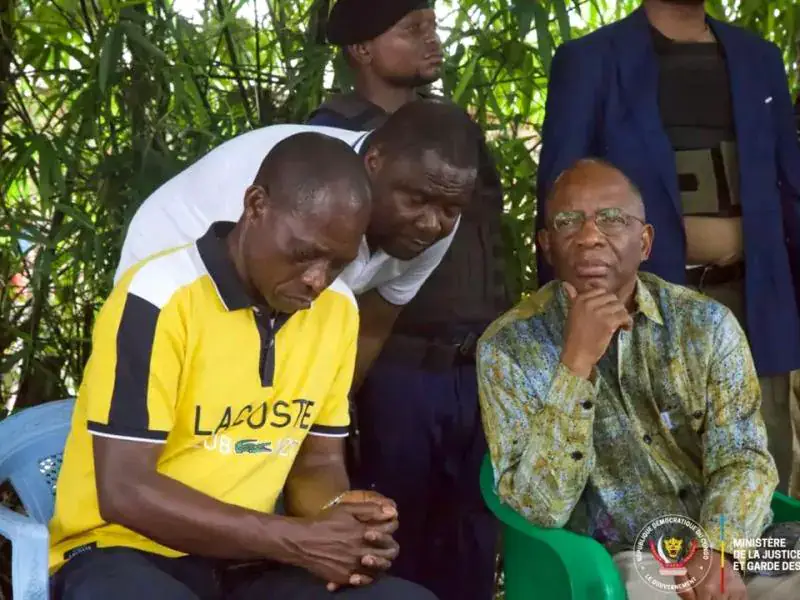
Democratic Republic of the Congo's Minister of Justice, Guillaume Ngefa, recently visited Kikwit in the Kwilu province, where he was met with the harsh realities faced by the local judicial institutions. The minister's tour aimed to assess the situation on the ground and identify areas that require government intervention. During his visit, Ngefa witnessed firsthand the challenges faced by the judiciary, including worn-out infrastructure, insufficient resources, and precarious archives.
At the Tribunal de grande instance and the Parquet de grande instance, officials highlighted the dire state of the infrastructure, citing cramped offices and a lack of operational resources. The president of the Tribunal for children, Viviane Nkiama Dienze, advocated for the construction of a suitable building for this specialized jurisdiction. The minister also examined the state of judicial archives, where files dating back to 1972 are stored in precarious conditions.
The visit also revealed that the Tribunal de paix is currently operating in rented premises, following an arson attack on the old building during the 2018-2019 post-election unrest. The minister acknowledged the risk of the tribunal being evicted and noted the possibility of rehabilitating the old building as part of the government's action plan. Furthermore, the military justice system faces significant challenges, including a lack of logistical resources, equipment, and operational funds.
The military justice system in Kikwit has fifteen magistrates covering a vast territorial jurisdiction, but it struggles with inadequate resources. During discussions with Colonel Jerry Ilepa Nkota Mpia, the military auditor general of the former Bandundu region, the need for improved logistical support and equipment was emphasized. The minister's visit also included meetings with local authorities, such as Kikwit's mayor, Lula Musuy Charlotte, and the interim commander of the 11th military region, General Richard Moyo Rabbi.
The minister's tour is part of a broader effort to address the issue of "judicial desert," characterized by the concentration of judicial institutions in major urban centers, leaving many remote areas underserved. Ngefa stated that his mission aimed to confront the perception of justice with the reality experienced on the ground. The visit also highlighted the need for the government to take concrete actions to address the challenges faced by the judicial institutions in Kikwit.
During his visit, Minister Ngefa also announced the government's plan to conduct a census of state properties that have been illegally occupied. This move is expected to help recover state assets and improve the overall efficiency of the judicial system. Additionally, the minister's visit led to the release of 11 detainees from the local prison, highlighting the need for judicial reform and improved access to justice.
The challenges faced by the judicial institutions in Kikwit are a microcosm of the broader issues affecting the DR Congo's justice system. Minister Ngefa's visit has brought attention to these issues, and the government is expected to take concrete actions to address them. The situation in Kikwit underscores the need for sustained efforts to improve the justice system and ensure that it is accessible and effective for all citizens.
Key points
- DR Congo's Justice Minister Guillaume Ngefa visits Kikwit to assess the challenges faced by local judicial institutions.
- The minister identifies worn-out infrastructure, insufficient resources, and precarious archives as major concerns.
- The visit aims to address the issue of "judicial desert" and improve access to justice in remote areas.