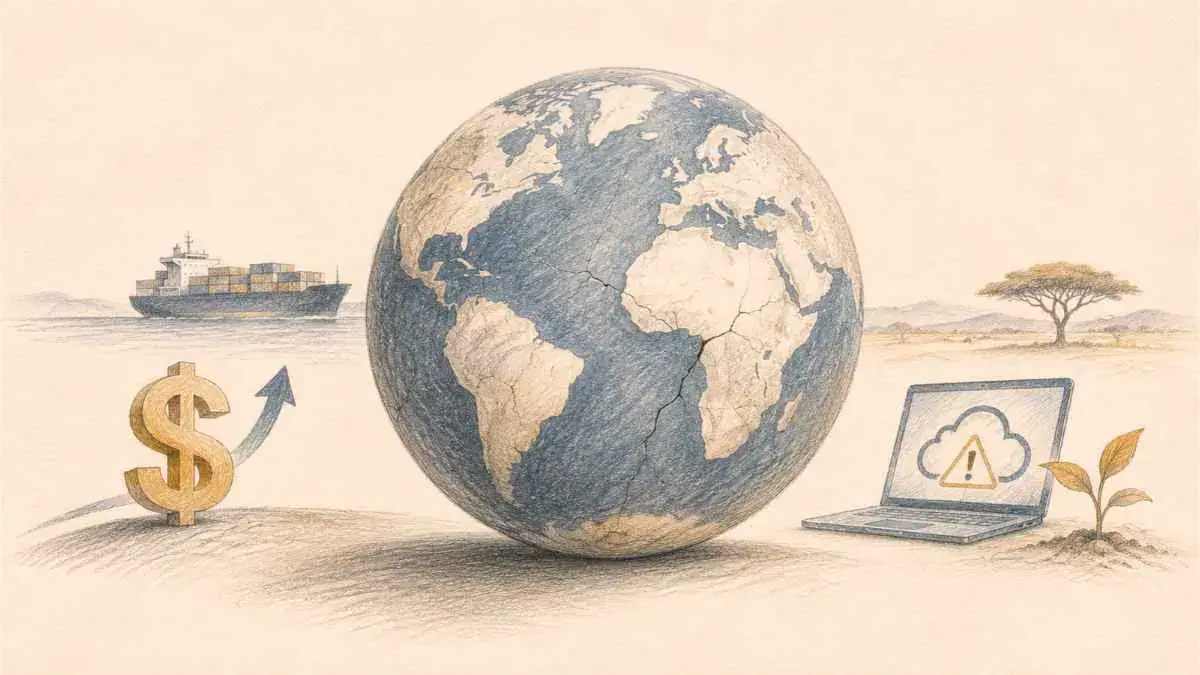
The global economy is facing a complex landscape, with multiple risks converging, including a rising US dollar, trade tensions, and climate financing challenges. The strengthening dollar has led to higher borrowing costs, impacting economies worldwide. This shift has significant implications for governments and businesses, which must now prioritize preserving their capacity for action over sustaining growth. The current situation demands urgent choices to mitigate these risks.
The recent surge in US interest rates has triggered a rise in bond yields, making financing more expensive. This change has far-reaching consequences, affecting not only financial markets but also the real economy. The slowdown in the US and UK real estate markets illustrates the impact of higher credit costs on access to housing. As monetary conditions tighten, the effects on the broader economy become more pronounced. The interplay between financial markets and the real economy has become increasingly evident.
Trade tensions have added another layer of complexity to the global economy. Geopolitical tensions have led to sanctions, tariff threats, and controls on critical industries, such as semi-conductor production in Malaysia. This new reality means that businesses must now consider not only costs and market access but also technological, regulatory, and geopolitical dependencies. The evolving landscape requires companies to adapt and develop strategies to manage these multifaceted risks.
The climate finance challenge remains a pressing concern, particularly for developing countries. At COP31 in Turkey, discussions highlighted the persistent gap between climate ambitions and financing mechanisms. Countries like India are seeking predictable commitments, while Africa requires sufficient guarantees for adaptation. In response, initiatives like Shelter Afrique's bond issuance in West Africa aim to mobilize regional markets to finance affordable housing. Innovative solutions like this are crucial to addressing the climate finance shortfall.
The digital landscape also presents both opportunities and risks. The recent Microsoft 365 outage underscored dependence on large platforms, while AI-assisted cyberespionage has increased vulnerabilities. However, satellite connectivity offers new prospects for Africa, illustrating the dual nature of digital transformation. As the global economy becomes increasingly interconnected, the distinction between economies that can manage these dependencies and those that cannot will become more pronounced.
In Tunisia, the economic situation is precarious, with a significant deficit impacting investment and, ultimately, development. The country's policymakers face difficult choices in balancing fiscal pressures with the need for economic stability. The situation highlights the challenges many countries face in navigating the complex global economic landscape. Finding a sustainable path forward will require careful consideration of both domestic and international factors.
The global economy is undergoing a transformation, with rising risks and urgent choices confronting governments and businesses. The path forward will depend on the ability of countries and companies to adapt to the changing landscape, manage dependencies, and mitigate risks. As the situation continues to evolve, one thing is clear: the global economy will require careful navigation to ensure stability and sustainable growth in the years to come.
Key points
- The global economy faces rising risks, including a strengthening US dollar, trade tensions, and climate financing challenges.
- The current situation demands urgent choices for governments and businesses to mitigate these risks and ensure sustainable growth.
- Innovative solutions, such as Shelter Afrique's bond issuance, are crucial to addressing the climate finance shortfall and promoting economic resilience.