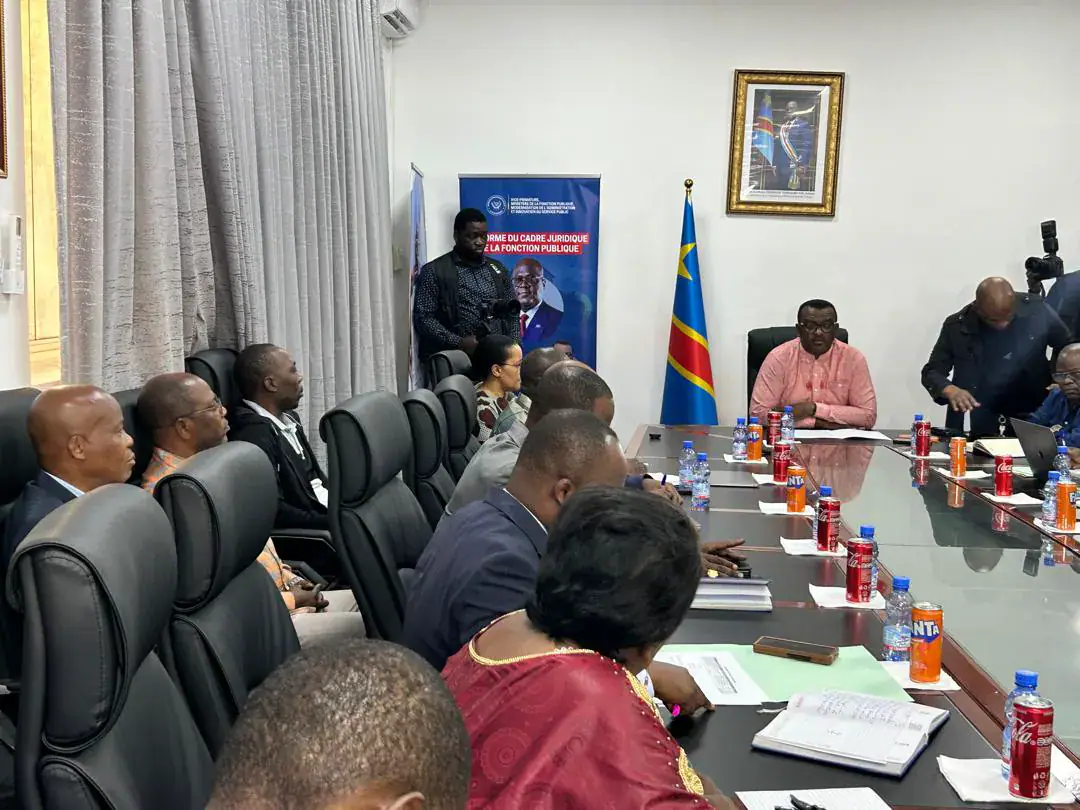
The Democratic Republic of Congo's government and public administration unions have convened in Kinshasa to discuss salary reforms aimed at reducing disparities in remuneration among state agents. The paritary commission, which met on November 6-7, produced a reference document outlining recommendations for a more equitable and harmonized remuneration policy. This policy aims to address existing salary gaps between different categories of state agents and services. The document will be submitted to the Council of Ministers for consideration.
A key focus of the discussions was the need to clean up the payroll system, rationalize bonuses, and gradually integrate technical bonuses into basic salaries. The Intersyndicale nationale de l’administration publique (INAP) noted that the final report and revised salary scales are subject to government validation and arbitration through the Council of Ministers. The commission also recommended taking into account new registered agents who have not yet been remunerated, both at the central and provincial administration levels.
The participants also called for the integration of the new salary grid into the programming of finance laws and its progressive implementation, depending on the state's budgetary capacities. This approach aims to ensure that the reforms are implemented in a sustainable and fiscally responsible manner. The recommendations formulated by the paritary commission provide concrete avenues for modernizing the public administration's salary policy and strengthening social justice within the Congolese public service.
According to Vice-Premier Minister Jean-Pierre Lihau, who is in charge of public service, the conclusions from these discussions constitute a roadmap for improving the social conditions of public agents. He emphasized that the recommendations offer concrete solutions for modernizing the salary policy of public administration and promoting social justice within the Congolese public service. The proposed reforms aim to promote a more equitable distribution of resources and improve the livelihoods of state agents.
The agreement between the government and unions marks a significant step towards addressing the longstanding issues of salary disparities and poor working conditions in the public service. The public administration has faced criticism for its opaque and often inequitable remuneration practices, which have contributed to widespread discontent among state agents. By implementing these reforms, the government hopes to improve morale and productivity within the public service.
The implementation of the new salary grid and the integration of technical bonuses into basic salaries are expected to have a positive impact on the living standards of state agents. However, the success of these reforms will depend on the government's ability to manage the associated costs and ensure that the new salary scales are sustainable in the long term. The Council of Ministers will play a crucial role in validating and implementing the proposed reforms.
The Congolese government has taken a significant step towards reforming its public service salary policy. The agreement with unions and the proposed reforms demonstrate a commitment to improving the working conditions and livelihoods of state agents. The implementation of these reforms will be closely watched by stakeholders, who hope that they will lead to improved morale and productivity within the public service.
Key points
- The DR Congo government and unions have agreed on salary reforms aimed at reducing disparities in remuneration among state agents.
- The reforms aim to promote a more equitable distribution of resources and improve the livelihoods of state agents.
- The implementation of the new salary grid and the integration of technical bonuses into basic salaries are expected to have a positive impact on the living standards of state agents.