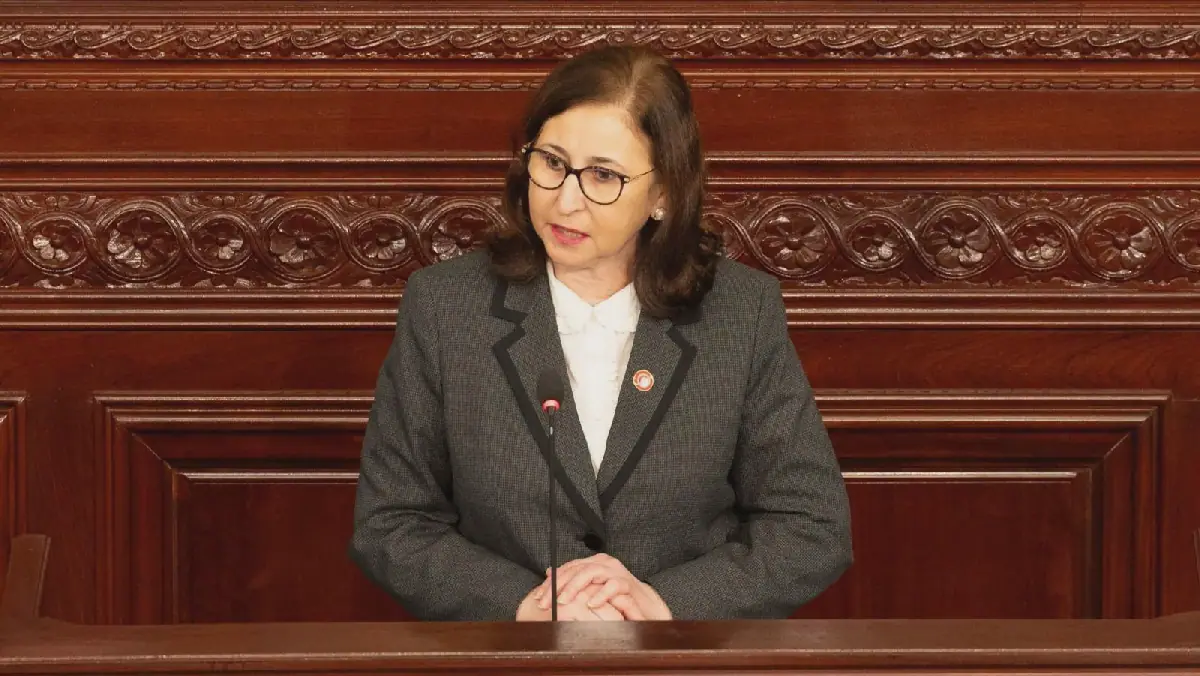
Tunisia's Prime Minister, Sarah Zafrani Znazri, announced that the country is expecting a decline in energy imports in 2027 compared to the record high in 2026. This decrease is anticipated to ease pressure on external balances, given the expected improvement in export performance, growth in tourism revenues, and continued inflows of remittances from Tunisians abroad.
According to the Prime Minister's statement on the 2027 state budget and economic plan, the current deficit is projected to decrease to 3.7% of GDP in 2027, down from 3.9% in 2026. This reduction is driven by growth in goods and services exports, tourism revenues, and sustained remittances from Tunisians abroad.
The improvement in export performance is linked to positive outcomes in several export sectors, particularly mechanical, electrical, phosphate, and agricultural industries, as well as food processing. These sectors are expected to benefit from enhanced competitiveness, particularly for products like olive oil and dates, and improved external demand.
Diversifying exports and expanding the base of exporting institutions are key priorities for the 2027 export policy, alongside efforts to enhance national economic competitiveness and access to foreign markets. The tourism sector is also expected to grow, with a 5.2% increase in value added forecasted for 2027, up from 4.9% in 2026, driven by an expected rise in foreign tourist arrivals and domestic tourism.
Tourism revenues are predicted to rise by 5.9% in 2027, compared to 5.6% in 2026. The government aims to support and modernize the tourism sector, diversify its offerings, stimulate investment, and develop infrastructure, while improving service quality, promoting digital transformation, and expanding the tourism season.
The growth of the transportation and logistics sectors, along with digital economy services, is expected to contribute to increased services exports and bolster the country's foreign exchange resources. Despite the anticipated decline in energy imports, the Prime Minister noted that the energy deficit will remain a significant pressure point on external balances due to continued reliance on imports to meet substantial domestic demand.
The forecast of decreased energy imports is based on assumptions regarding global price trends, including an oil price of $80 per barrel in the 2027 state budget. The government will continue efforts to enhance energy sovereignty, accelerate energy transition projects, develop renewable energies, and improve energy efficiency to gradually reduce dependence on energy imports and mitigate the vulnerability of the energy balance.
Key points
- Tunisia's current deficit is expected to decrease to 3.7% of GDP in 2027.
- Energy imports are forecasted to decline in 2027.
- The tourism sector is expected to grow by 5.2% in 2027.
Reporting sources
- Établissement de la Radiodiffusion-Télévision Tunisienne · Établissement de la Radiodiffusion-Télévision Tunisienne