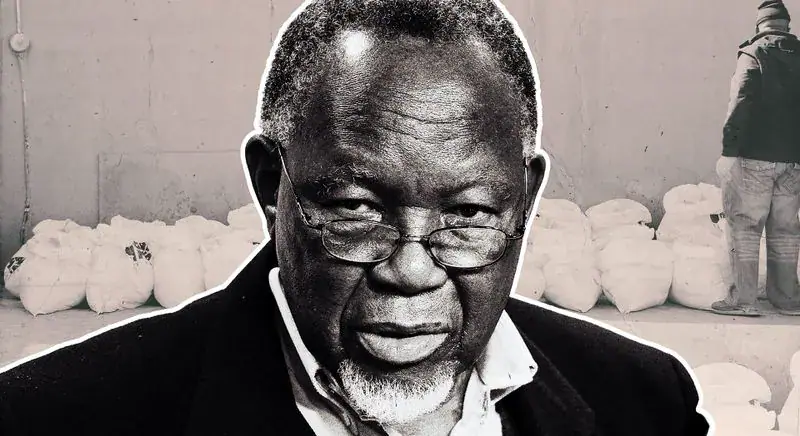
Former South African President Kgalema Motlanthe, chair of the Eastern and Southern Africa Commission on Drugs (ESACD), has called for a shift in approach to tackling the continent's illicit drug trade. Speaking at a conference in Cape Town on November 9, 2026, Motlanthe emphasized the need for law enforcers to target top traffickers instead of users, who often end up in overcrowded prisons. This approach is part of a broader effort to overhaul Africa's drug policies.
The conference, themed "rethinking current policy responses to drug use and personal possession," brought together delegates to discuss the changing illicit drug landscape. They highlighted the need for adapted policies and actions to respond to this evolving threat. The ESACD, launched in 2023, aims to support this fight by promoting a focus on traffickers rather than users. This approach has been echoed by law enforcement sources, who express concern that top traffickers, often based abroad, are not being arrested.
South Africa has become a transit, consumption, and production hub for illicit drugs, with several large methamphetamine factories linked to Mexican cartels recently uncovered. Law enforcement sources worry that police are not effectively targeting those involved in drug manufacturing, including chemical producers, transporters, and equipment suppliers. This concern aligns with the focus of the ESACD's conference, which seeks to address these issues.
Motlanthe criticized current policies, stating that they have "failed to solve the problems created by the illicit drug trade" and have "done more harm than good." He argued that punitive measures have been prioritized over harm reduction, leading to increased imprisonment of users and overcrowding in prisons. Instead, Motlanthe advocates for rehabilitation and treatment, including access to essential medicines and pain control.
The conference also heard from Acting Police Minister Firoz Cachalia, who emphasized the need for "serious responses" to tackle trafficking and the harms caused by drugs. He highlighted the importance of capable intelligence, dedicated investigations, and strong law enforcers in dismantling organized crime networks. Cachalia also acknowledged that incarceration can worsen problematic situations and that alternatives to prison terms need to be explored.
The illicit drug trade is becoming increasingly sophisticated, with cocaine trafficking becoming more prevalent in eastern and southern Africa. Monica Juma, executive director of the United Nations Office on Drugs and Crime, noted that the trade is "moving faster" and "putting down roots" in new regions. The discovery of methamphetamine factories in South Africa, linked to Latin America, points to a significant shift in manufacturing drugs on African soil.
The issue of Mexican cartels expanding into Africa was also raised, with several incidents suggesting increased activity in the region. The ESACD's efforts aim to address these challenges by promoting a more effective approach to tackling the illicit drug trade. By targeting top traffickers and providing support for users, the commission hopes to make a significant impact in the fight against drug trafficking in Africa.
Key points
- Former President Kgalema Motlanthe urges law enforcers to focus on top traffickers rather than users to effectively tackle Africa's illicit drug trade.