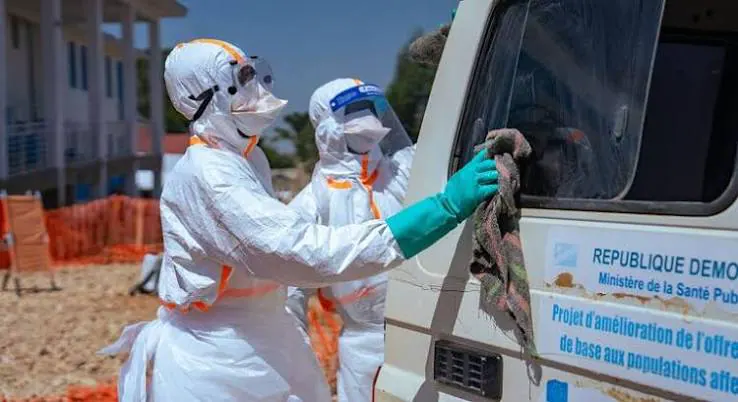
The Democratic Republic of Congo is grappling with a severe shortage of healthcare professionals to staff specialized treatment centers, the World Health Organization (WHO) warned. This shortage comes as the country battles the fastest-growing Ebola epidemic in recorded history. The epidemic has spread across seven provinces, with government figures recording 7,773 confirmed cases and 3,759 deaths.
Despite recent declines in cases in certain regions, such as Ituri province where cases dropped by 26% and Haut-Uele where cases decreased by 15% between August 31 and September 20, the outbreak remains largely out of control across a wide geographic footprint. WHO's Marie Roseline Belizaire noted that while cases and deaths are declining in some provinces, they continue to rise in others, emphasizing that the outbreak is still not under control.
The eastern province of North Kivu has experienced a sharp spike in cases, with a 73% surge over a three-week period. However, Catherine Smallwood noted that cases and deaths eventually began declining in North Kivu following weeks of increases. Health authorities are adding new treatment beds daily, but facilities still lack sufficient staff and operational partners.
Multiple compounding factors are accelerating viral transmission, including armed insecurity, widespread population displacement, massive movement, and ongoing health worker strikes. These challenges create extreme operational hurdles, and the current trajectory threatens to eclipse past historical crises. The WHO reports that this epidemic is on track to surpass the 2014-2016 West Africa outbreak, which remains the deadliest on record with over 11,000 fatalities.
Staffing shortages are crippling medical responses in active zones, with Catherine Smallwood emphasizing that the human resources gap is one of the biggest gaps. Anne Ancia outlined the massive staffing requirements for medical infrastructure, noting that a single Ebola treatment center needs approximately 300 professionals, including general practitioners, nurses, hygienists, and anesthetists.
Front-line workers previously launched strikes over unpaid wages, severely damaging patient access to care. Health Minister Roger Kamba explained that administrative delays were caused by a verification process for payroll lists after discovering ghost workers and unauthorized names added to response rosters. Frontline workers reported that officials promised to clear salary arrears, but many staff members received only partial payments while others received nothing at all.
The severe shortage of healthcare workers and the challenges faced by front-line workers have devastating consequences. The WHO and other health authorities are working to address these issues, but the situation remains critical. The outbreak highlights the need for sustained support and resources to combat the epidemic and ensure that healthcare workers have the necessary tools and compensation to effectively respond to the crisis.
Key points
- DR Congo faces a severe shortage of healthcare professionals to staff specialized treatment centers amid the intensifying Ebola outbreak.
- The epidemic has spread across seven provinces, with 7,773 confirmed cases and 3,759 deaths reported.
- The WHO warns that the outbreak is on track to surpass the 2014-2016 West Africa outbreak, which remains the deadliest on record.