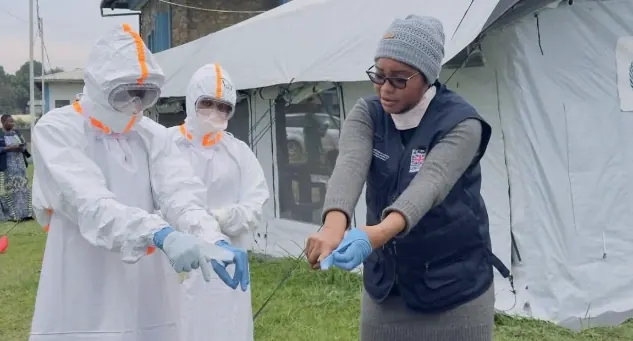
Doctors Without Borders, also known as MSF, has expressed concerns that the response to the Ebola outbreak in the Democratic Republic of Congo is not adequate. According to Anthony Kergosien, MSF emergency coordinator in Bunia, Ituri province, it would be a mistake to assume that the epidemic is under control simply because some Ebola Treatment Centers are receiving fewer patients. The organization argues that a decline in certain indicators in the initial outbreak areas does not necessarily mean that the epidemic is under control.
The Ebola epidemic continues to produce new cases and spread to areas where the response capacity remains limited. MSF notes that the situation is mixed, with Ituri, the initial epicenter of the outbreak, showing signs of slowing down. However, this trend is not reflected nationwide, with North Kivu experiencing a significant increase in infections and now accounting for a substantial proportion of new cases. Additionally, South Ubangi has become the seventh province affected by the epidemic.
The geographical expansion of the epidemic constitutes one of the main current risks, according to MSF. Dr. Wessam Mankoula, head of emergency response at Africa CDC, agrees that a temporary decrease in cases is not enough to conclude that there is a lasting control of transmission. He notes that there can be several peaks during an epidemic, and that a decrease in cases can be followed by an increase if control measures are not maintained over time.
On September 12, the DRC government announced that the peak of the epidemic had been reached in mid-August and that available indicators showed a decrease in the number of cases nationwide. According to DRC's Health Minister Roger Kamba, the number of new daily infections had fallen from 120 at the height of the transmission to nearly 80. However, MSF and Africa CDC argue that this decrease is not enough to conclude that the epidemic is under control.
The Ebola outbreak in the DRC has been ongoing for some time, with the first cases reported in Ituri province. Since then, the epidemic has spread to several other provinces, including North Kivu and South Ubangi. The response efforts have been led by the DRC government, with support from international organizations such as MSF and Africa CDC.
MSF and Africa CDC are calling for sustained efforts to control the epidemic, including increased testing, contact tracing, and vaccination. They also emphasize the need for improved coordination and communication among response teams, as well as with local communities. The organizations stress that it is essential to maintain a high level of alertness and preparedness to respond to the epidemic.
The situation in Rwanda and other neighboring countries is being closely monitored, as the risk of spread to these countries remains. Rwanda has been working to strengthen its preparedness and response measures, including enhancing its surveillance and testing capacity. The country has also been working to raise awareness among its citizens about the risks of Ebola and the importance of reporting suspected cases.
Key points
- The response to containing the spread of Ebola in the Democratic Republic of Congo is still insufficient, according to Doctors Without Borders.
- The epidemic continues to produce new cases and spread to areas where the response capacity remains limited.
- Sustained efforts are needed to control the epidemic, including increased testing, contact tracing, and vaccination.