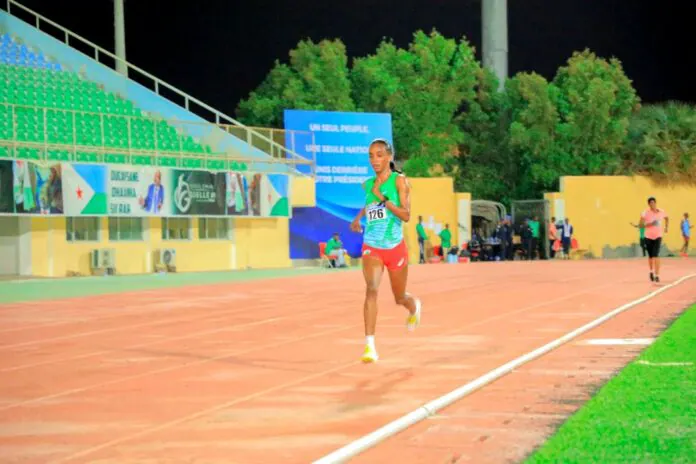
Djibouti's athletes have made their mark in various regional and international competitions, raising questions about how to convert individual potential into consistent performance. Mohamed Ismaïl Ibrahim won silver in the 3,000m steeplechase at the 2025 Islamic Solidarity Games, while Samiya Hassan Nour took bronze in the 10,000m. These achievements demonstrate that Djiboutian athletes can excel with the right environment. However, the challenge lies in replicating this success consistently.
Djibouti's sports history boasts several talented athletes who have competed at the highest level. Ahmed Salah, for instance, won a bronze medal in the marathon at the 1988 Seoul Olympics. More recently, Ayanleh Souleiman became a world champion in the 1,500m and set a world indoor record in the 1,000m. These accomplishments indicate that Djibouti has a strong foundation of athletic talent. The issue now is to create a system that supports and nurtures this talent.
The development of sports infrastructure is crucial, and Djibouti has made significant investments in this area. The country has benefited from FIFA programs, which have provided substantial funding for football infrastructure, technical centers, and grassroots development. While these investments are essential, they must be accompanied by a well-structured system for detecting, training, and supporting young athletes.
A critical aspect of building a successful sports system is the availability of quality human resources. Djibouti needs to focus on training coaches and providing them with the necessary skills to develop young athletes. The Kenyan model in Elgeyo Marakwet, where authorities have strengthened coach training, offers a valuable lesson. By investing in coach education, Djibouti can create a ripple effect that benefits multiple generations of athletes.
International cooperation is vital in helping Djibouti develop its sports sector. Rather than solely focusing on preparing athletes for major competitions, cooperation should also aim to transfer knowledge and skills. This approach will enable Djibouti to build a robust sports system that can produce consistent results.
The fund for supporting high-level athletes has been instrumental in promoting success, but it must be integrated into a broader strategy. This strategy should encompass athlete status, regional training centers, regular national competitions, coach training, sports medicine, and youth talent tracking. The goal is to create an environment where multiple generations of athletes can progressively reach high levels.
While athletics, particularly distance running, has been a staple of Djibouti's sports tradition, diversification is essential. Exploring other sports, such as combat sports, swimming, cycling, or individual disciplines, can provide new opportunities for detecting and nurturing talent. By expanding its sports base, Djibouti can increase its chances of producing top-level athletes.
Key points
- Djibouti needs to shift from a focus on individual talent to a comprehensive sports system that includes detection, training, and support structures.
- The country must invest in coach education and training to ensure long-term success.
- International cooperation should prioritize knowledge transfer and capacity building to help Djibouti develop a sustainable sports sector.