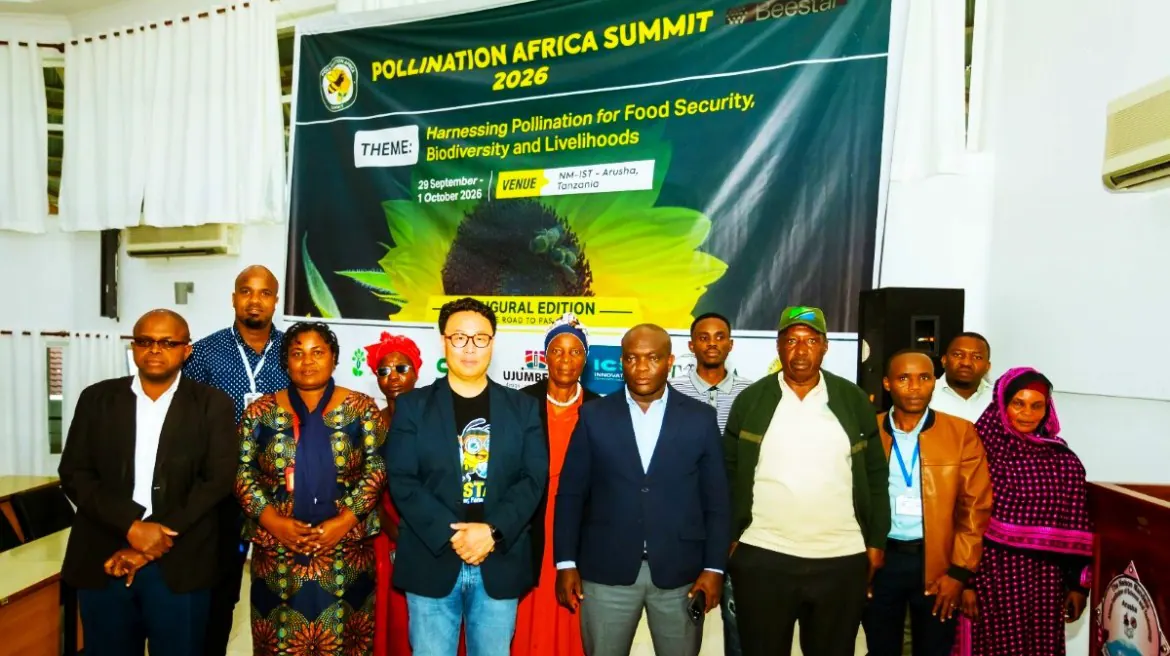
The inaugural Africa Pollination Summit, held in Tanzania, brought together over 250 delegates from across Eastern Africa to discuss the critical role of pollinators in agricultural productivity. The event, organized by the Sustainable Agricultural and Agribusiness Development Initiatives Tanzania (SAADIT), featured a live demonstration of BeeSTAR Technology's smart hive sensors. The technology streams real-time data on hive weight, temperature, and colony health directly to a smartphone, providing valuable insights for beekeepers and large-scale crop producers.
The Australian Agri-Tech firm, BeeSTAR Technology, showcased its groundbreaking live Internet of Things (IoT) technology, which enables precision pollination and optimizes farming activities. The founder and Chief Executive of BeeSTAR, Ray Kwon, demonstrated how the technology can help agribusinesses maximize the biological impact of bees, boost crop yields, and generate digital farm-to-table traceability data. This data is crucial for clearing strict international export audits and ensuring the quality of honey and other agricultural products.
The summit highlighted the importance of pollinators, such as bees, birds, and butterflies, in maintaining healthy agricultural systems. According to Malulu Martin Igobeko, Director and Founder of SAADIT, the populations of these pollinators are declining at an alarming rate due to habitat loss and pesticide misuse. Without these pollinators, agricultural systems face a significant crisis, emphasizing the need for conservation efforts and sustainable practices.
The event marked a critical evolution in the conversation around pollination, shifting from traditional honey gathering to structured, managed pollination services. The summit demonstrated how local beekeepers can establish a new, highly lucrative stream of commercial income by lending their hives to large agribusinesses, while using remote sensor data to eliminate hive theft and prevent colony swarming. This approach has the potential to significantly boost the income of beekeepers and promote sustainable agricultural practices.
The 1 million Hive Impact Pollination Initiative (HIPI 2030), a flagship framework anchored by SAADIT, aims to promote pollinator conservation and sustainable agricultural practices across Africa. The initiative has already shown success in Arusha and Tabora, with plans for cross-border integration into Kenya and Uganda. The summit provided a platform for stakeholders to discuss the importance of pollinator conservation and the need for a coordinated approach to address the challenges facing African agricultural systems.
The Africa Pollination Summit was convened in partnership with several organizations, including Worker Bees Africa, Innovative Community Solutions, and the Sustainable Earth Foundation, under the formal backing and endorsement of the Ministry of Industry and Trade. The event drew a massive turnout of delegates representing a powerful cross-border alliance of policy experts, researchers, and large-scale crop growers from several African countries.
The widespread adoption of precision pollination is expected to unlock the next era of African agricultural productivity. The summit provided a platform for stakeholders to discuss the critical convergence of modern beekeeping and precision pollination as fundamental pillars for regional food security and agricultural productivity. The event concluded with a call to action for governments, the private sector, and development partners to integrate pollinator conservation directly into national development agendas.
Key points
- The Africa Pollination Summit was held in Tanzania, featuring a live demonstration of BeeSTAR Technology's smart hive sensors.
- The event aimed to promote pollinator conservation and sustainable agricultural practices across Africa.
- The 1 million Hive Impact Pollination Initiative (HIPI 2030) aims to promote pollinator conservation and sustainable agricultural practices across Africa.