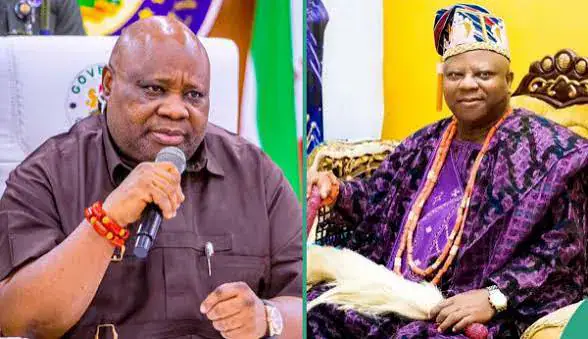
The dethroned Apetumodu of Ipetumodu, Oba Joseph Oloyede, has filed a suit at the Osun State High Court in Ile-Ife, challenging his removal from the throne and seeking to stop the state government from appointing a successor. Oloyede, alongside the Latimogun Royal Family, accuses the state government of failing to follow due process and grant him a fair hearing before his deposition. The case, registered as Suit No. HIF/50/2026, lists Governor Ademola Adeleke and relevant state government officials among the defendants.
Oloyede's removal from the throne was following his conviction in the United States over a multimillion-dollar fraud involving COVID-19 relief funds. The US court sentenced the monarch to more than four years in prison after finding him guilty of participating in the fraudulent scheme. Governor Adeleke had earlier signed an instrument formally removing Oloyede from the traditional position. This has placed the traditional institution in the centre of a legal dispute over the legitimacy of the government’s action.
The dethroned monarch seeks judicial intervention to overturn the decision that removed him from office. He also wants the court to restrain the defendants from proceeding with plans to fill the vacant Apetumodu stool while the dispute remains unresolved. The case has raised concerns about the process of selecting a new monarch and the government's actions. Oloyede's legal action aims to address these concerns and determine whether the government followed the appropriate legal procedures in removing him from the throne.
At the initial court sitting, proceedings could not progress because of issues surrounding the service of court processes on the defendants. Consequently, Justice Dapo Adeniji adjourned the matter until January 21, 2027, and directed the parties to issue fresh hearing notices to ensure proper service. This development leaves the dispute pending, with the court yet to determine the legitimacy of the government's actions.
The case has significant implications for the traditional institution and the state government. The court's decision will determine whether the government has the authority to remove a traditional monarch based on a foreign conviction. Additionally, it will establish whether the government must follow specific procedures in selecting a new monarch. The outcome will likely have far-reaching consequences for the state and its traditional institutions.
The dethroned monarch's legal action is an attempt to protect his rights and the rights of the traditional institution. Oloyede's supporters argue that the government’s actions were unfair and that he was not given a fair hearing. The case will likely attract attention from various stakeholders, including traditional leaders, government officials, and human rights groups. The court's decision will be closely watched, as it may set a precedent for similar cases in the future.
The dispute highlights the complexities of traditional institutions in Nigeria and the role of the government in their affairs. The case raises questions about the limits of government power and the rights of traditional monarchs. As the court prepares to hear the case, stakeholders will be watching closely to see how the dispute is resolved. The outcome will likely have significant implications for traditional institutions and the state government.
Key points
- The dethroned monarch, Oba Joseph Oloyede, seeks to overturn the government's decision to remove him from the throne.
- Oloyede's removal was based on his conviction in the United States for a multimillion-dollar fraud involving COVID-19 relief funds.
- The court's decision will determine whether the government followed the appropriate legal procedures in removing Oloyede from the throne.