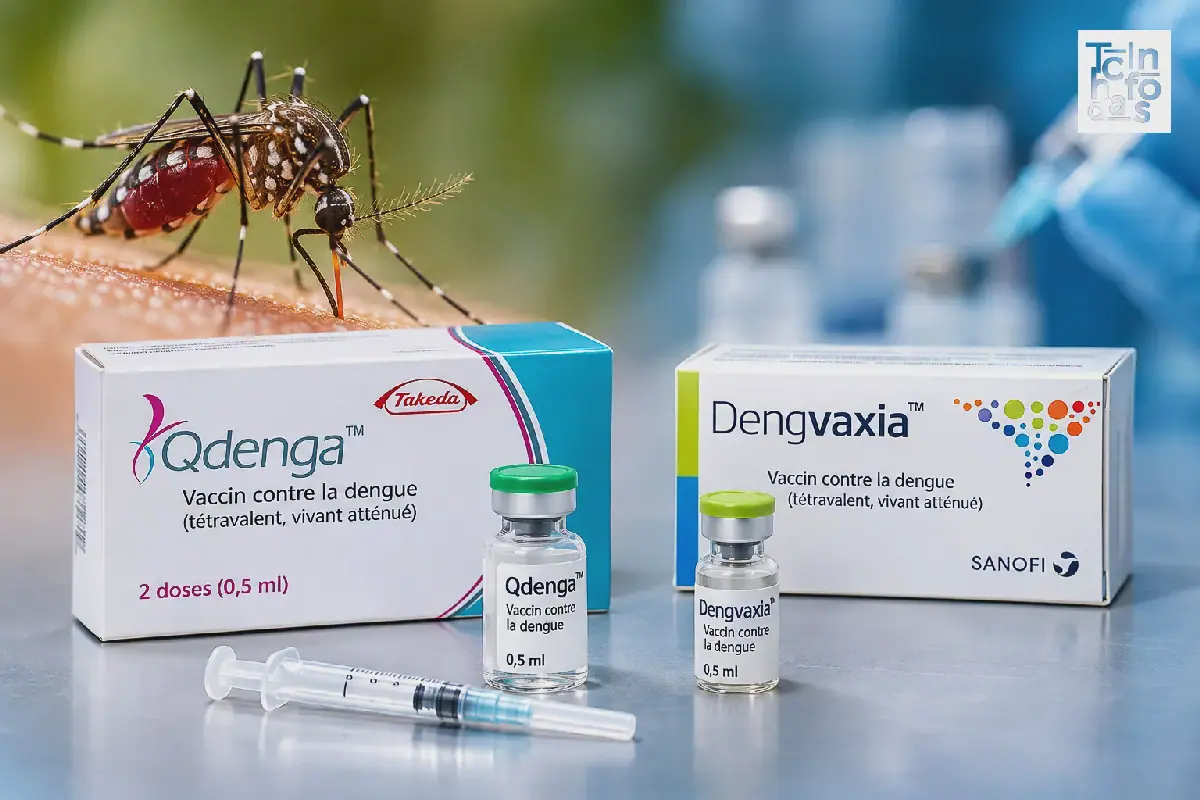
The dengue epidemic in Chad has sparked interest in the existence of vaccines against the disease. Two vaccines, Qdenga and Dengvaxia, have been developed to combat dengue. Qdenga, developed by Japanese laboratory Takeda, is recommended by the World Health Organization (WHO) for certain populations. In contrast, Dengvaxia, developed by French company Sanofi, has been gradually withdrawn from the market.
Qdenga targets the four serotypes of the dengue virus and is administered in two injections, three months apart. The WHO primarily recommends its use in children aged 6 to 16 living in areas with high transmission rates. However, it is not recommended for pregnant or breastfeeding women, or individuals with certain immune deficiencies. This vaccine has shown promise in reducing the risks associated with dengue.
Dengvaxia, the first dengue vaccine, was authorized in 2015 and intended only for individuals who had previously contracted the disease. However, it was found to increase the risk of severe dengue in people who had never been infected. Administered in three injections, its marketing has been gradually discontinued, with its European authorization withdrawn in October 2025.
The cost of Qdenga varies in France, ranging from 95 to 120 euros per dose, approximately 62,300 to 78,700 FCFA. For the two necessary injections, the total cost ranges from 125,000 to 157,500 FCFA, excluding consultation fees. As Dengvaxia is no longer on the market, its current price is no longer representative.
In Chad, where these vaccines are not confirmed to be available in the national pharmaceutical circuit, some individuals with financial means have sought to obtain dengue vaccines abroad, particularly in France, neighboring countries, and the Maghreb. However, the actual availability of these vaccines in these countries remains to be verified.
The WHO emphasizes that vaccination does not replace prevention measures, such as combating mosquitoes and eliminating standing water. In the face of the epidemic in Chad, the question of introducing the Qdenga vaccine into the national dengue control strategy may now be posed to health authorities.
The dengue epidemic in Chad has resulted in significant concerns, with 14 deaths recorded in six affected provinces. The situation highlights the need for effective measures to combat the disease, including vaccination and prevention. As the country navigates this health crisis, the role of vaccines in controlling the epidemic will likely be a key area of focus.
Key points
- The WHO recommends Qdenga for children aged 6 to 16 in high transmission areas.
- Dengvaxia was withdrawn from the market due to increased risk of severe dengue in never-infected individuals.
- Qdenga costs between 125,000 to 157,500 FCFA for two injections in France.