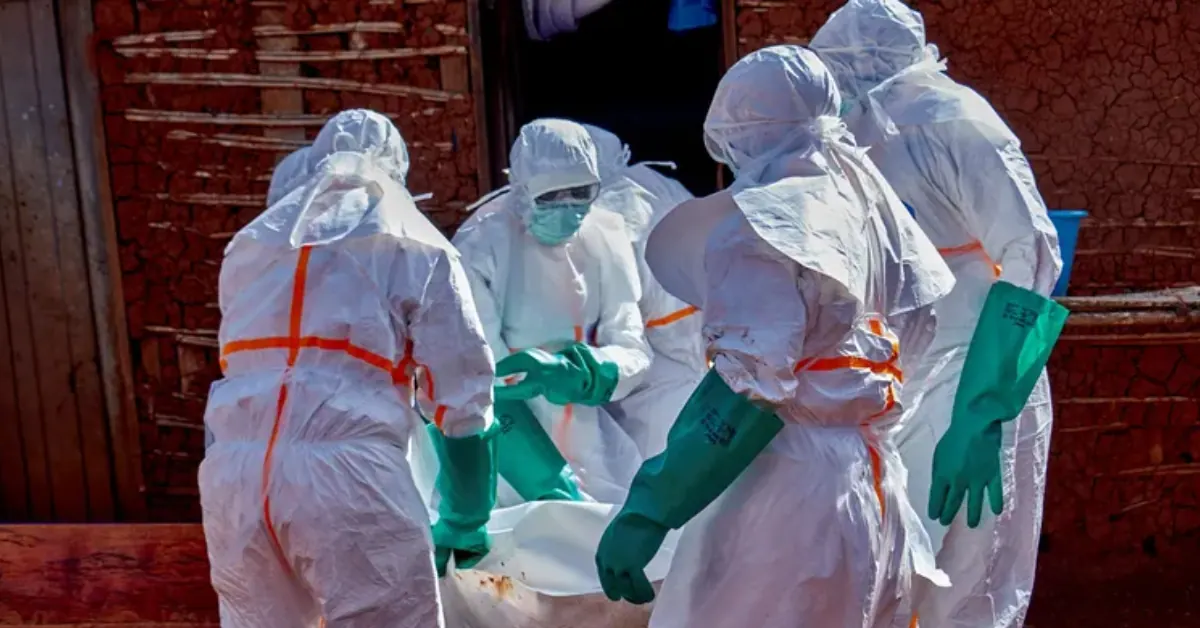
The Democratic Republic of Congo's Ministry of Health has reported a significant increase in Ebola cases, with 8,067 confirmed infections and 3,901 deaths. The outbreak, which has spread to seven provinces, is posing substantial challenges to containment efforts due to security, logistical, and geographical issues. According to the World Health Organization, the current strain of the virus, known as "Bunibikeqo," differs from the "Zaire" strain, for which vaccines and treatments were developed.
The international community, including organizations such as the Danish Refugee Council, is facing difficulties in responding to the crisis due to a deteriorating security situation, displacement of people, and limited access to affected areas. Funding for humanitarian aid has also decreased sharply, from $1.4 billion in 2024 to approximately $400 million in early 2026. This reduction in funding has severely impacted the ability of organizations to provide adequate support.
One of the major challenges in containing the outbreak is the lack of a specific vaccine or treatment for the current strain of the virus. The delay in detecting cases, due to limited diagnostic capabilities and laboratory capacity, has further complicated efforts to control the spread of the virus. The World Health Organization has highlighted that delayed detection of infections and access to healthcare are significant obstacles, particularly in areas with ongoing conflict and insecurity.
The security situation in the affected regions is a significant concern, with the virus spreading in areas experiencing armed conflict and insecurity. This has resulted in the displacement of people, making it difficult for response teams to track contacts, isolate infected individuals, and access affected areas. Attacks on healthcare workers and facilities have also directly impacted response efforts.
The Ebola outbreak has also highlighted issues of trust among the local population, with some communities expressing skepticism about treatment centers and response teams. This mistrust, fueled by years of conflict and previous outbreaks, has led to some individuals refusing treatment. The healthcare system in the Democratic Republic of Congo faces significant challenges, including a shortage of medical personnel, equipment, and basic healthcare services.
The movement of people and trade across borders with neighboring countries, including Uganda, South Sudan, and Rwanda, has further complicated efforts to contain the outbreak. With over 8,000 confirmed cases, the current outbreak is twice as large as the one that occurred between 2018 and 2020 and is the largest in the Democratic Republic of Congo's history.
The crisis extends beyond the health sector, with significant protection and security concerns for millions of displaced individuals. According to the Danish Refugee Council's protection monitoring mechanism, 369 incidents were recorded between March and mid-June 2026, including 178 attacks on life and 38 incidents of gender-based violence.
Key points
- The current Ebola outbreak in the Democratic Republic of Congo has reported over 8,000 cases and 3,901 deaths.
- The outbreak faces significant challenges, including a lack of a specific vaccine or treatment for the current strain of the virus.
- The crisis has been exacerbated by a deteriorating security situation, displacement of people, and limited access to affected areas.