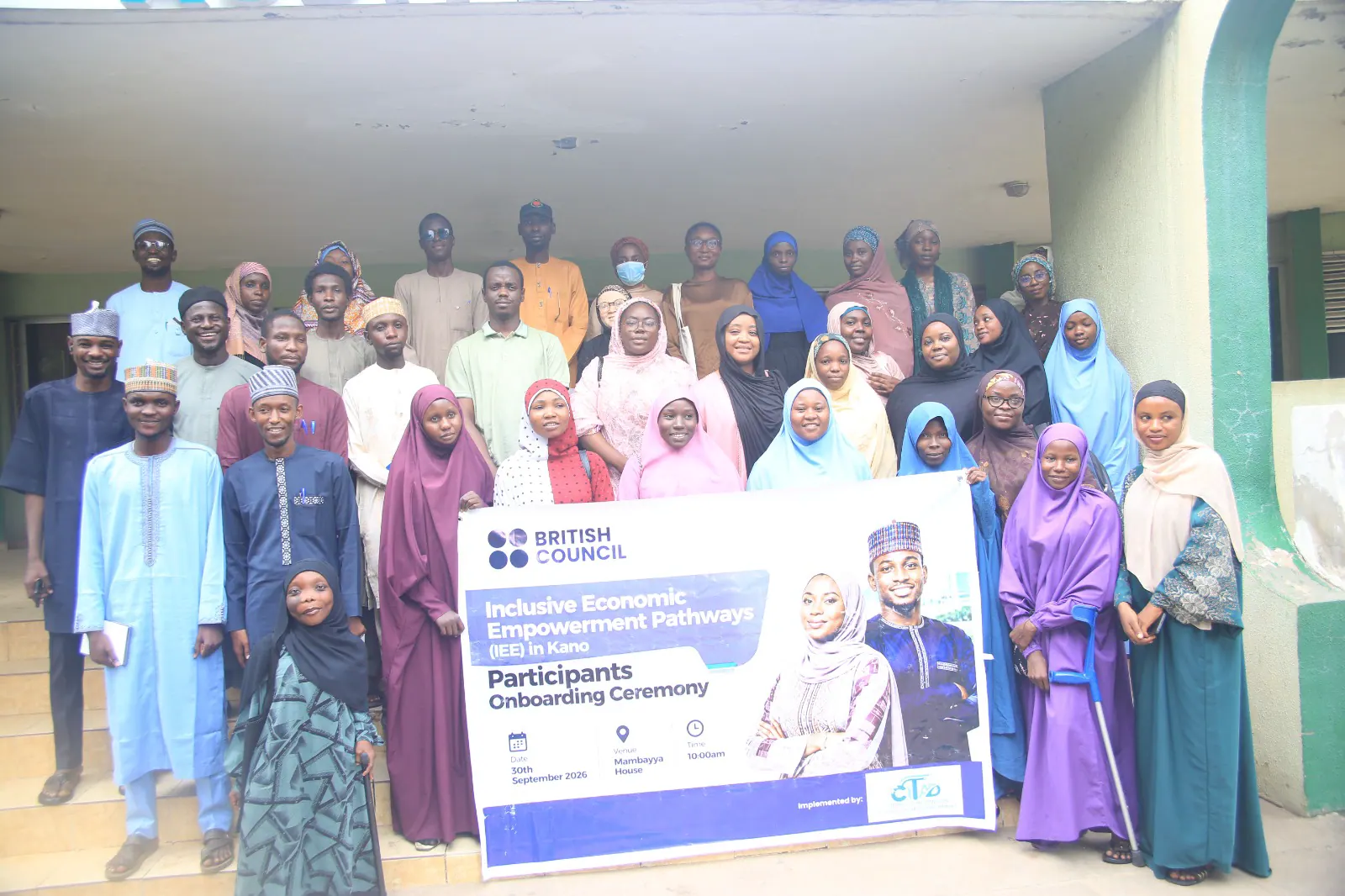
The British Council, in collaboration with the Centre for Information Technology and Development (CITAD), has launched the Inclusive Economic Empowerment (IEE) Project. The six-month initiative aims to address unemployment and promote sustainable economic opportunities for 50 vulnerable youths in Kano. The project provides life skills, career guidance, employability skills, and business knowledge to equip young people with the skills needed to improve their employment and entrepreneurship opportunities.
The project was launched during an orientation exercise in Kano, where CITAD Senior Programme Officer, Mallam Isa Garba, explained that the initiative was developed to bridge the gap between job seekers, aspiring entrepreneurs, and the changing demands of the labour market. The orientation was intended to familiarise beneficiaries with the objectives of the project and how they could use the knowledge gained to achieve self-reliance.
Garba emphasised that the inclusive nature of the project ensures that young people facing social, economic, or geographical barriers are not excluded from opportunities for economic advancement. The programme provides participants with equal access to knowledge and guidance, irrespective of their background or location. This approach aims to promote sustainable economic opportunities and reduce unemployment among vulnerable youths.
The project has two major tracks: employability and career readiness, and entrepreneurship and business management. The employability track focuses on job-search strategies, workplace expectations, career planning, and professional development. The entrepreneurship track provides practical knowledge on market opportunities, business planning, customer relations, and building sustainable enterprises.
Participants will have access to counsellors and mentors throughout the programme to support them in making appropriate career and business decisions. The project focuses on equipping beneficiaries with knowledge and strategic skills rather than providing direct financial capital. Understanding markets, customers, and business strategies is essential for long-term success, according to Garba.
Counsellor Naima Ibrahim said her responsibility was to guide participants in making career choices based on their interests, abilities, and capabilities. The guidance will help trainees determine whether entrepreneurship or formal employment is more suitable for them, reducing the risk of poor career choices and business failure. Ibrahim emphasised the importance of confidence-building and practical knowledge in achieving self-reliance.
The British Council is supporting the project, while CITAD serves as the lead implementing partner. The organisers expressed confidence that the training will equip the 50 beneficiaries with practical skills and knowledge to improve their participation in the Nigerian economy and pursue sustainable career opportunities.
Key points
- The project aims to equip 50 young people in Kano with skills and knowledge to improve their employment and entrepreneurship opportunities.
- The programme provides participants with equal access to knowledge and guidance, irrespective of their background or location.
- The project focuses on equipping beneficiaries with knowledge and strategic skills rather than providing direct financial capital.