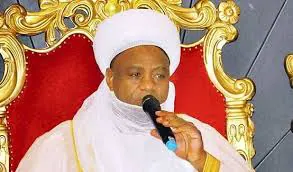
The Sultan of Sokoto and President-General of the Nigeria Supreme Council for Islamic Affairs, Muhammad Sa'ad Abubakar III, has emphasized that nobody should be forced to embrace Islam. He made this statement at the NSCIA General Assembly held at the National Mosque in Abuja, stressing that conversion to Islam must be based on an individual's free will. Abubakar highlighted that "there is no compulsion in religion," encouraging Muslims to respect the rights and freedoms of people of other faiths.
Abubakar's comments come amid recurring concerns over religious intolerance and tensions between adherents of different faiths in Nigeria. He called on Christians and Muslims to refrain from insulting one another, stressing that mutual respect is necessary for peaceful coexistence. The Sultan's remarks underscore the need for tolerance and understanding between different religious groups in the country.
In a similar vein, Abubakar urged adherents of both faiths to promote tolerance at the International Conference on National Security for Socio-economic Development in Abuja. He emphasized that neither Muslims nor Christians should consider themselves superior to the other, stressing that all people are equal before God. The Sultan's advocacy for religious tolerance is seen as a crucial step towards fostering peaceful relations between different faiths.
Meanwhile, the NSCIA Secretary-General, Professor Ishaq Oloyede, called on Muslim parents to ensure their children receive both Islamic and Western education. Oloyede believes that the current generation needs to acquire knowledge in both systems to contribute effectively to national development. He noted that the most educationally disadvantaged states are Muslim states, highlighting the need for a more balanced approach to education.
Oloyede also called for greater representation of qualified Muslims in the media and employment, urging Muslim leaders to ensure competent members of the community are considered for key positions. This, he believes, will help to promote a more inclusive and equitable society. The NSCIA leadership's comments on education and representation reflect the organization's commitment to promoting the welfare and development of Muslims in Nigeria.
On the annual Hajj pilgrimage, Oloyede questioned the continued involvement of government in organizing the exercise, arguing that the government's role should largely be limited to facilitating the pilgrimage. He also cautioned against government sponsorship of people who cannot afford to undertake the pilgrimage. These comments suggest a need for a more nuanced approach to the Hajj pilgrimage and the role of government in supporting it.
The comments by the NSCIA leadership touched on various issues, including religious tolerance, education, and the participation of Muslims in national affairs. As the Sultan of Sokoto and the NSCIA continue to promote peaceful coexistence and education, their efforts are seen as crucial in fostering a more harmonious and inclusive society in Nigeria. The Sultan's advocacy for free will in religious conversion and Oloyede's push for dual education are key aspects of this effort.
Key points
- The Sultan of Sokoto emphasizes that conversion to Islam must be based on free will.
- The NSCIA Secretary-General calls for Muslim parents to ensure their children receive both Islamic and Western education.
- The Sultan and NSCIA leadership advocate for religious tolerance and peaceful coexistence between different faiths in Nigeria.