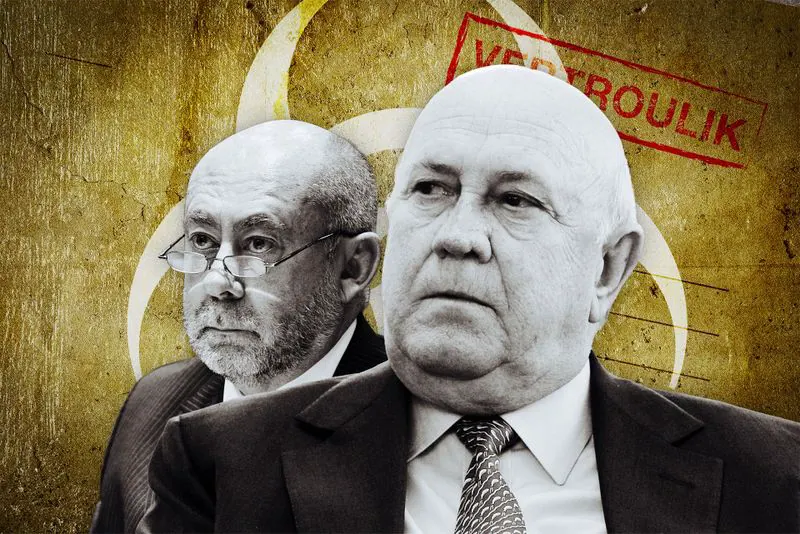
In a stunning revelation, former South African President FW de Klerk was shocked to discover the existence of Project Coast, a covert apartheid biological weapons programme. The programme, which was shrouded in secrecy, was revealed to have been involved in heinous crimes and gross human rights violations. De Klerk's discovery was made after he appointed Judge Richard Goldstone to investigate rumours of secret units operating outside the law.
South Africa had signed the Biological and Toxin Weapons Convention (BTWC) in 1972 and ratified it in 1975, committing to ban biological and toxin weapons. However, the country's biological weapons programme, Project Coast, continued to operate in secret. The programme was led by Wouter Basson, who designed and executed its offensive components with aggressive enthusiasm.
De Klerk acted swiftly, ordering the suspension of individuals involved in Project Coast and requesting the firing of some. Basson was fingered as the leader of the rogue aspects of the programme and was subsequently fired. However, it was later discovered that Basson had not destroyed the programme's documents as ordered, and instead had hidden them in padlocked steel trunks at his home.
The discovery of the documents led to special hearings on Project Coast by the Truth and Reconciliation Commission (TRC) and resulted in criminal charges being brought against Basson. An investigation also found that the poisons, drugs, and biochemical materials of mass destruction, including 600 cultures, were not properly destroyed.
After his firing, Basson was hired by the national railways, Transnet, and used his position to offer consultancy services to global contacts interested in biological and chemical materials. His frequent trips to Libya, where he met with Muammar al-Qaddafi, raised concerns among the UK and US governments.
The US and UK governments delivered a diplomatic warning to De Klerk, expressing their concerns about South Africa's incomplete and deceptive Confidence Building Measures (CBM) filed in 1993. They insisted that their country experts be briefed, and that the abuses of the programme be thoroughly investigated and reported.
The democratic government established new accounting procedures to prevent a repetition of the fraud associated with Project Coast. An investigation found that state assets worth over R50-million had ended up in private hands, and that Philip Mijburgh, nephew of apartheid-era Defence Minister Magnus Malan, was the chief beneficiary.
Key points
- De Klerk's discovery of Project Coast led to a thorough investigation and eventual dismantling of the programme.
- Wouter Basson's actions undermined efforts to dismantle the programme, and he was eventually brought to justice.
- The legacy of Project Coast serves as a cautionary tale about the dangers of unregulated biological and chemical programmes.