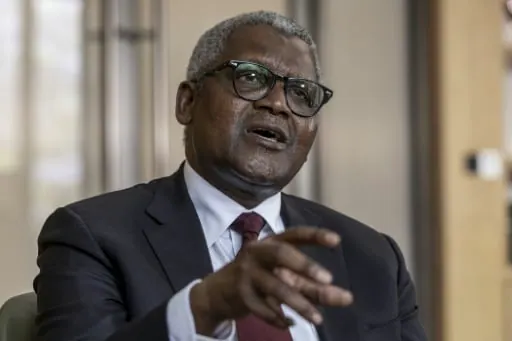
Aliko Dangote, Africa's richest man, is set to break ground on a new $16 billion mega-refinery in Kenya. The refinery, located on the Indian Ocean coast at Lamu, will have a capacity of 700,000 barrels per day, larger than any in Europe. Dangote says the project marks a vital step towards the continent's self-sufficiency in fuel. He emphasizes that Africa needs to stop exporting raw materials and start creating finished products.
The project has faced a lawsuit from a local community over land rights, but a court ruling allowed the ground-breaking to proceed. Environmentalists, including Greenpeace, have raised objections over the refinery's impact. Dangote dismissed the challenges, stating that there are people who don't want the development of Africa. He expressed confidence in the project's success, citing the availability of better, cleaner water, solid land, and a deep sea area at Lamu.
The refinery will include a 1,000-megawatt power facility, with half the production going back into the Kenyan grid. Dangote framed the refinery as a vital step towards Africa reducing its reliance on fuel imports and foreign expertise. He believes that by 2030, the majority of African countries will be self-sufficient in fuel, and that the continent should refine its own fuel.
There have been questions about where the new refinery will source crude oil, given that east African countries are only just starting to find and exploit significant reserves. Dangote said it would source crude from multiple places, including the Middle East, the United States, and others. The refinery will be ready as countries like Kenya, Tanzania, and Mozambique start producing more oil.
Dangote emphasized that the Kenyan refinery would be just a small part of meeting the demand that Africa will create as its economy grows. He highlighted US President Donald Trump's threats to stop exporting diesel, stressing the need for Africa to address its fuel needs today. The refinery is expected to be a start-up for the region, but a big investment.
The project is seen as a significant investment in the region, with potential to boost economic growth. Dangote's vision for Africa's economic development is centered around self-sufficiency and reducing reliance on foreign expertise. The refinery is expected to play a key role in achieving this vision.
The refinery's impact on the environment and local communities will be closely watched. While Dangote has dismissed concerns, environmentalists and local communities will continue to monitor the project's progress. The project's success will depend on various factors, including the availability of crude oil and the refinery's ability to meet demand.
Key points
- The refinery will have a capacity of 700,000 barrels per day.
- The project has faced a lawsuit from a local community over land rights.
- The refinery will include a 1,000-megawatt power facility.