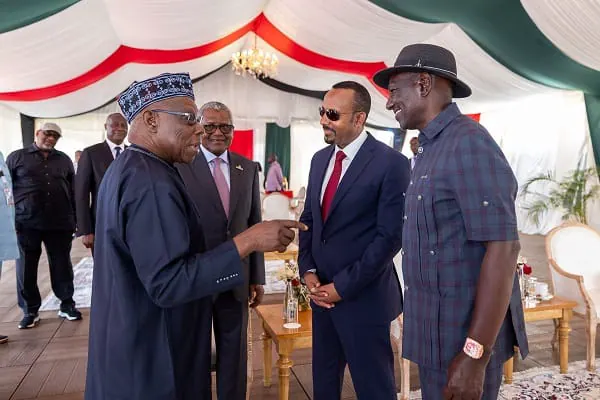
Africa's richest businessman, Aliko Dangote, has commenced the construction of a $16 billion oil refinery in Kenya. The groundbreaking ceremony, attended by Kenyan President William Ruto, former Nigerian President Olusegun Obasanjo, and other African leaders, took place at Lamu Port in northern Kenya. This project is expected to be one of the largest investments in the region's energy sector and is scheduled for completion in 2030.
The proposed refinery aims to increase the supply of refined petroleum products within East Africa and reduce the region's reliance on imports, helping countries conserve foreign exchange spent on importing fuel. Dangote stated that the project was conceived to help the region achieve greater self-sufficiency in refined petroleum products. He emphasized that East Africa's 54 countries currently import petroleum products, and the goal is to make the region self-sufficient.
The refinery will build on the experience of Dangote's 700,000-barrel-per-day Dangote Refinery in Lagos, Nigeria, while serving the wider East African market. Dangote disclosed that his company had offered regional governments a combined 30 percent equity stake in the project, giving participating countries a direct interest in the refinery. A $450 million engineering contract for the project has been awarded to Engineers India Limited.
The groundbreaking ceremony attracted regional and continental leaders, including Ethiopian Prime Minister Abiy Ahmed, Ugandan President Yoweri Museveni, and Togolese President Jean-Lucien Savi de Tové. The presence of these leaders underscores the regional importance of the project and its potential impact on energy supply, trade, and industrial development across East Africa.
The refinery will be located at Lamu Port, a major infrastructure project on Kenya's northern coast that forms part of the country's broader transport and trade corridor. The Lamu Port is designed to connect Kenya's northern region and neighboring landlocked countries to international maritime trade routes. The project's integration into the area's wider infrastructure network could further strengthen the corridor and support the movement of petroleum products and other industrial goods.
Kenyan officials estimate that East Africa's annual demand for petroleum products is between 20 million and 30 million metric tonnes. Industry experts estimate that the region would require refining capacity of more than one million barrels per day to meet its growing demand for petroleum products. The project is expected to create more than 50,000 jobs and generate wider economic opportunities through increased industrial activity, local supply chains, and associated infrastructure development.
The project comes amid concerns over high fuel prices and East Africa's continued dependence on imported refined petroleum products. Beyond refining fuel, the project is expected to support the development of related industries, including petrochemicals and bitumen production. With its completion, the refinery is poised to have a significant impact on the region's energy landscape and economic growth.
Key points
- The project aims to make East Africa self-sufficient in refined petroleum products.
- The refinery is expected to create more than 50,000 jobs and generate wider economic opportunities.
- The project is scheduled for completion in 2030.