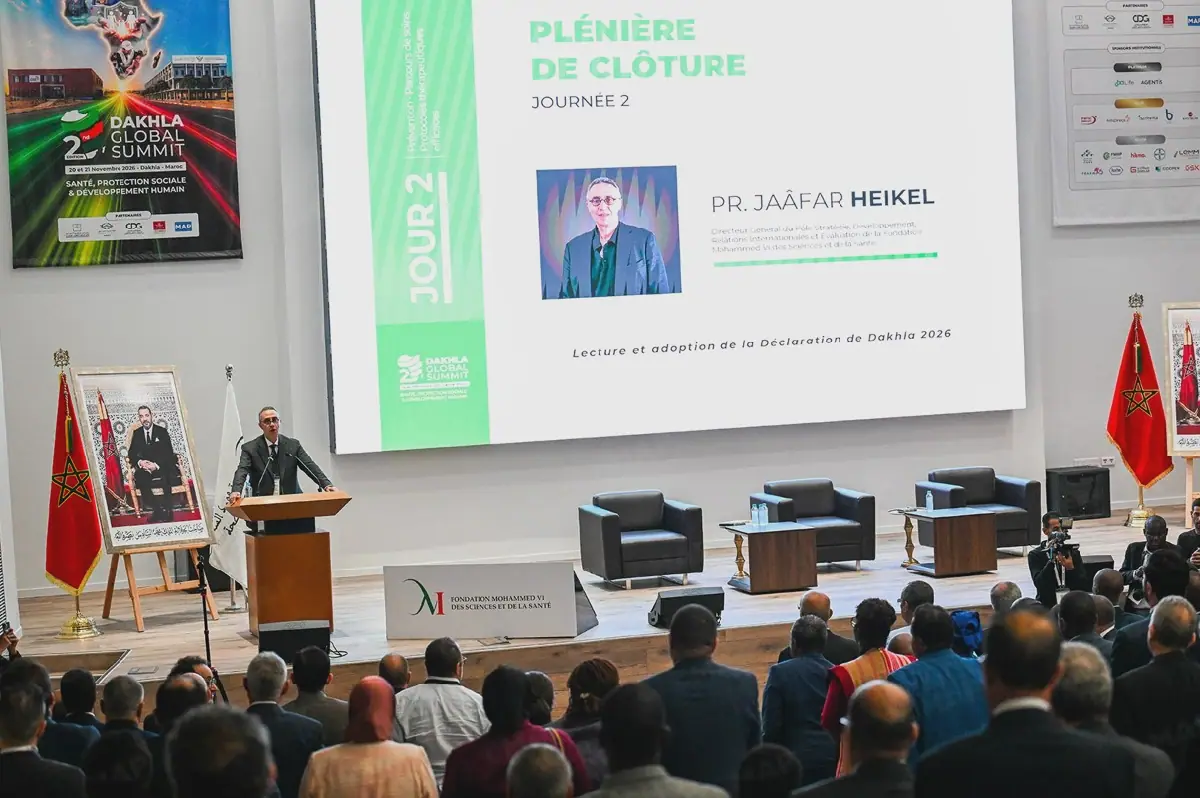
The second edition of the Dakhla Global Summit, held on November 20-21, concluded with a final declaration emphasizing the need to prioritize health as an investment and a common good. The declaration, inspired by the vision of King Mohammed VI, highlights the importance of health and social protection in human dignity and cooperation among African countries. It reaffirms the principles established in Dakhla in 2025, including the right to health for all, equity, solidarity, and health sovereignty.
The declaration stresses the need to establish pathways linking local healthcare to reference centers, and to develop protocols evaluated based on their outcomes. Participants commit to networking African centers of excellence, with the support of the African Academy of Health Sciences (AAHS). This effort aims to improve healthcare quality and access across the continent. The AAHS will play a key role in facilitating this process.
In the area of training, the declaration emphasizes the need for sustained budgetary efforts for initial and specialized training, and calls for increased national health budgets to cover the significant expenses of this vital sector. The declaration also urges African countries to redouble their efforts to combat brain drain, particularly in the medical and nursing fields. This issue has significant implications for healthcare systems in Africa.
On governance, participants recommend involving communities in decision-making processes and relying on data to better diagnose health situations. They also commit to supporting local production of medicines and vaccines, ensuring equitable access to treatments, and promoting research and precision medicine. The use of artificial intelligence in healthcare, under African governance and with rigorous data protection, is also advocated. Effective governance is seen as crucial to achieving these goals.
The declaration also highlights the importance of improving water quality, preventing associated health risks, preserving African ecosystems, and combating climate change and its effects on population health. These environmental factors have a significant impact on public health in Africa. The declaration emphasizes the need for a comprehensive approach to healthcare.
The Dakhla Global Summit, organized by the Mohammed VI Foundation for Science and Health, brought together participants from around thirty countries, including politicians, diplomats, academic and hospital leaders, researchers, healthcare professionals, and students. The summit provided a platform for stakeholders to discuss pressing health issues in Africa and develop strategies for improvement. The event was a significant gathering of experts in the field.
The final declaration of the Dakhla Global Summit represents a commitment from participants to prioritize health as an investment and a common good, and to work towards strengthened health sovereignty in Africa. The declaration's recommendations and calls to action aim to improve healthcare outcomes and access across the continent. Implementation of these commitments will be crucial to achieving meaningful change.
Key points
- The Dakhla Global Summit's final declaration emphasizes the need to prioritize health as an investment and a common good in Africa.
- The declaration calls for strengthened health sovereignty in Africa, including improved governance, training, and access to healthcare.
- The summit's recommendations aim to address pressing health issues in Africa, including brain drain, climate change, and environmental health risks.