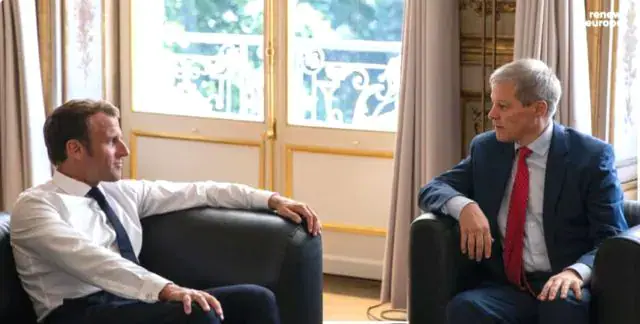
Dacian Ciolos, a Romanian former prime minister and European commissioner for agriculture, is a candidate for the position of Secretary General of the Organisation internationale de la Francophonie (OIF). He is the only male and European candidate, competing against three African women. Ciolos claims he is not France's candidate, despite being educated in France, married to a French national, and having ties to French President Emmanuel Macron. The election will take place during the 20th Francophonie Summit in Phnom Penh, Cambodia, on November 16-17, 2026.
Ciolos has made statements emphasizing Africa's importance to the Francophonie, but his words have been met with skepticism. During a conference in Dakar, Senegal, in June, he praised Senegal as a "spiritual and political hub of the Francophonie" and promised to put Africa at the heart of the organization. However, in other interviews, he has downplayed Africa's centrality, stating that the Francophonie is "much more than Africa." This inconsistency has raised questions about his commitment to African interests.
Ciolos's experience with Africa is limited, and he has admitted to not having direct experience with the continent. During his audition before Francophonie ministers in June, he was questioned by African delegations about his relationship with Africa. He mentioned having African friends from his time studying in France and promised to visit each African state during his first year in office if elected. This approach has been criticized, as one would typically expect a candidate to have a better understanding of the region they wish to represent before being elected.
Ciolos's background in agricultural policy has led to criticism from African farmers. As European Commissioner for Agriculture from 2010 to 2014, he implemented the Common Agricultural Policy (CAP), which had significant effects on African farmers. The policy's reform, which he supported, included a budget of 408 billion euros for 2014-2020, with around 38% allocated to European farmers. However, this policy has been criticized for harming African farmers, particularly in West Africa, where European exports of skimmed milk powder increased by 50% between 2010 and 2014.
The impact of Ciolos's agricultural policies on African farmers has been significant. Oxfam and SOS Faim reported that European exports of skimmed milk powder to West Africa rose from approximately 29,600 to 44,500 tonnes between 2010 and 2014. This has put pressure on local farmers, who are only protected by a 5% tariff. In 2011, the European Commission, which Ciolos was a part of, proposed removing free access to the European market for 18 ACP countries, including Cameroon, Côte d'Ivoire, and Ghana, if they did not ratify their economic partnership agreements.
Ciolos's candidacy has sparked concerns about his ability to serve the interests of all Francophonie member states, particularly African countries. His ties to France and his past actions as European Commissioner for Agriculture have raised questions about his impartiality and commitment to African interests. As the election approaches, it remains to be seen whether Ciolos's promises to prioritize Africa will be enough to alleviate concerns about his candidacy.
The Francophonie is set to elect a new Secretary General during the 20th Francophonie Summit in Phnom Penh, Cambodia. The successful candidate will need to balance the interests of all member states, including those from Africa, Europe, and other regions. While Ciolos has made efforts to emphasize Africa's importance, his past actions and ties to France have raised concerns about his ability to serve the interests of all Francophonie member states.
Key points
- Dacian Ciolos's candidacy for OIF Secretary General has raised questions about his ties to France and his past actions as European Commissioner for Agriculture.
Reporting sources
- Élections OIF: Dacian Ciolos, candidat de la France? · Wakat Séra