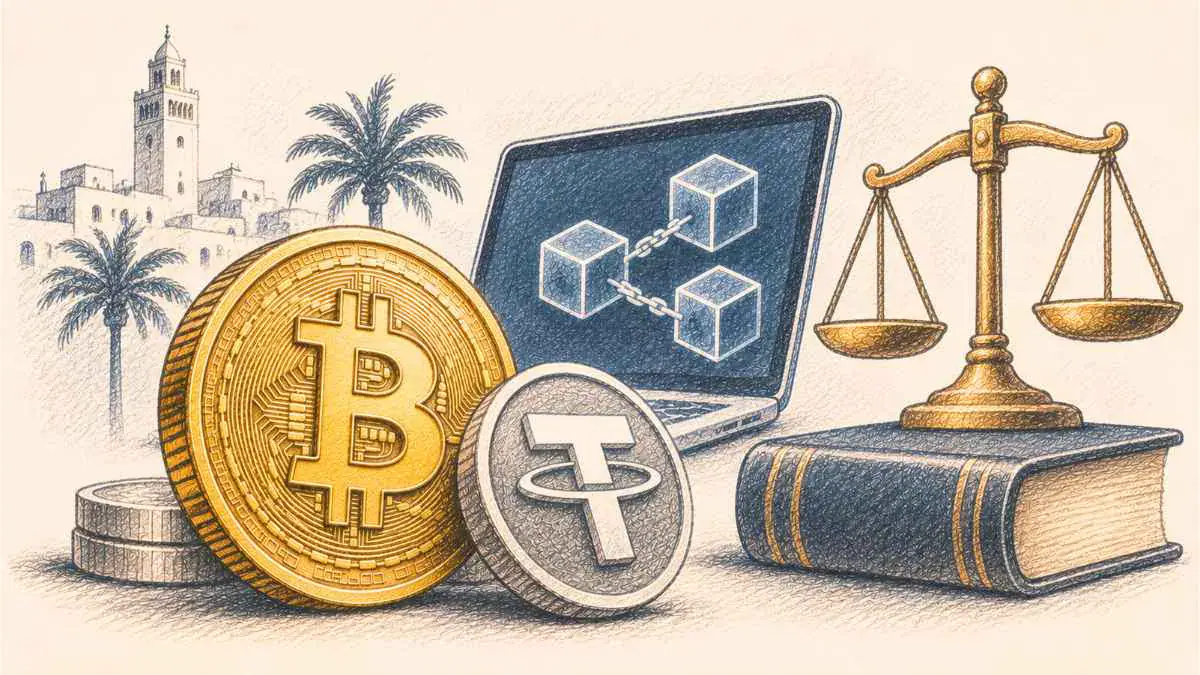
The use of cryptocurrencies in Tunisia is growing, but the country's regulatory framework remains unclear. While there is no specific law governing the issuance, marketing, and use of cryptocurrencies, the 1976 Foreign Exchange Code and its amendments still regulate international financial transactions. This has created a situation where individuals and businesses are unsure about what is allowed and what is not.
The Foreign Exchange Code distinguishes between holding a digital asset, buying it on a foreign platform, and using it to pay a bill, which are not necessarily equivalent transactions. Article 35 of the code imposes prison sentences and significant fines for certain foreign exchange infractions. However, not all Bitcoin holdings automatically lead to these sanctions, as the risk depends on the nature of the transaction, applicable rules, and its legal qualification.
In addition to regulatory uncertainty, users of cryptocurrencies in Tunisia face financial risks such as price volatility, scams, hacking, and difficulties recovering funds. The government announced a project in 2024 to update the Foreign Exchange Code to include crypto assets, but it has not yet been adopted. A report by the World Trade Organization in 2025 noted the lack of specific Tunisian regulations on cryptocurrencies.
For Tunisian startups working with foreign clients, cryptocurrencies may seem like a solution to international payment difficulties. Stablecoins, which aim to track the value of a currency, can facilitate certain transfers. However, using them does not exempt companies from complying with exchange, accounting, tax, and anti-money laundering obligations.
The use of blockchain technology in Tunisia could go beyond payments, potentially developing services for traceability, certification, or digital asset management, subject to specific activity rules. The government has proposed legislative mechanisms for declaring and authorizing transactions with the Central Bank of Tunisia, indicating ongoing consideration of digital asset regulation.
The lack of clear regulations does not mean freedom to use cryptocurrencies. Instead, it creates uncertainty for users and businesses. To move forward, Tunisian companies need precise rules to distinguish between authorized uses, regulatory obligations, and prohibited or authorized activities.
The future of cryptocurrencies in Tunisia depends on both legal clarification and the real economic utility of proposed technologies. As the regulatory environment evolves, users and businesses will need to adapt to new guidelines and requirements. The adoption of a new regulatory framework will be crucial in shaping the future of cryptocurrency use in Tunisia.
Key points
- The Tunisian government announced a project in 2024 to update the Foreign Exchange Code to include crypto assets.
- The use of cryptocurrencies in Tunisia is subject to the 1976 Foreign Exchange Code and its amendments.
- The lack of clear regulations creates uncertainty for users and businesses in Tunisia.