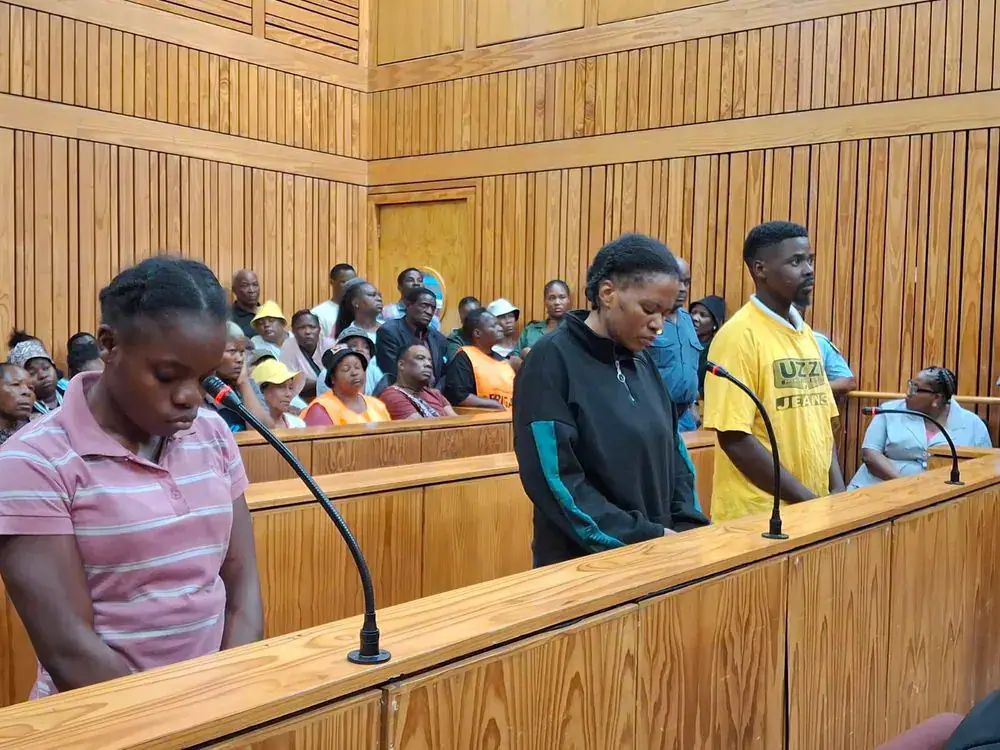
The Chairperson of the CRL Rights Commission, Thoko Mkhwanazi-Xaluva, has sparked controversy by suggesting that the entire faith community should be regulated in response to a recent horrific crime involving religious leaders. A video clip circulating on social media shows her warning that a paedophile could easily move to another province and start a new church without being detected.
Mkhwanazi-Xaluva's comments have drawn a mixed reaction, with some arguing that existing laws already provide sufficient protection for children and that regulation of the faith community would infringe on its independence. The South African Community of Faith-Based Fraternals and Federations (SACOFF) has stated that anyone who harms a child must face the full weight of the law, and that the police, prosecutors, and courts must be allowed to do their work without interference.
The unique role of religious ministry is a profession unlike few others, and an independent Church is an essential voice in a healthy democracy. It must remain free from undue interference and able to speak truth to power, challenge injustice, hold those in authority accountable, and give expression to the faith, convictions, and conscience of millions of South Africans.
Existing laws already address concerns around child protection, including the National Register for Sex Offenders and the National Child Protection Register. These registers are national, meaning that moving from one province to another does not change an individual's obligations or ability to be tracked. Organisations that work with children, including churches, are required to check whether a person is listed before allowing them to work with children.
The CRL Rights Commission itself has extensive powers to monitor, investigate, and research issues concerning the rights of religious, cultural, and linguistic communities. The Commission may summon people to give evidence under oath, produce documents, and make recommendations to the relevant authorities.
Despite this, Mkhwanazi-Xaluva has continued to push for greater regulation of the faith community, claiming that there is currently no way for people to report concerns about religious leaders. However, the CRL Rights Commission Act of 2002 empowers the Commission to establish and maintain databases of cultural, religious, and linguistic community organisations and institutions.
The ANC, DA, ACDP, and ActionSA have all rejected the model of state regulation or control of churches and their religious affairs, with the ANC confirming on 13 October 2026 that churches "must be free to govern and regulate their own affairs within the ambit of the Constitution".
Key points
- The CRL Rights Commission chairperson's comments have sparked debate on regulating the faith community in South Africa.
- Existing laws already provide protection for children, including national registers for sex offenders and child protection.
- The faith community has consistently condemned abuse and called for the government to enforce existing laws.